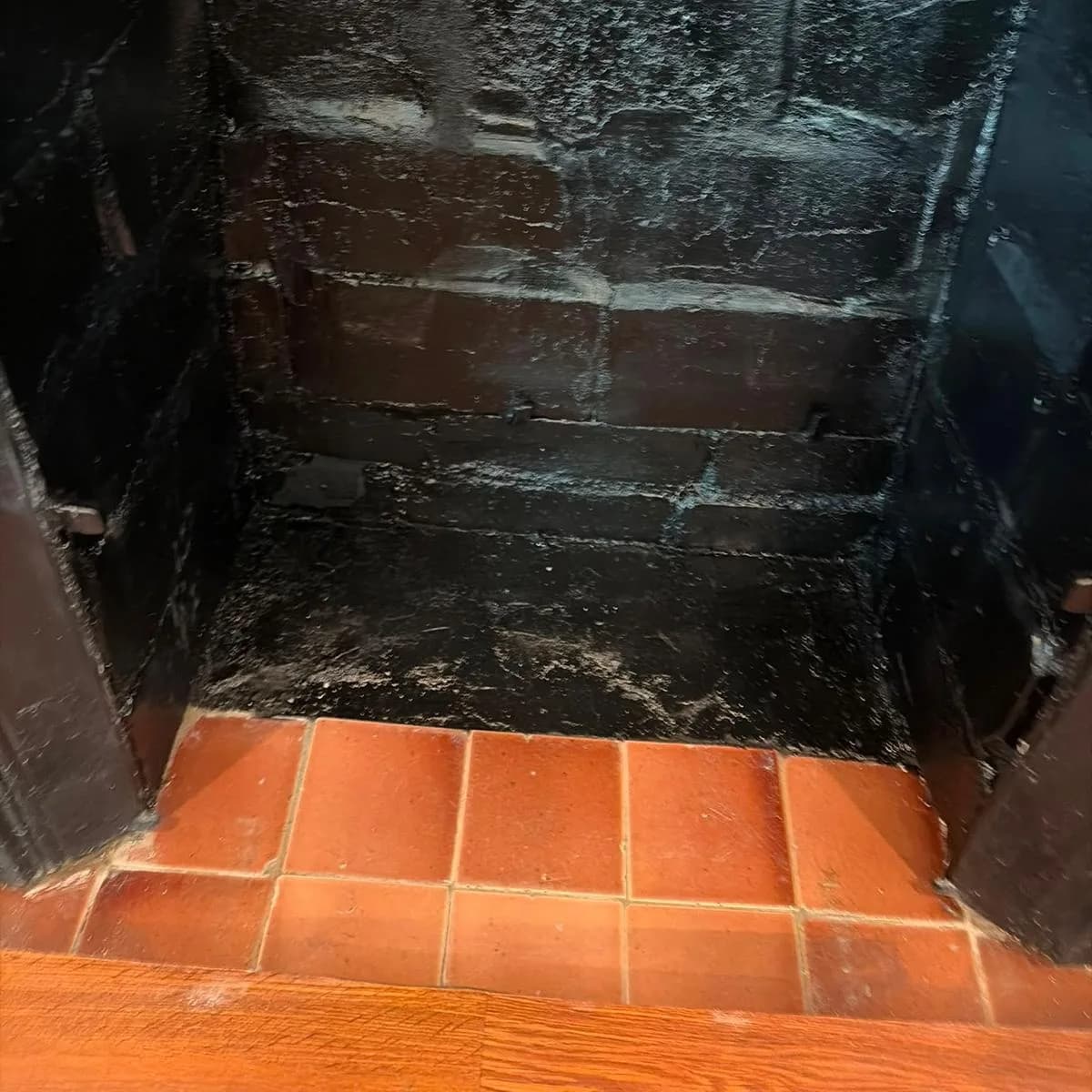
Firebox after sweeping
Brick and hearth cleared down, with the terracotta tile at the front left clean.
View this projectEXPERT CHIMNEY CARE. HONEST PRICING. DONE RIGHT.
Emergency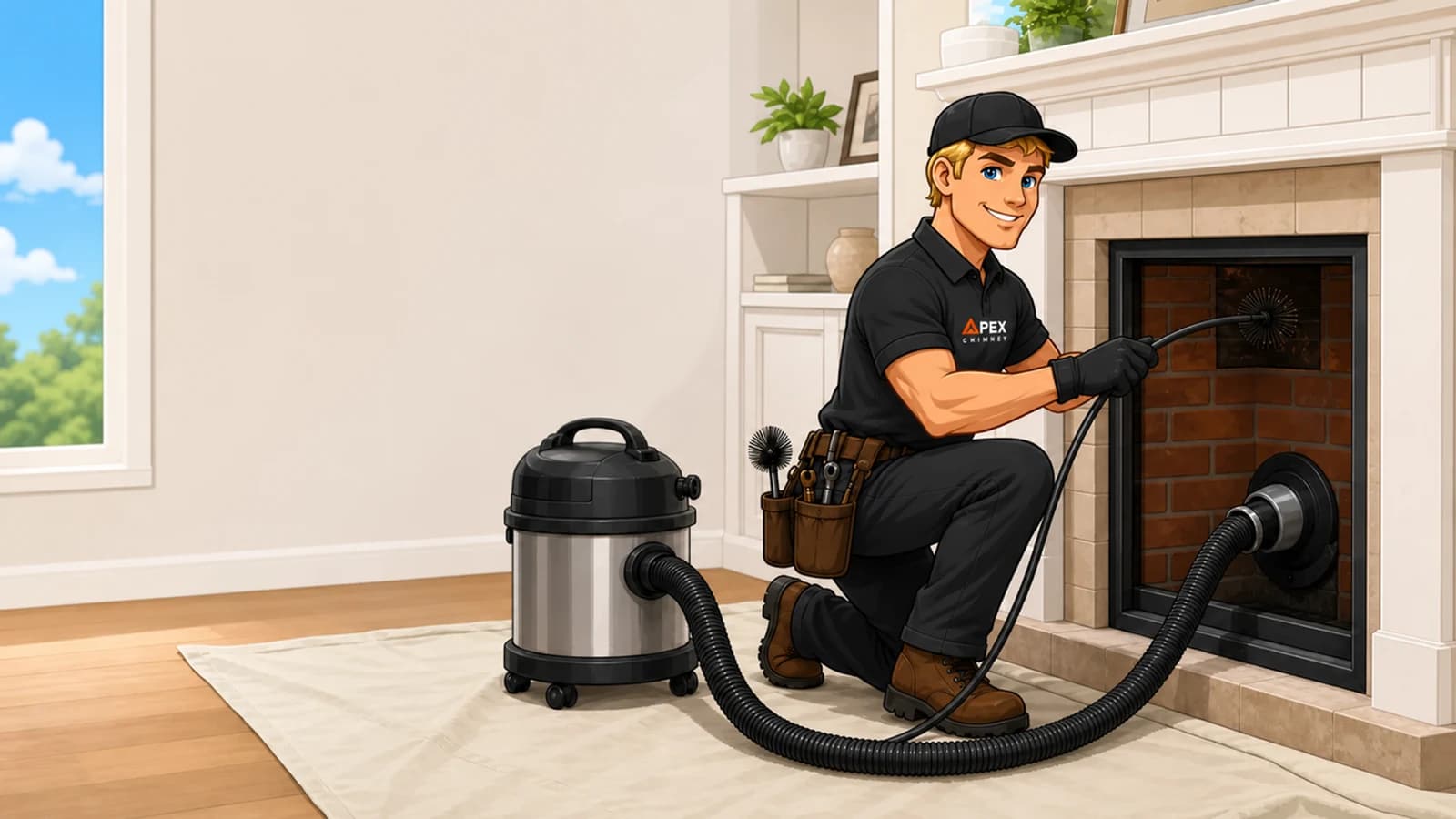
Creosote, soot, and blockages cleared out of your flue.
Wood smoke cools on its way up the flue and leaves creosote behind — first a dust, then a hard crust, then a shiny glaze. Sweeping removes that buildup so the flue can be inspected for visible damage and obstructions.
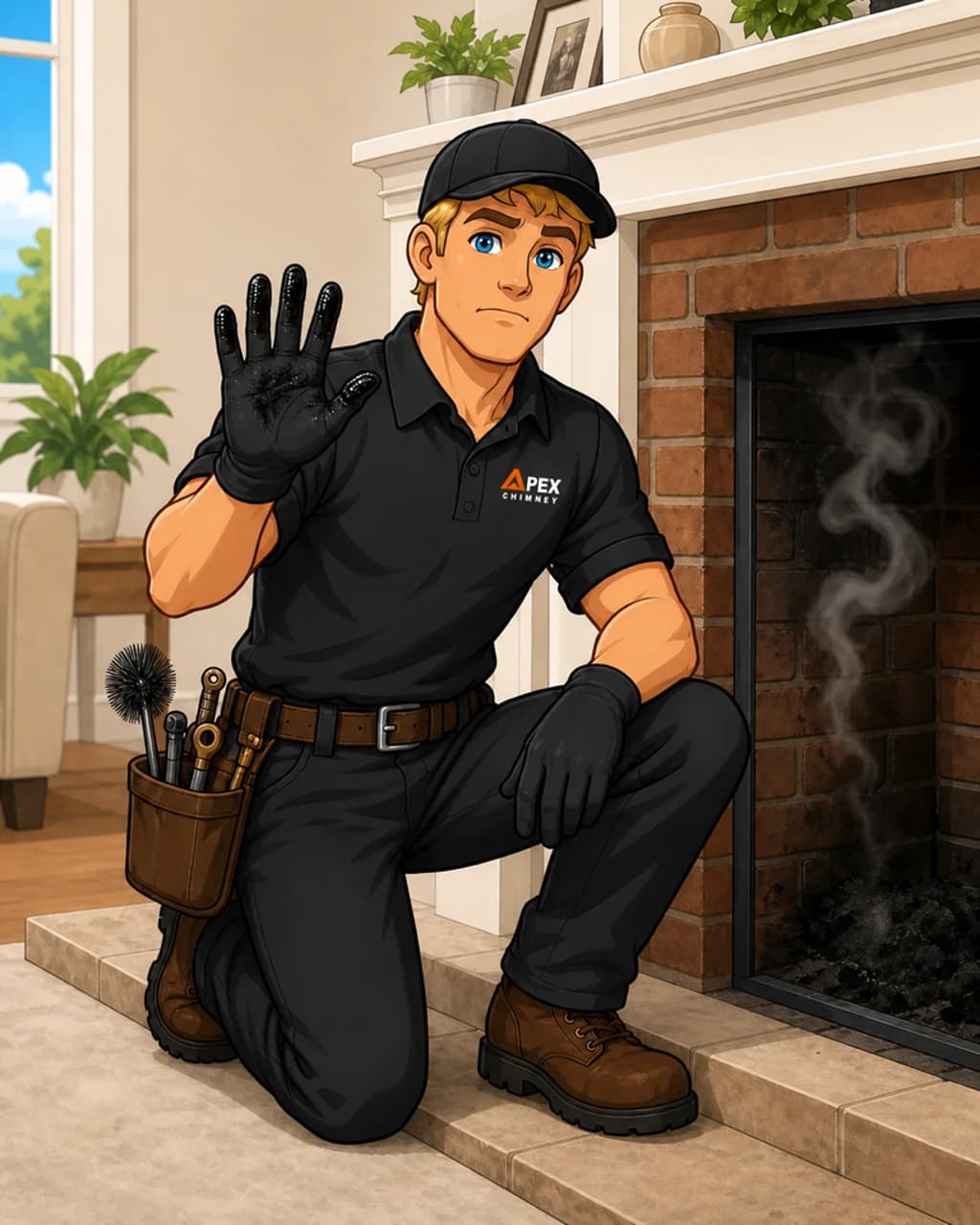
The fireplace opening and surrounding room need protection before soot and brushes are moved through the flue.
Rods and brushes sized to your flue, worked from the firebox and the top as needed, until the walls are back to bare masonry or bare liner.
The area just above the damper collects the heaviest deposits and gets skipped by anyone working fast. It's usually where the real buildup is. If the smoke chamber's parging has broken down and left rough, open masonry, we'll tell you — that surface is why it keeps loading up.
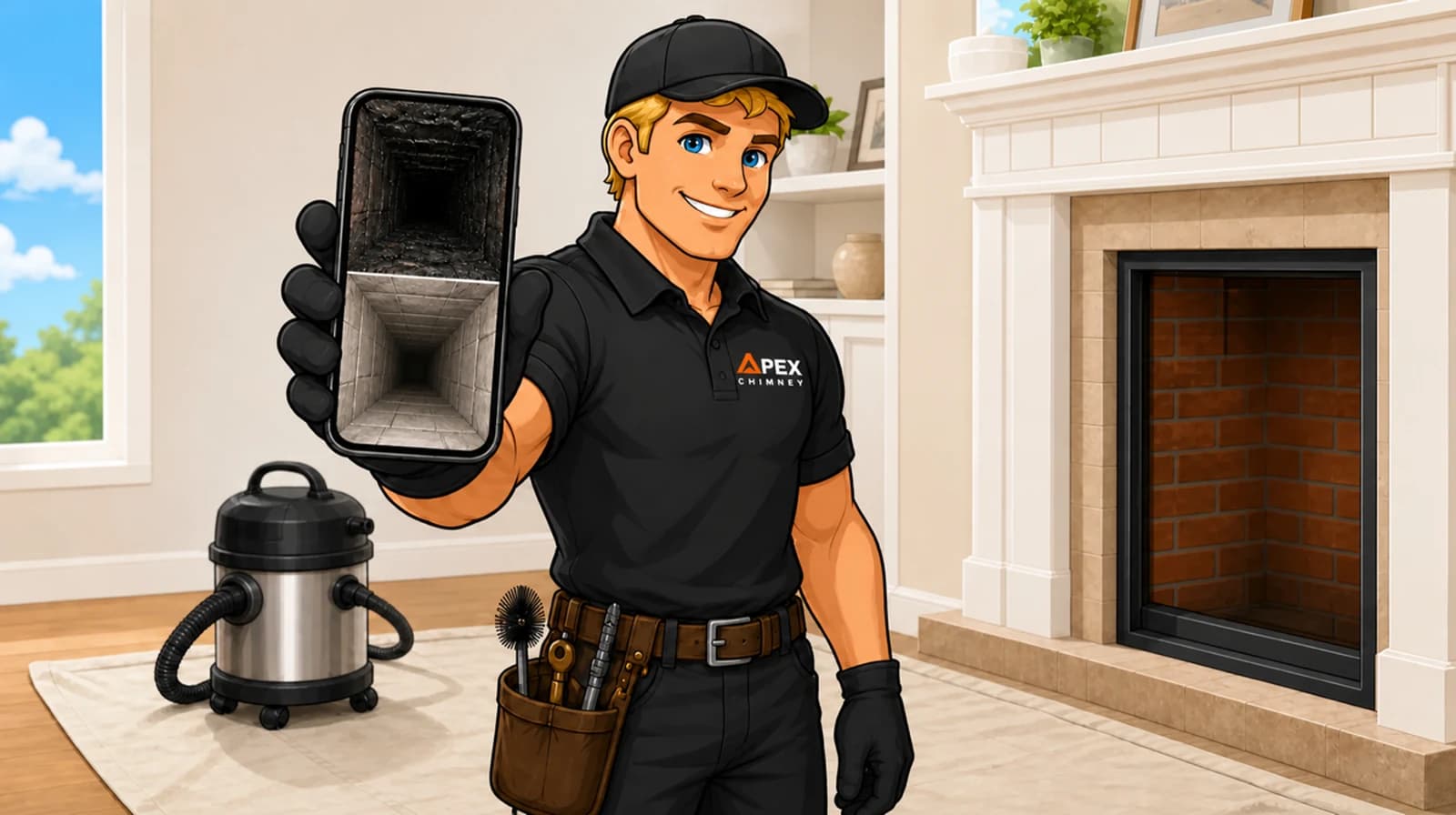
Since the flue is now clean, we can see it. We check the liner, damper, firebox, crown, and cap and tell you what we found.
The inspection identifies visible concerns in the liner, damper, firebox, crown, and cap.
Creosote burns. That's the whole reason this job exists. A flue with enough buildup in it can turn an ordinary fire in your firebox into a fire inside your chimney — and a chimney fire cracks liners and damages masonry even when nobody notices it happening. A blocked flue is the other half of it: whatever can't go up goes back into the room, and that includes carbon monoxide.
Related
Recent work
Our own photographs, from real jobs. Before and after where we have both ends of it.
Brick and hearth cleared down, with the terracotta tile at the front left clean.
View this projectTell us what's going on and we'll call you back to agree on a time. If you'd rather talk it through now, the phone is faster.