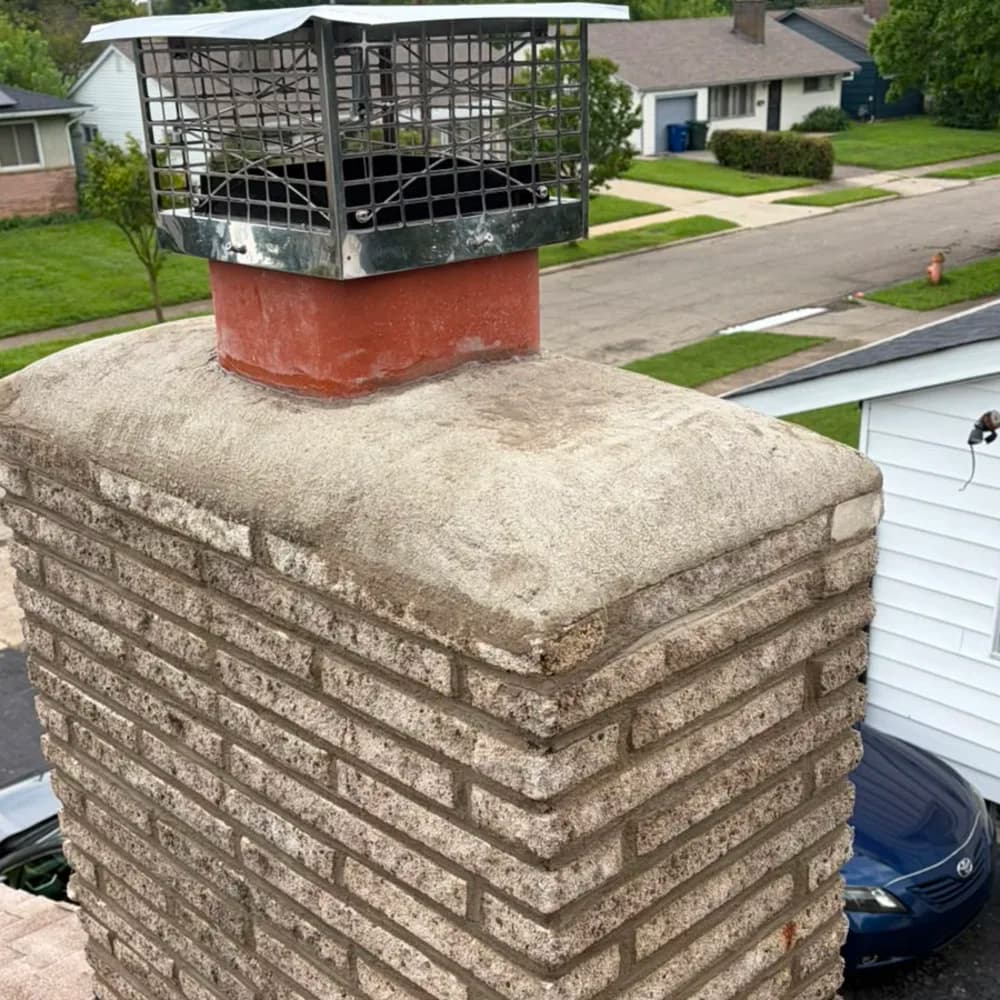
Crown rebuilt and screened cap fitted
The finished chimney has a continuous crown around the flue and a fitted screened cap.
View this projectEXPERT CHIMNEY CARE. HONEST PRICING. DONE RIGHT.
Emergency
The lid on your chimney. Keeps rain, leaves, and animals out.
If your chimney has no cap, you own an open pipe pointed at the sky. The cap keeps weather and wildlife out and its screen keeps embers in. The crown — the concrete slab at the very top — sheds water off the masonry. Two small, unglamorous parts, and both prevent the repairs that cost thousands.

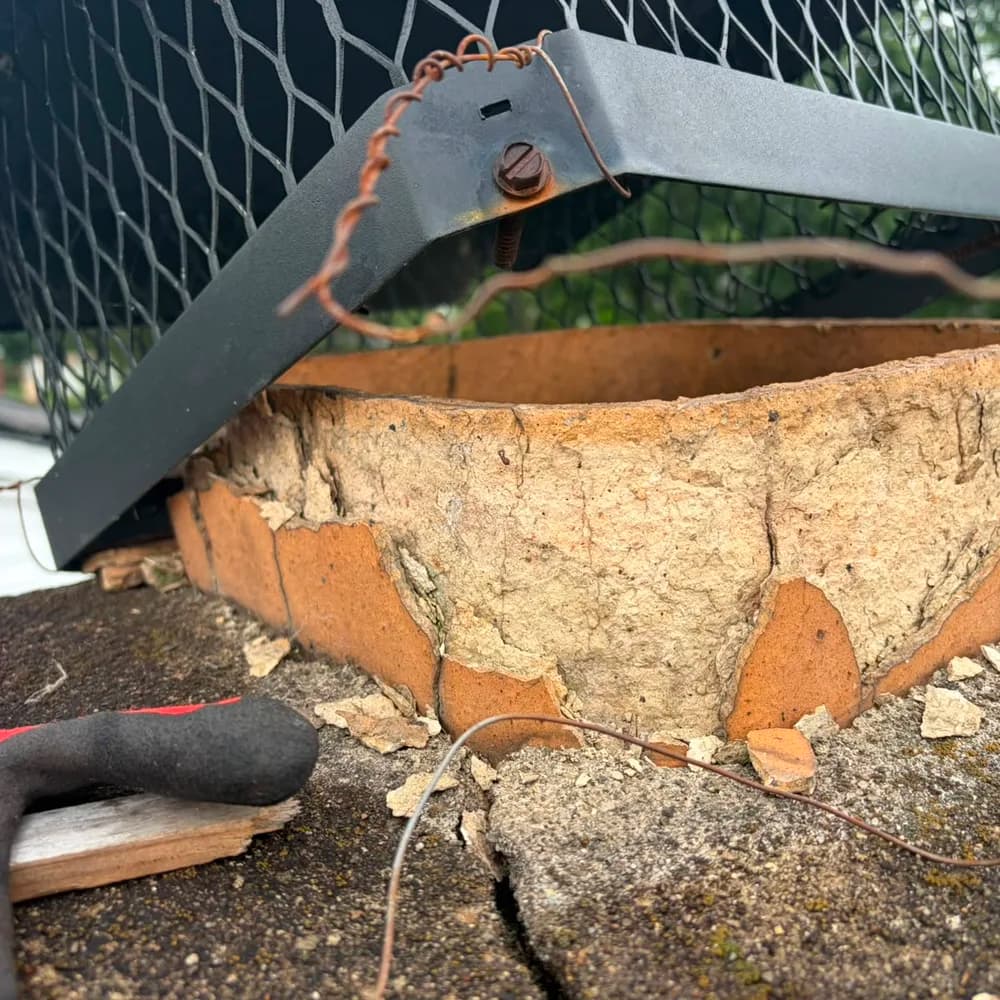
Plenty of chimneys have a cap that's rusted through, undersized, or was never fastened properly. Its condition determines whether it needs securing, repair, or replacement.
Sized to your flue, in stainless or copper, with a spark arrestor screen and an animal guard. A cheap cap that rusts out in four years isn't a saving.
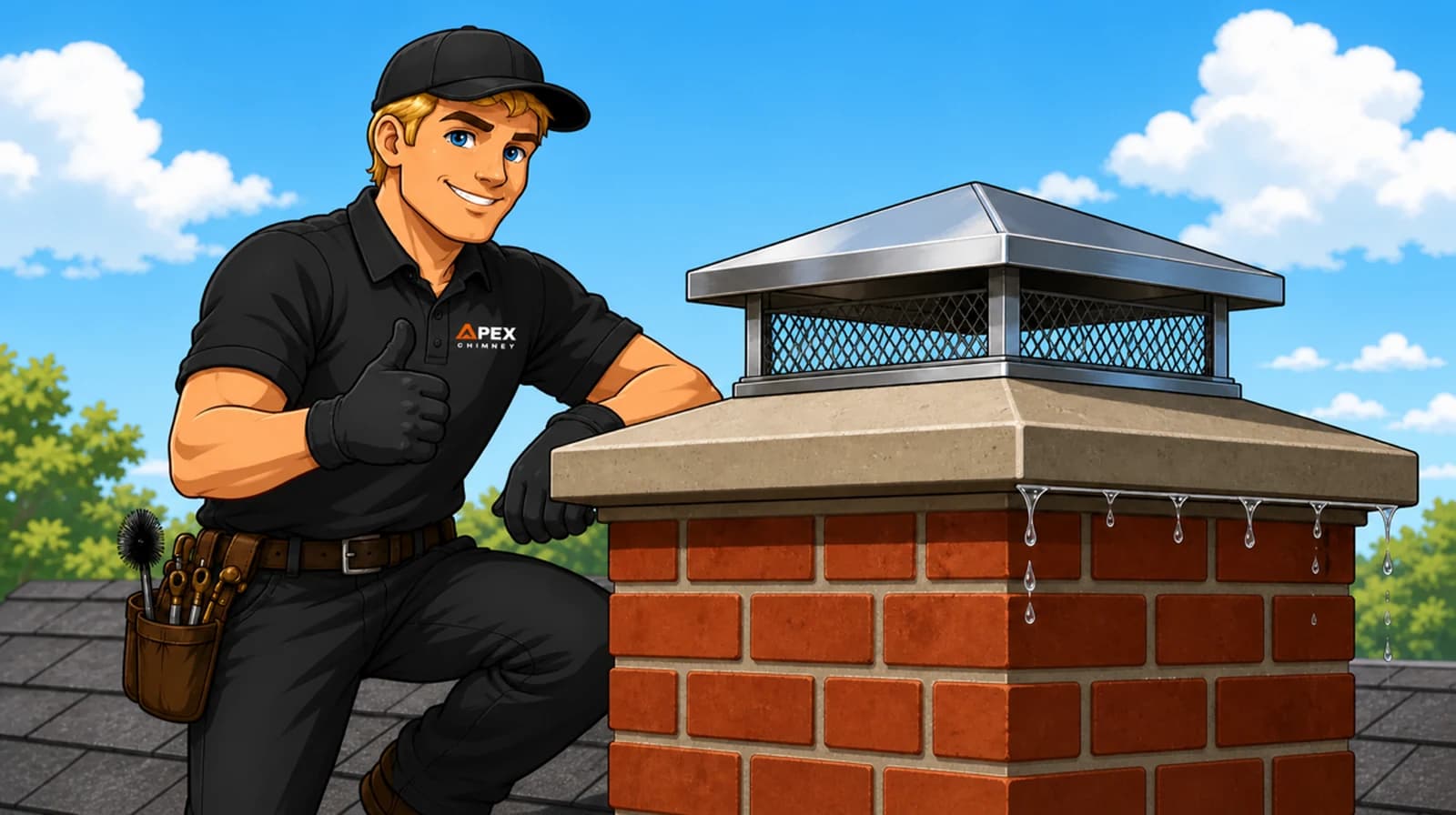
Hairline cracks get sealed with a flexible crown coat. A crown that's spalling or broken up gets rebuilt properly — sloped away from the flue as a crown wash, with an overhang and a drip edge so water leaves the masonry instead of running down it.
On framed chimneys, the metal chase cover is usually the thing that rusted and started the leak. Stainless replacement, properly cross-broken so water runs off.
Chimney swifts nest in flues and are protected under the federal Migratory Bird Treaty Act, so an active nest with eggs or young can't legally be removed. If that's what's up there we'll tell you, keep the flue out of service until they fledge, and cap it afterwards so it doesn't happen again.
Almost every chimney leak we get called about traces back to the top: a missing cap, a cracked crown, or a rusted chase cover. Water is patient and it only needs one way in. Getting the lid right is the single cheapest thing you can do to avoid a masonry bill later.
Related
Creosote, soot, and blockages cleared out of your flue.
A documented look at the whole system, firebox to crown.
Tuckpointing, brick replacement, and rebuilds — above and below the roofline.
A cracked or missing flue liner is a safety problem, not maintenance.
Recent work
Our own photographs, from real jobs. Before and after where we have both ends of it.
The finished chimney has a continuous crown around the flue and a fitted screened cap.
View this projectThe crown was rebuilt around two metal flues, each finished with a metal cap.
View this project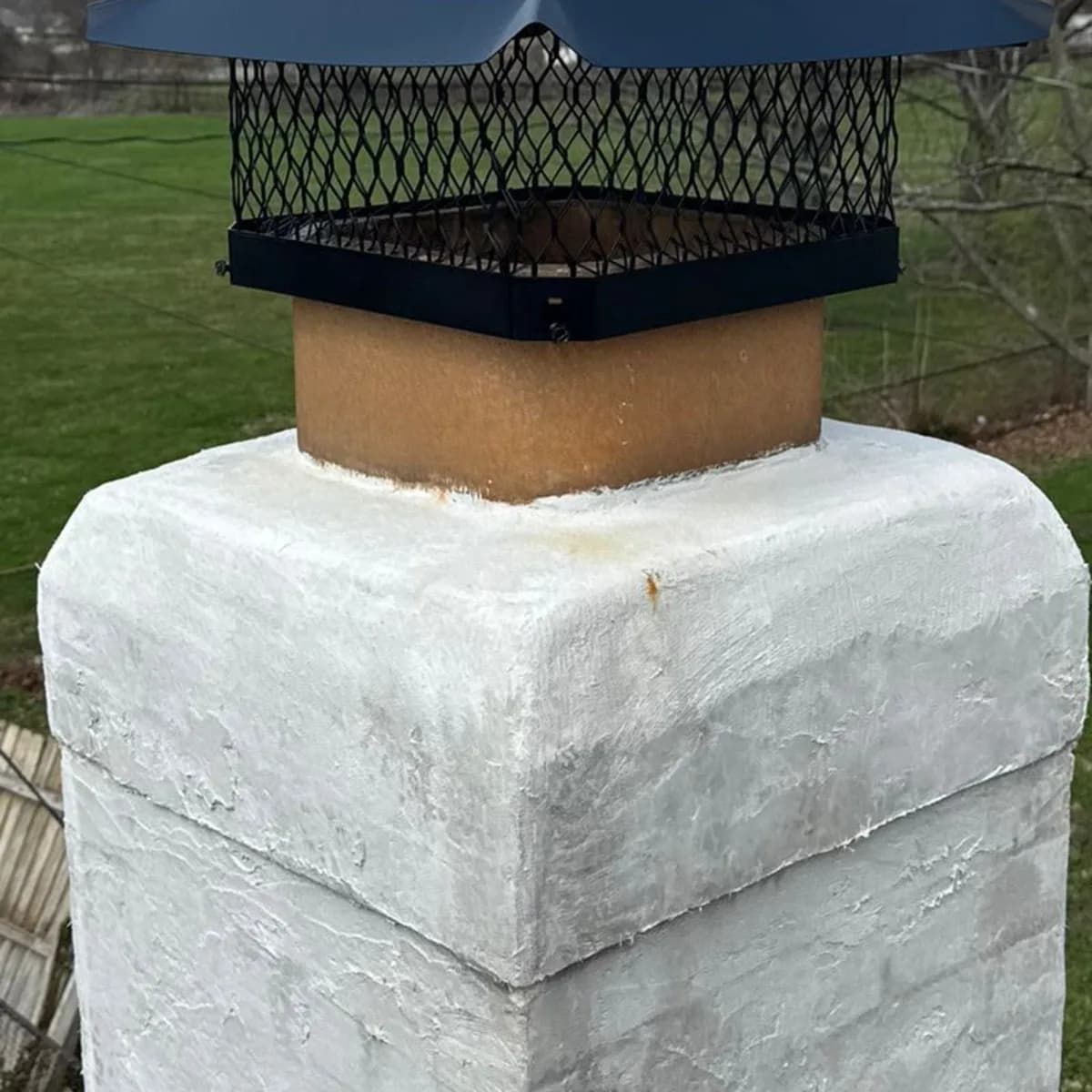
A screened metal cap now covers the flue and sheds rain clear of the chimney top.
View this projectTell us what's going on and we'll call you back to agree on a time. If you'd rather talk it through now, the phone is faster.