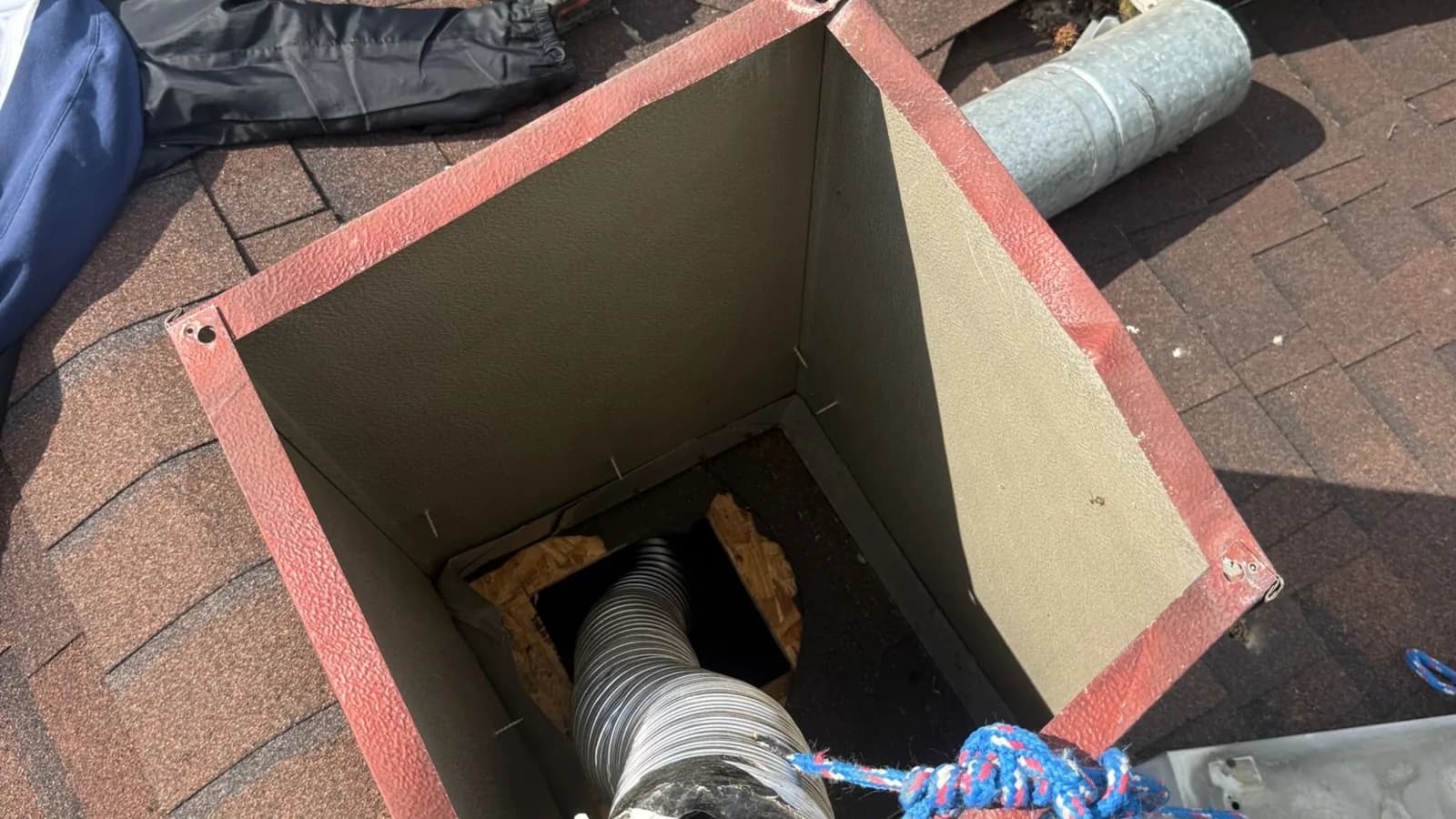
Stainless liner run down the chase
The chase opened at the roof and a single length of stainless flex liner fed down it.
View this projectEXPERT CHIMNEY CARE. HONEST PRICING. DONE RIGHT.
Emergency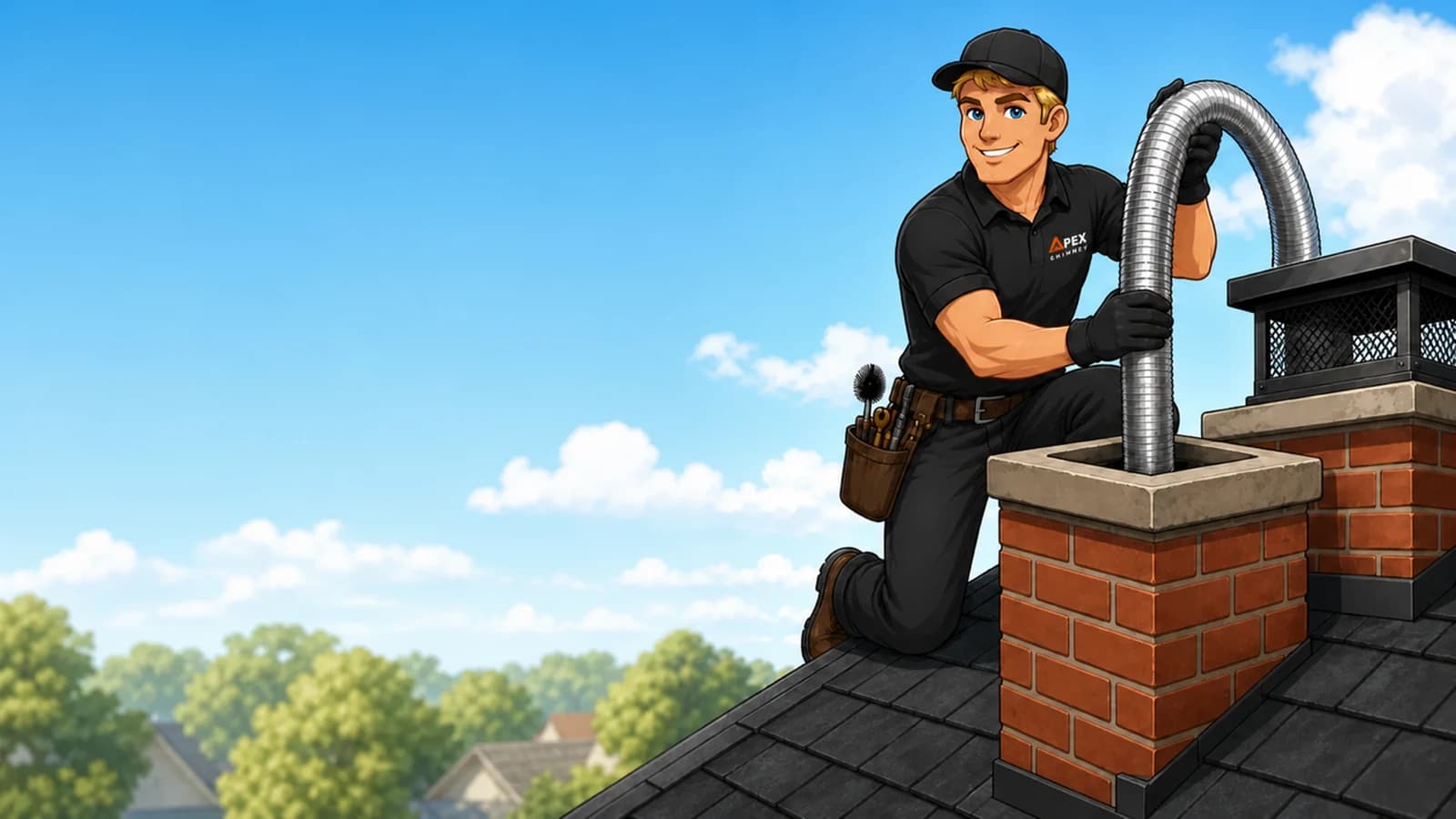
A cracked or missing flue liner is a safety problem, not maintenance.
The liner is the surface the fire touches. Its job is to contain heat and combustion gases so they go out the top instead of into the wall cavity beside it. Older chimneys use clay tile, which cracks with age and heat; some very old chimneys were built with no liner at all. This is the one item on the list where the right advice is sometimes to stop using the appliance today.
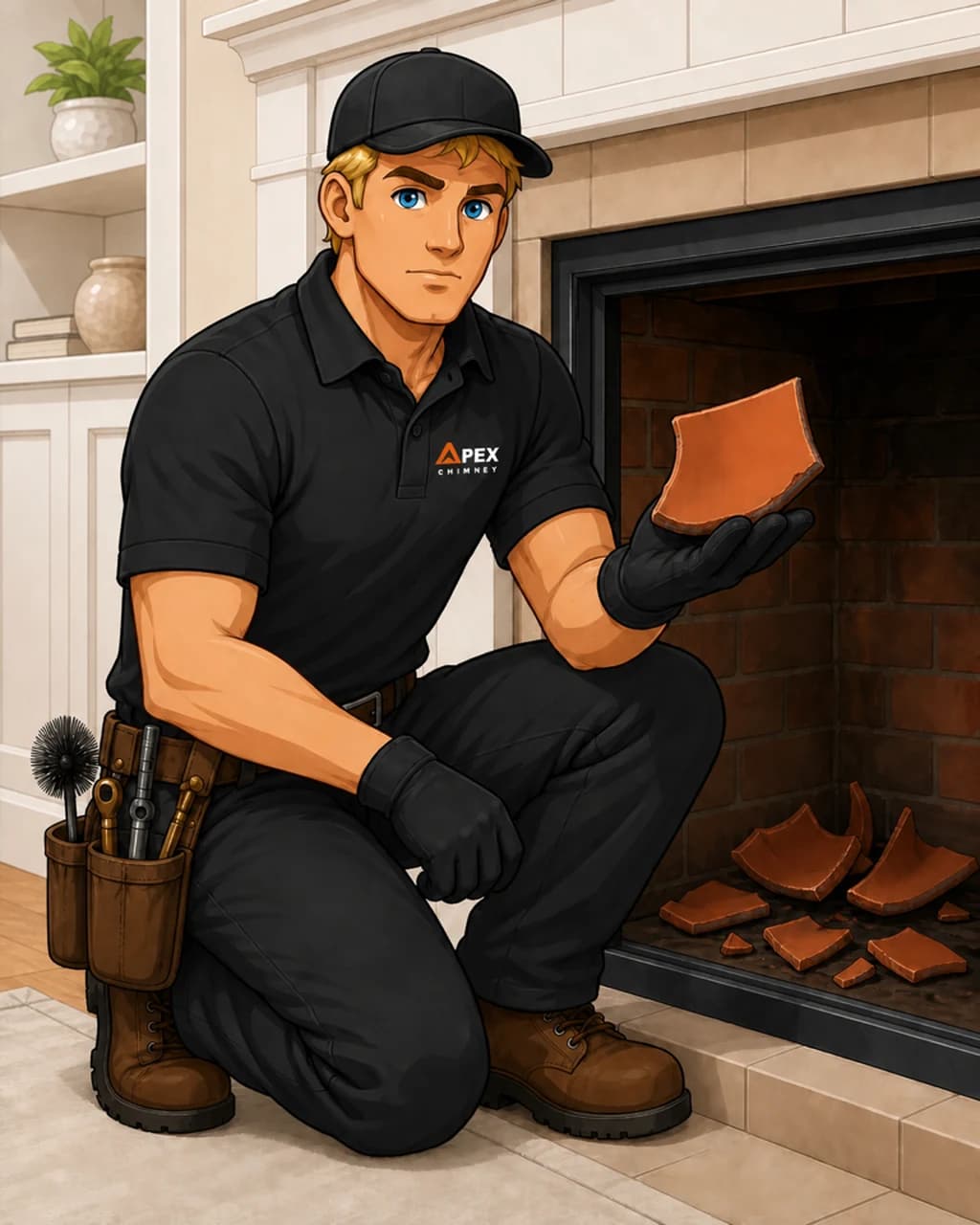
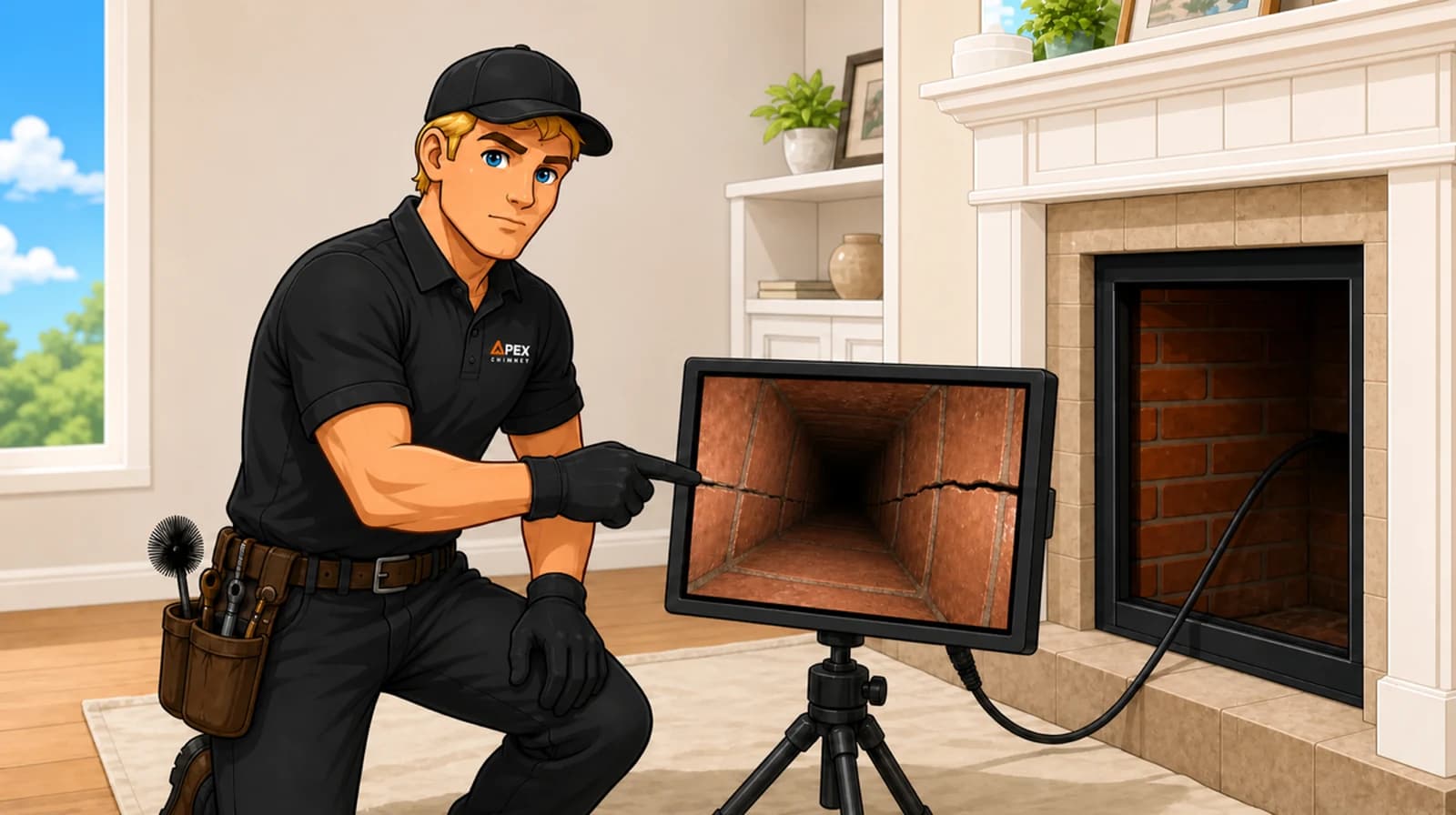
A video scan is the only honest way to assess a liner. You'll see the footage — cracks, gaps, and missing sections are unmistakable once they're on screen.
An oversized flue drafts badly and lets exhaust cool and condense; an undersized one can't vent. The liner has to match what it's serving, not just fit down the hole.
Stainless steel liner, insulated along its length, connected properly at the appliance and terminated correctly at the top with a new cap.
A liner that's installed but doesn't draw isn't finished. We verify it works with the appliance running.
This is the failure that hurts people. A cracked liner lets heat reach framing that was never meant to get hot, and it lets combustion gases — including carbon monoxide — into the house instead of out the top. If an inspection flags your liner, treat it as the thing you fix first.
Recent work
Our own photographs, from real jobs. Before and after where we have both ends of it.
The chase opened at the roof and a single length of stainless flex liner fed down it.
View this project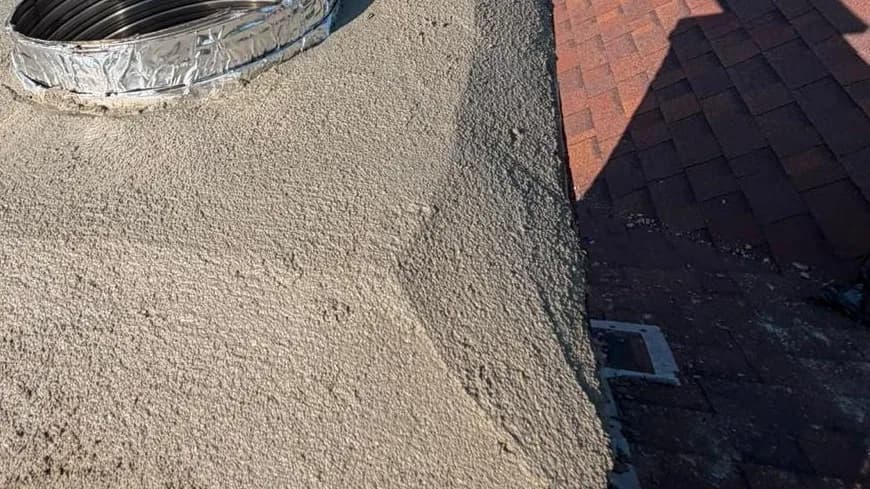
Fresh crown carried out over the brick, with the stainless top plate collared and sealed where the liner comes through.
View this projectTell us what's going on and we'll call you back to agree on a time. If you'd rather talk it through now, the phone is faster.