Recent work
What the work looks like
Our own photographs, from real jobs. Before and after where we have both ends of it — and nothing here that isn't ours.
- Crowns & caps6
- Masonry & tuckpointing
- Liners & relining2
- Leaks & flashing3
- Fireplace & firebox3
- Sweeping1


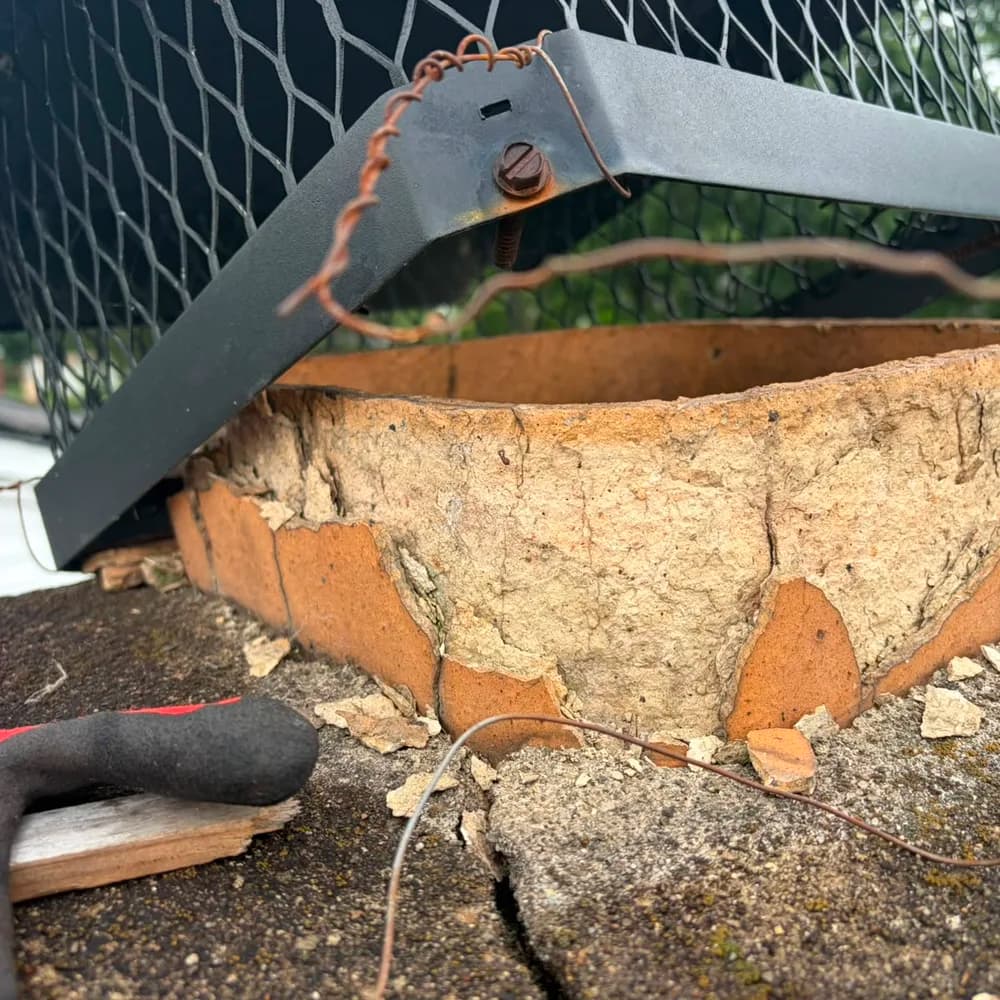
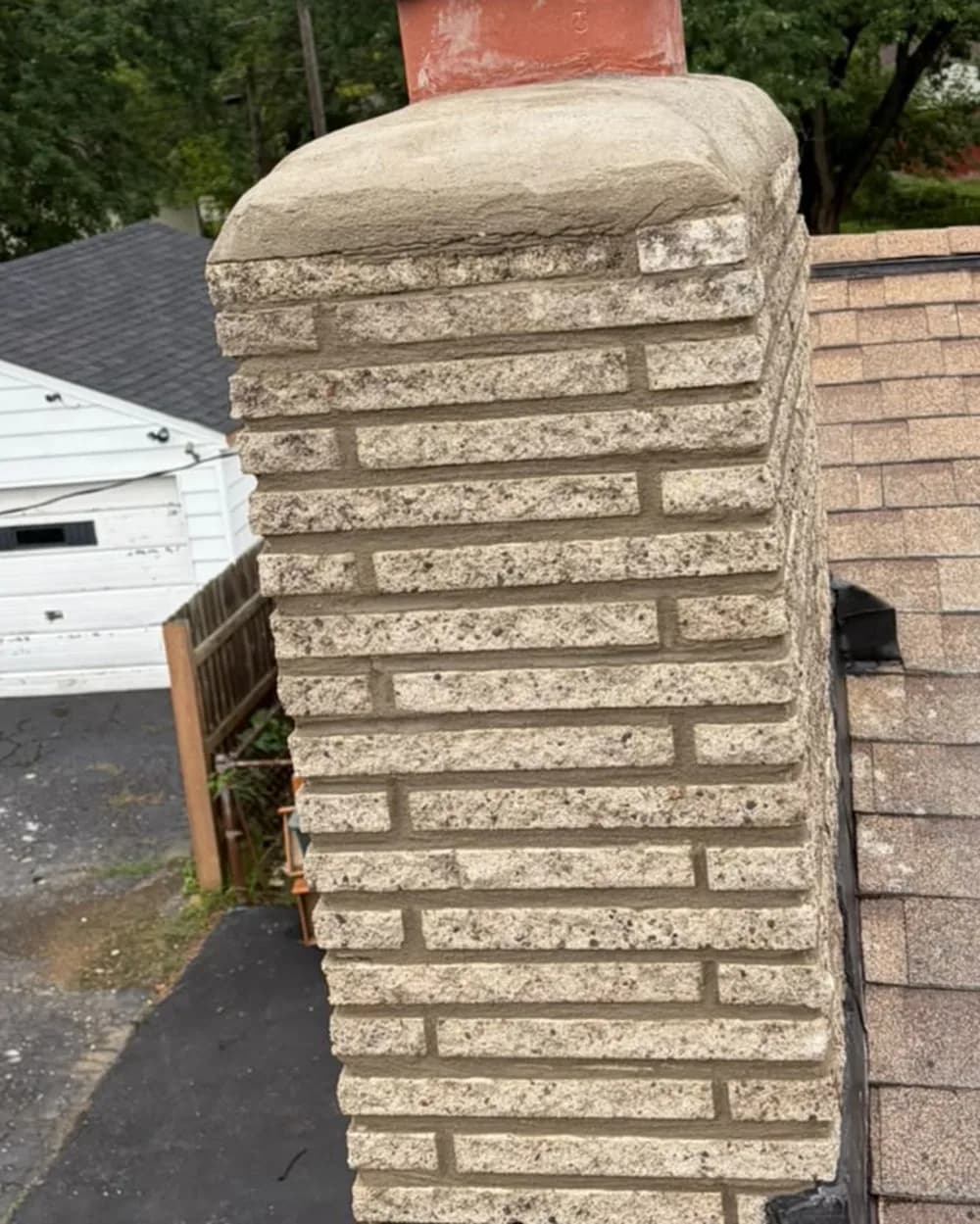
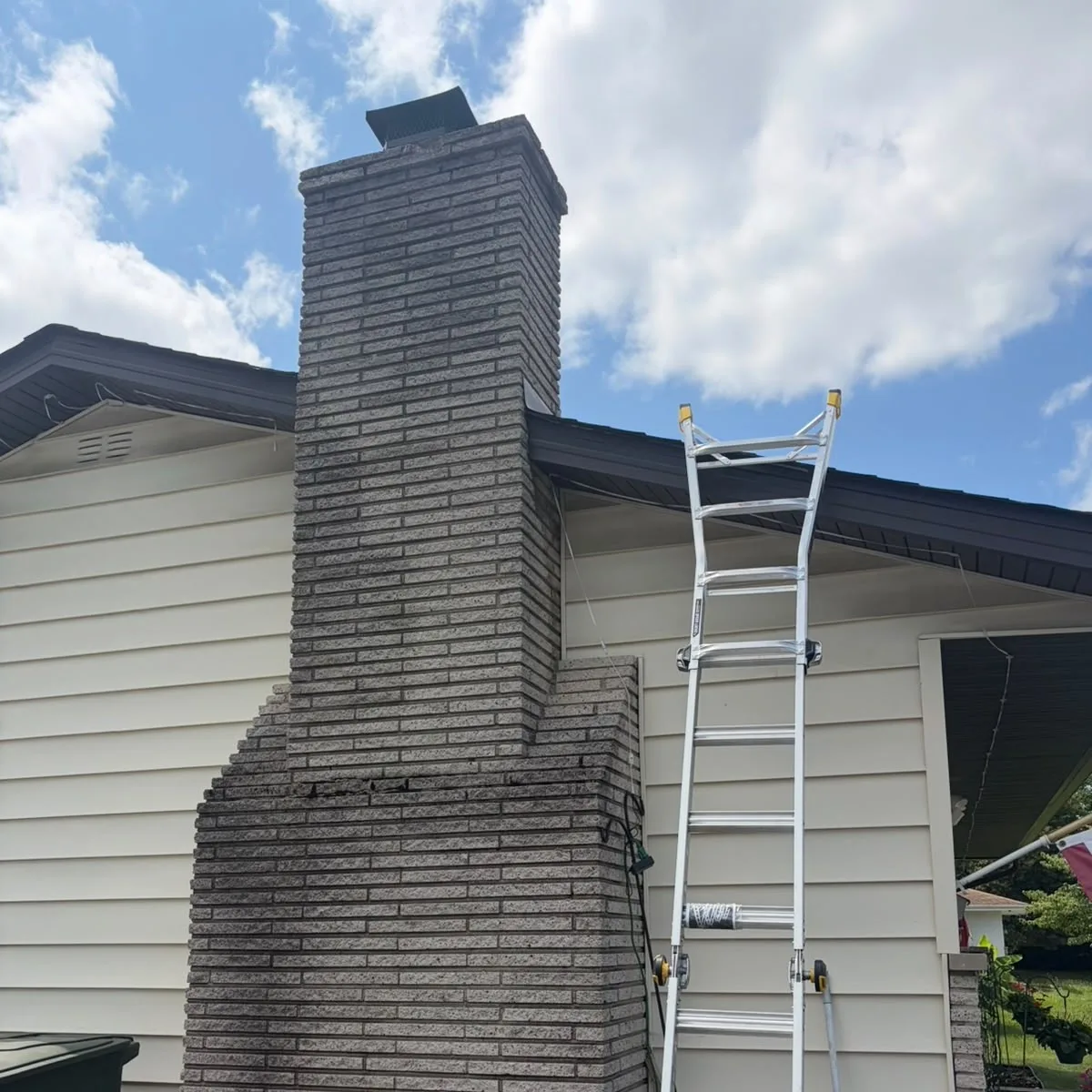
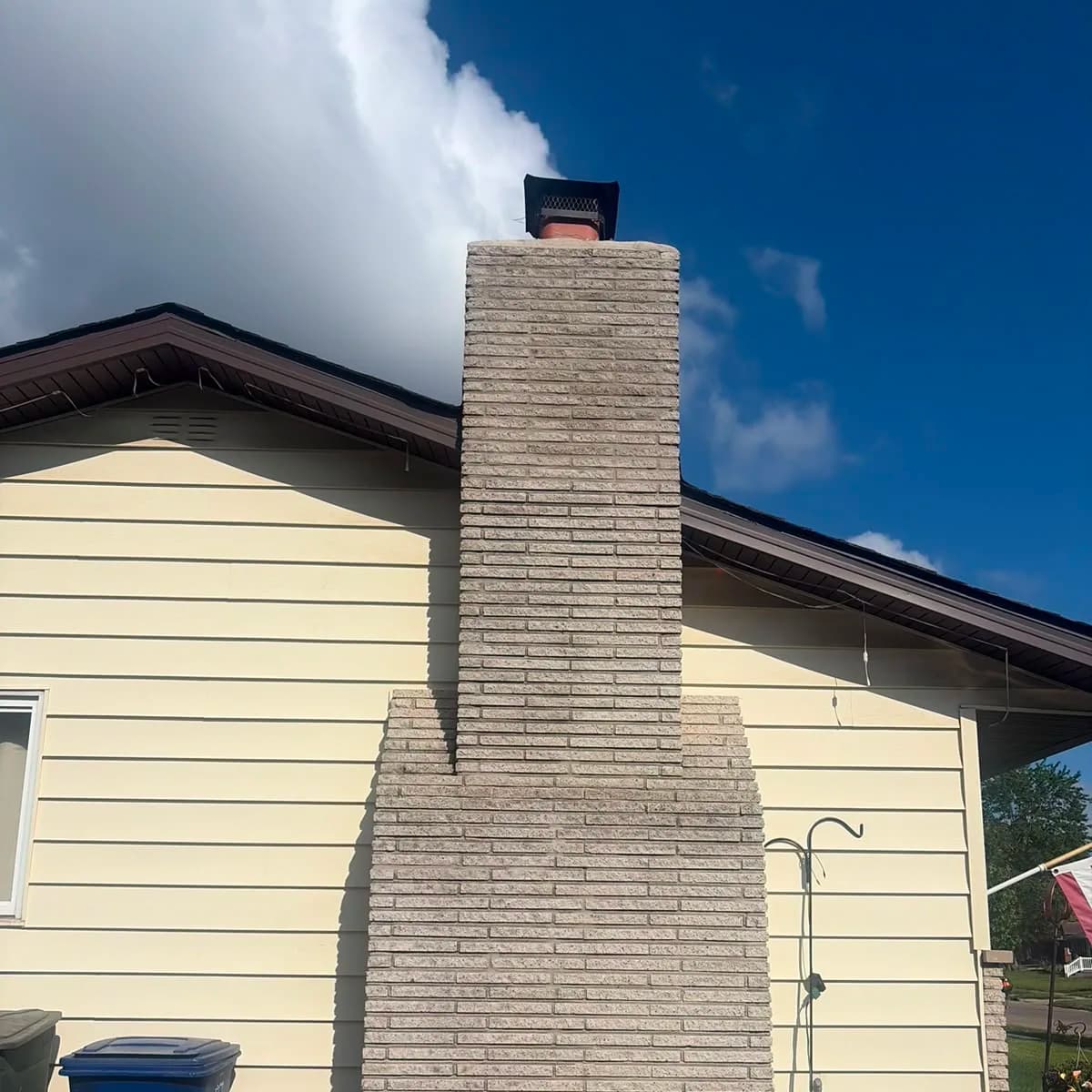
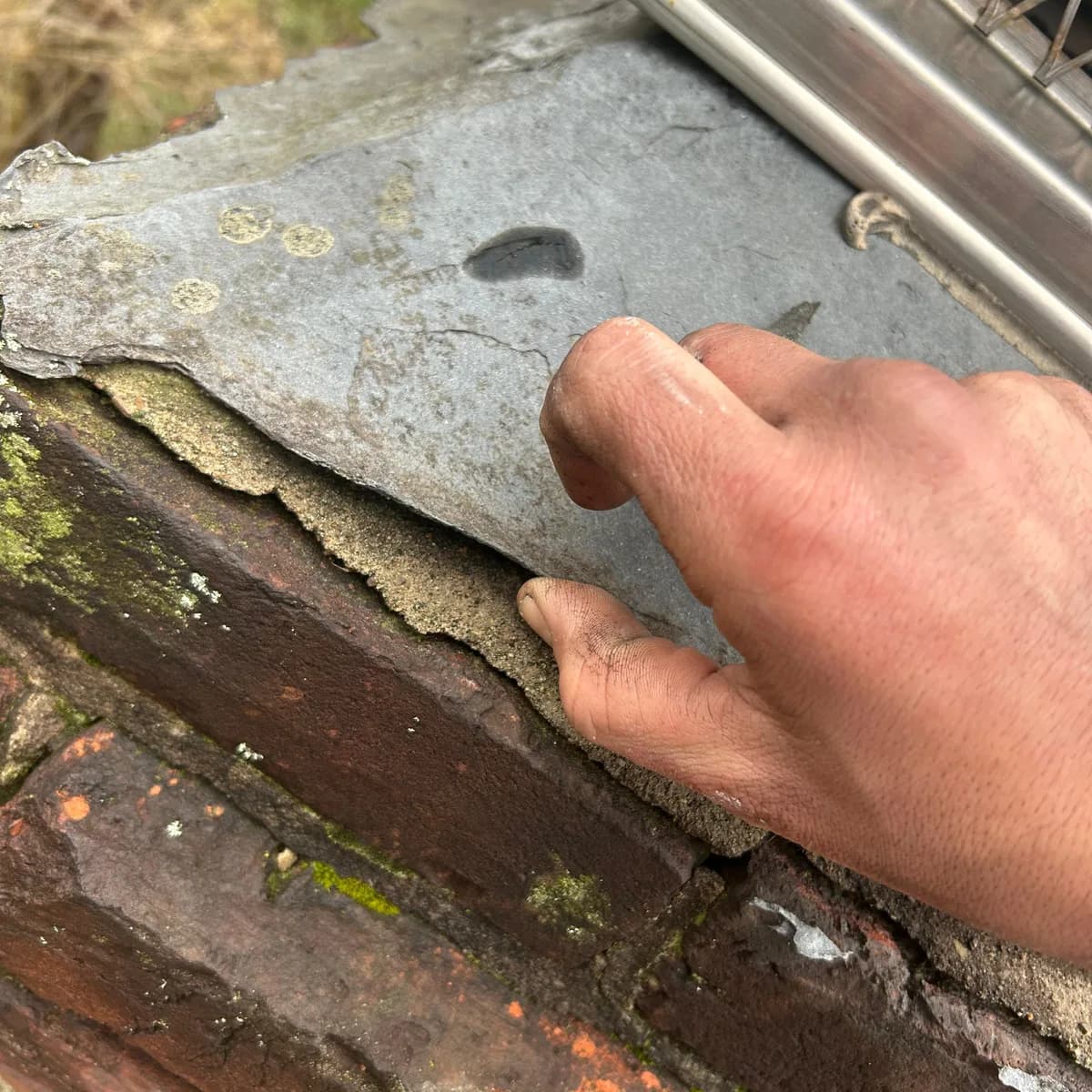
Cracked crown, and the same crown after
Problem: The crown had broken up where it meets the flue tile, so rain sat in the cracks instead of running off the edge.
Fix: The crown surface is unbroken again, sloped away from the tile and carried out over the brick.

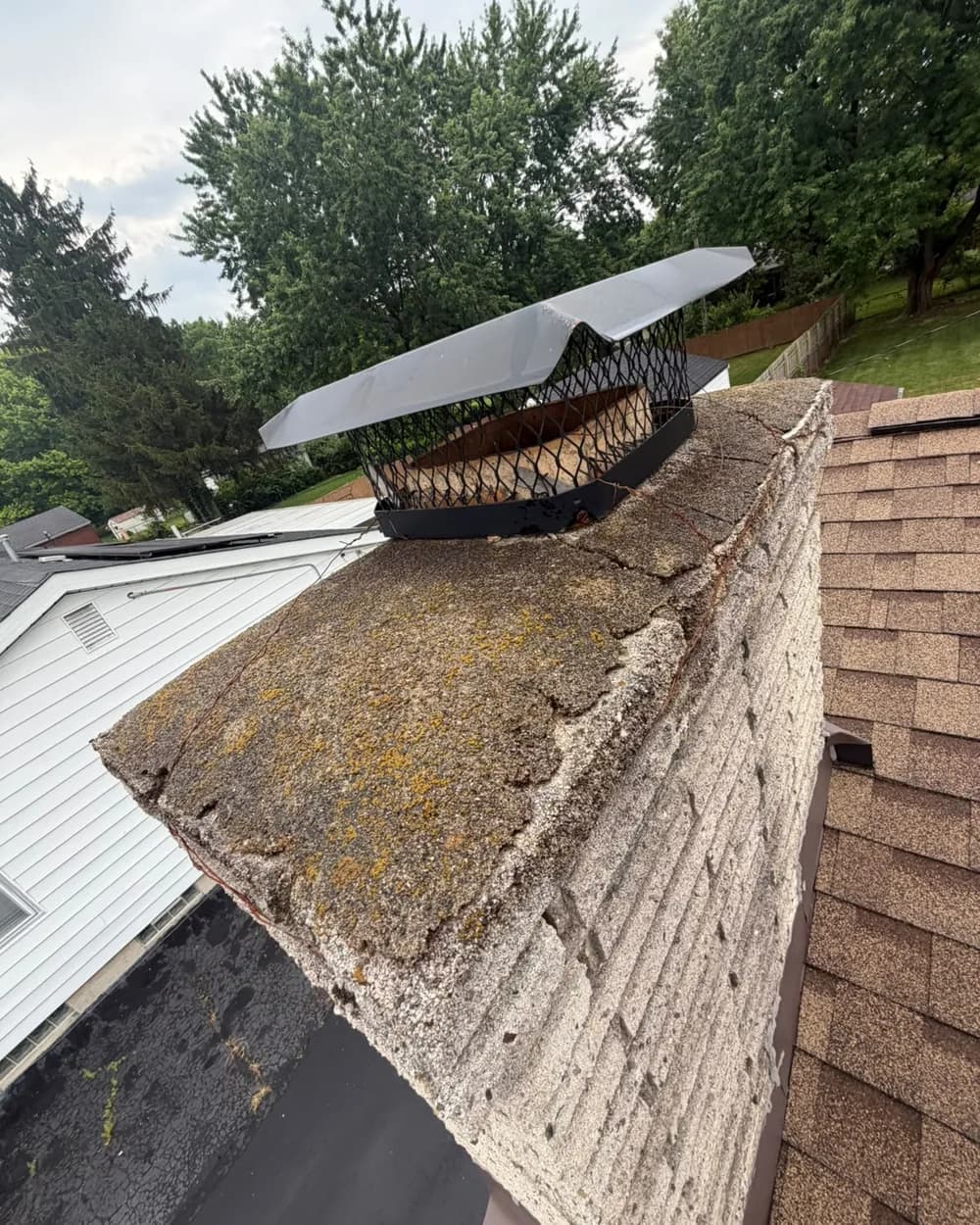
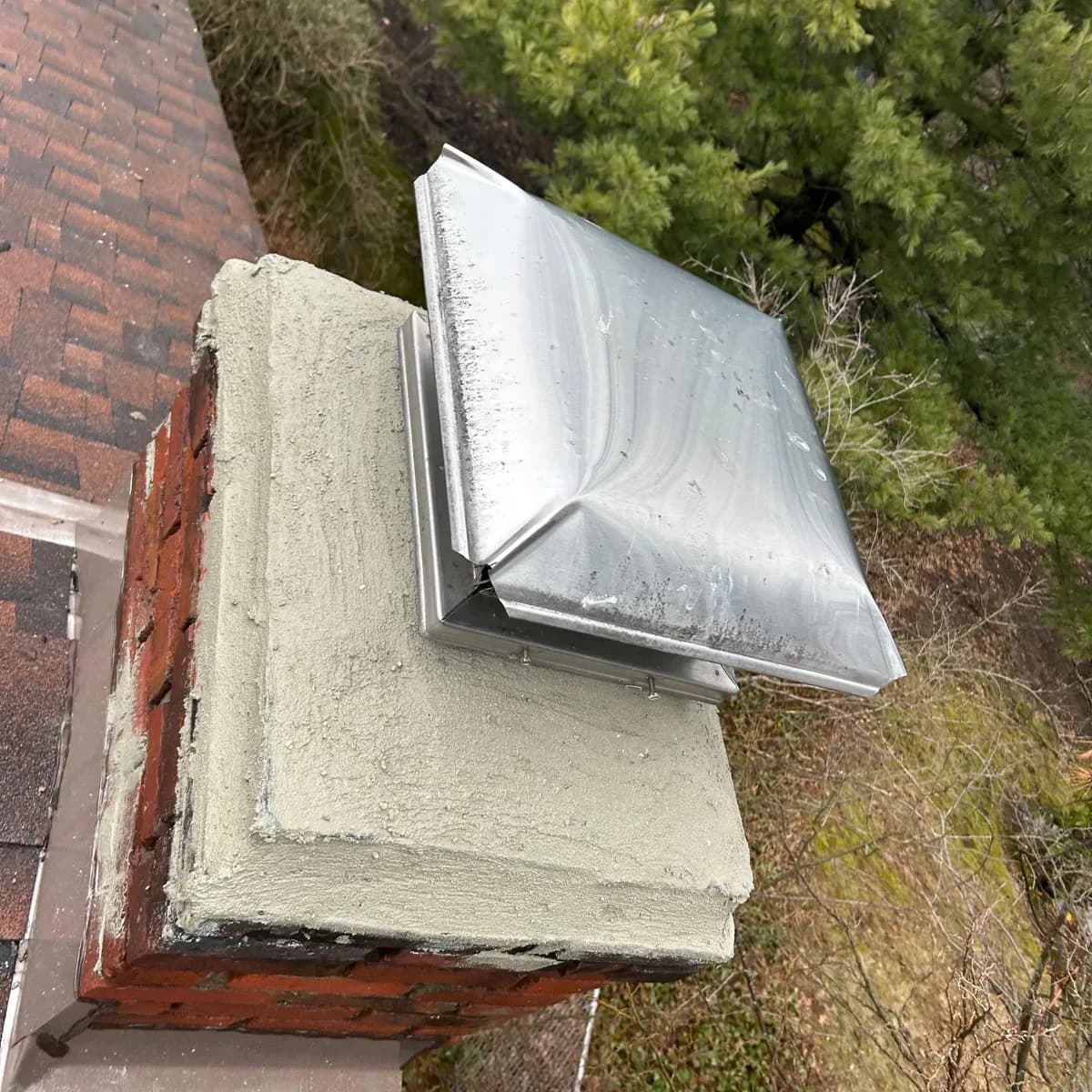
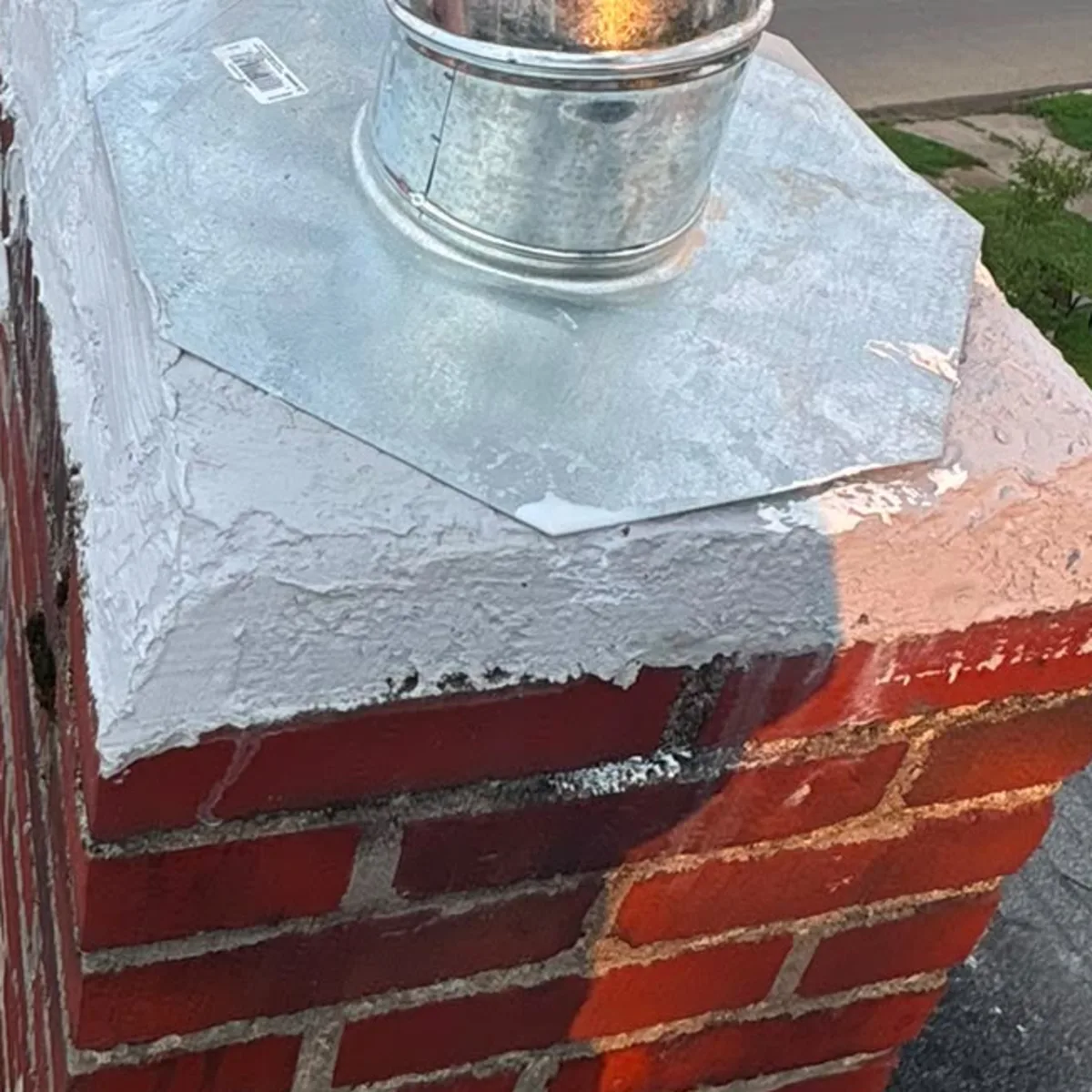
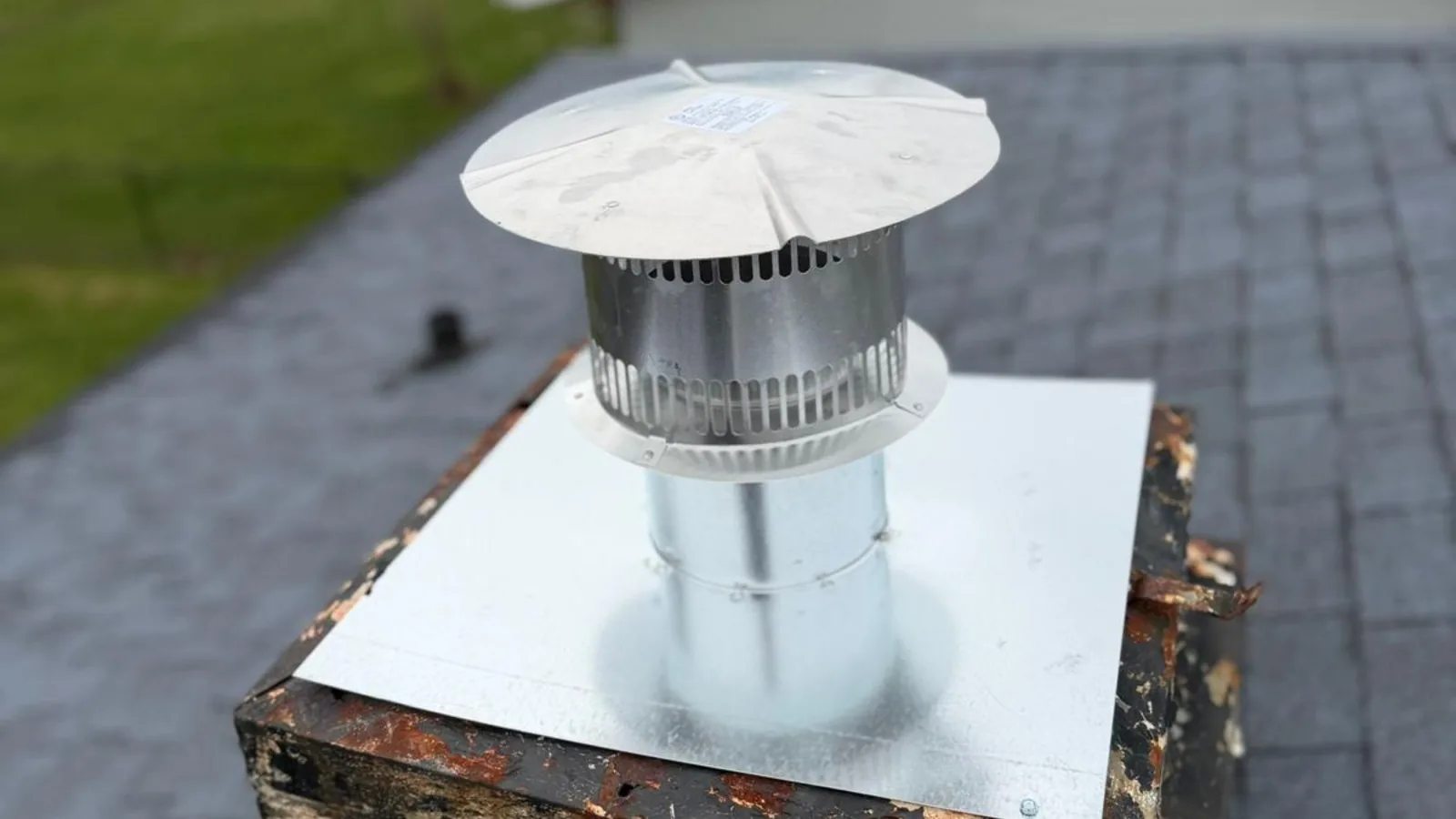
New chase cover and cap
Problem: The old chase top had rusted. Once that happens, water sits on the chase instead of running off it.
Fix: New cover fitted over the chase and the flue capped — the rust it replaced is still showing underneath.

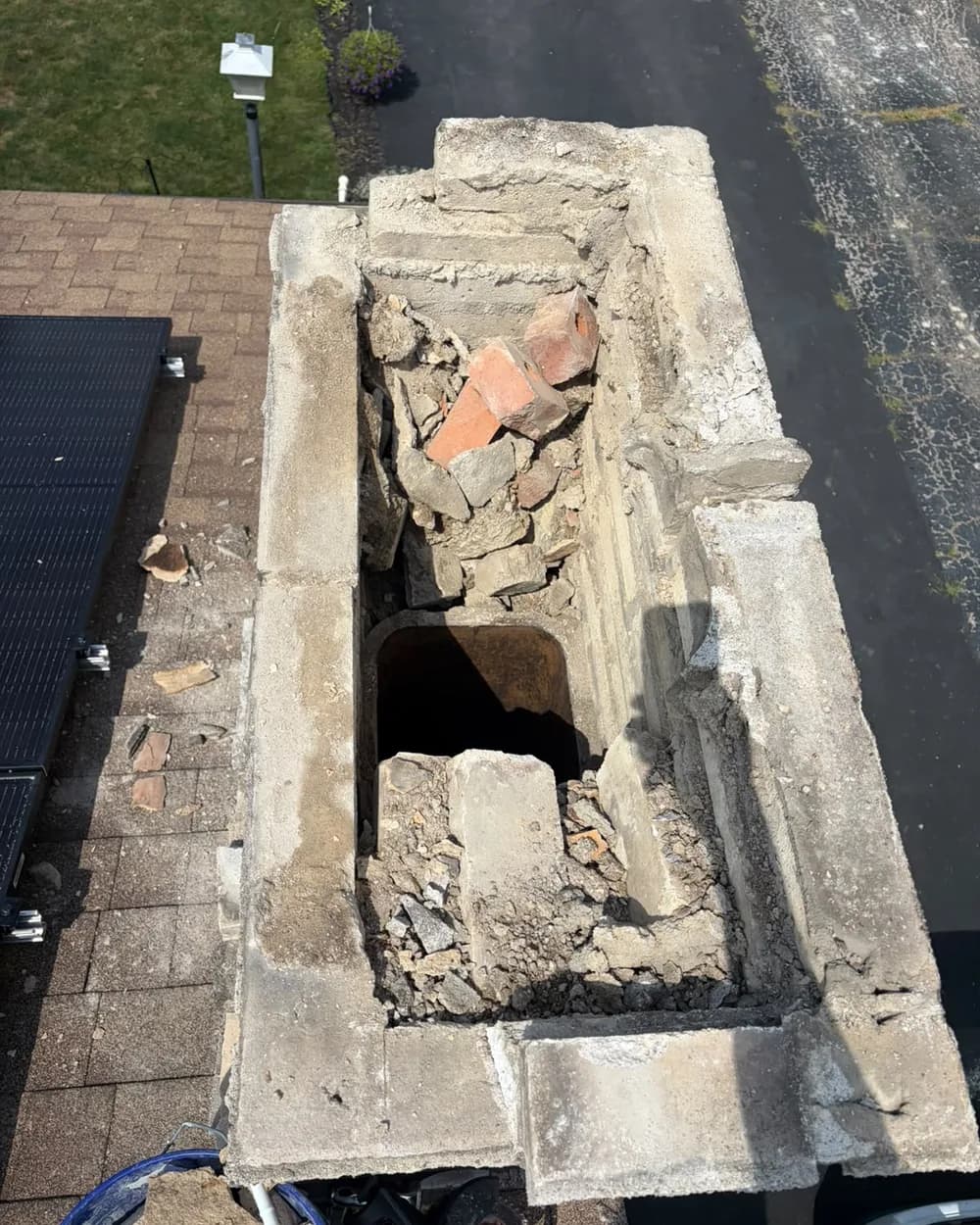
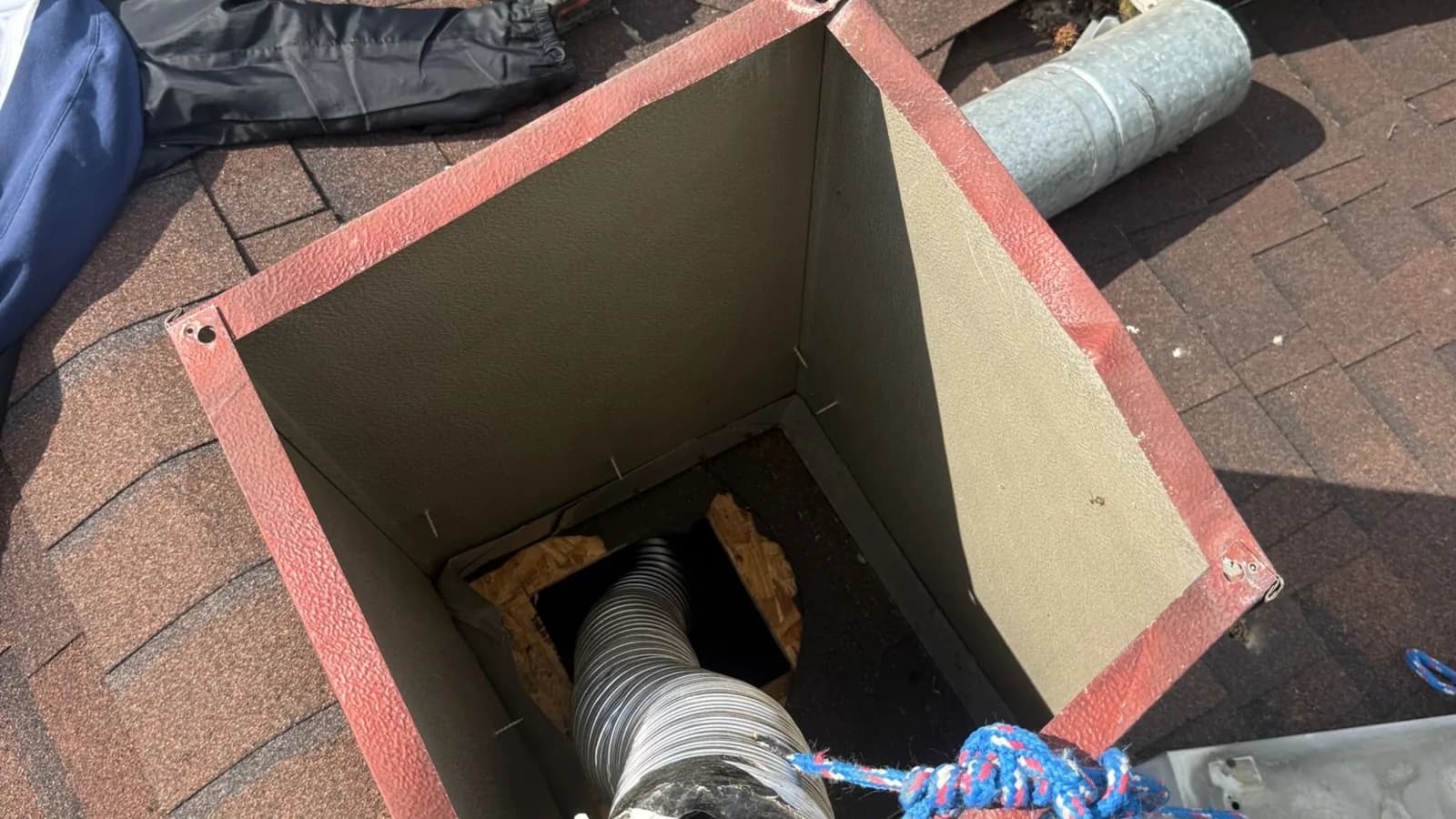
Stainless liner run down the chase
Problem: A flue that needs relining has to be done in one continuous run, top to bottom.
Fix: The chase opened at the roof and a single length of stainless flex liner fed down it.


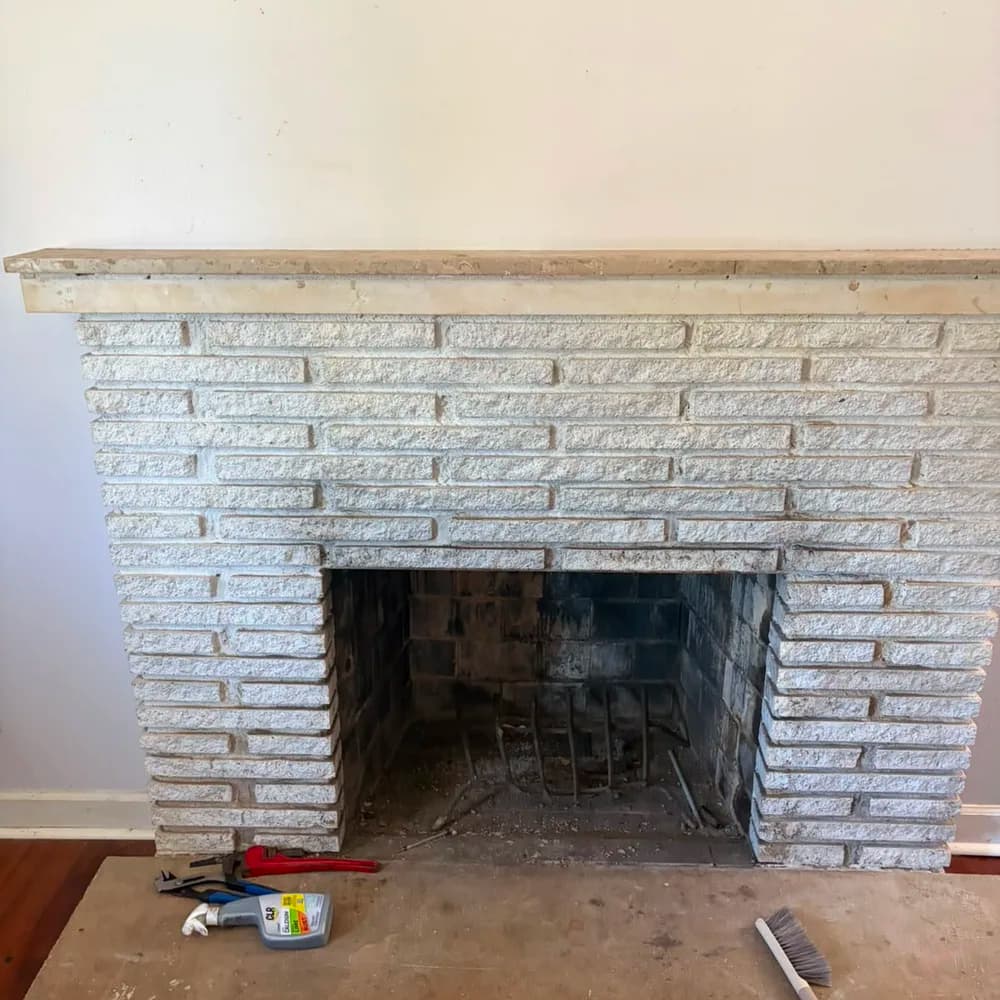
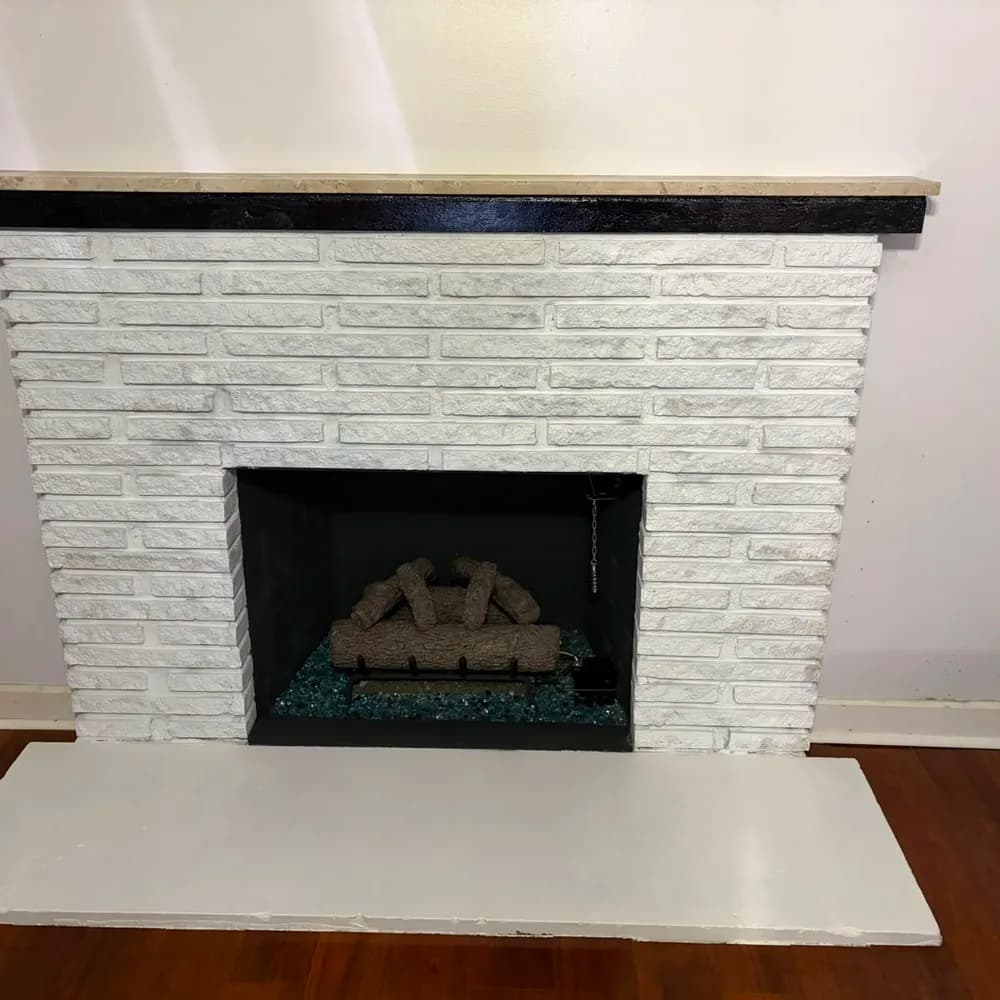
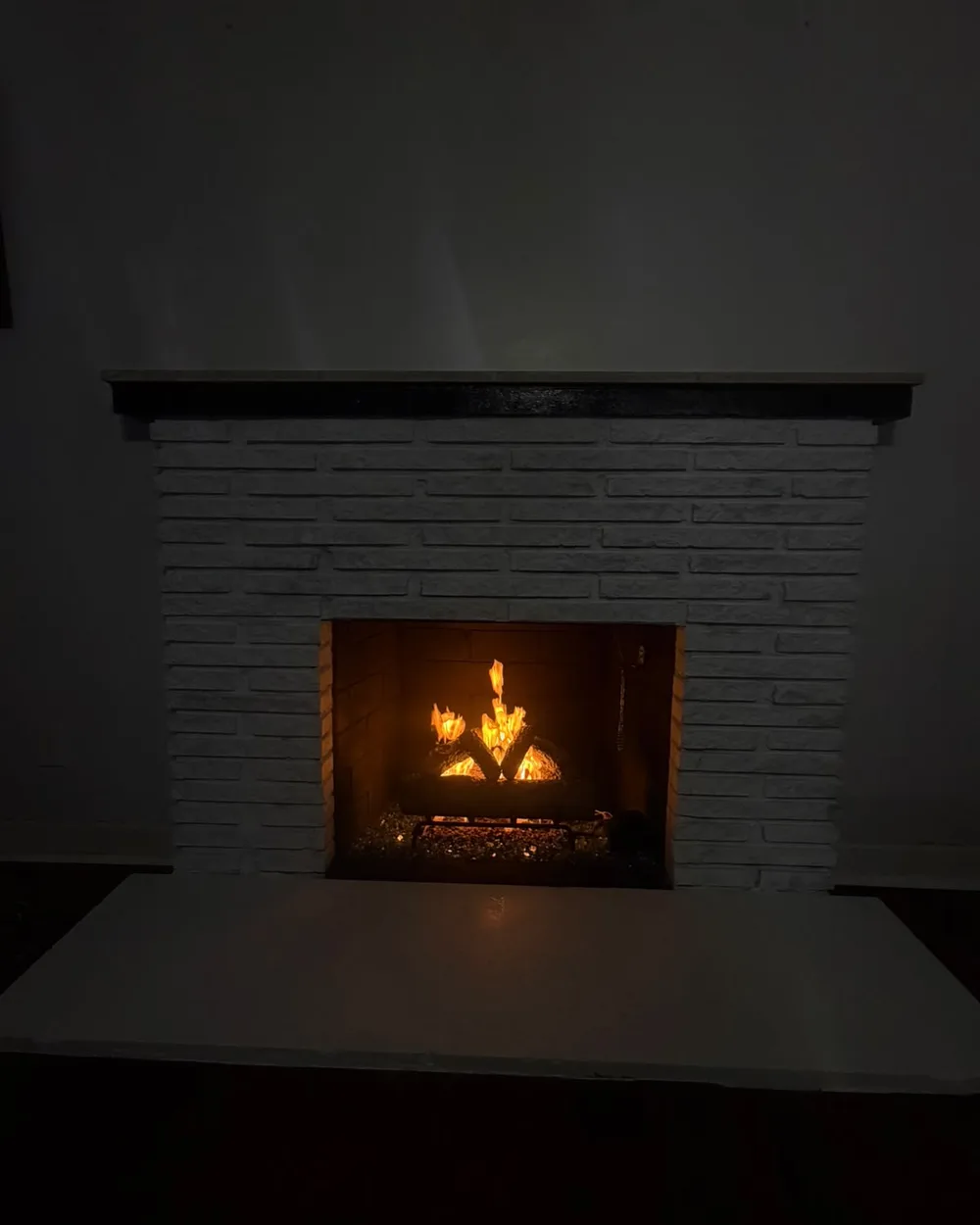
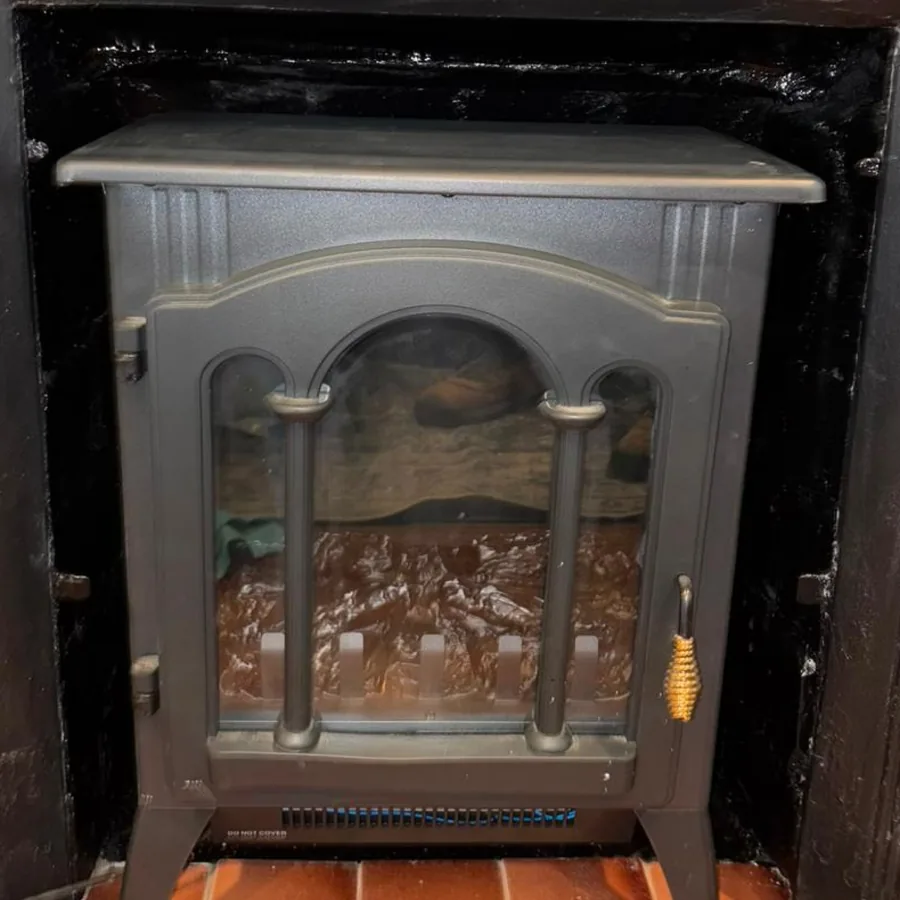
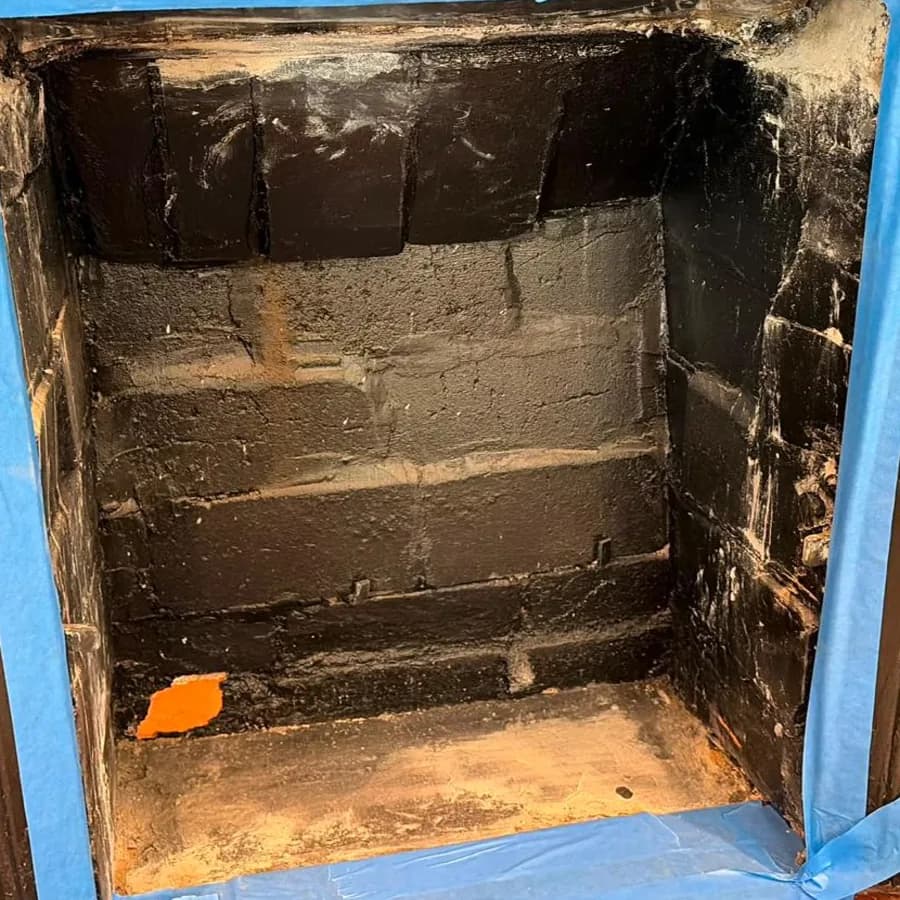
Firebox stripped back, and the same opening after
Problem: The firebox was masked off at the surround before any work started, so the room stayed clean while the brick was worked on.
Fix: The same opening finished, with a stove set in it and the hearth tile clear.

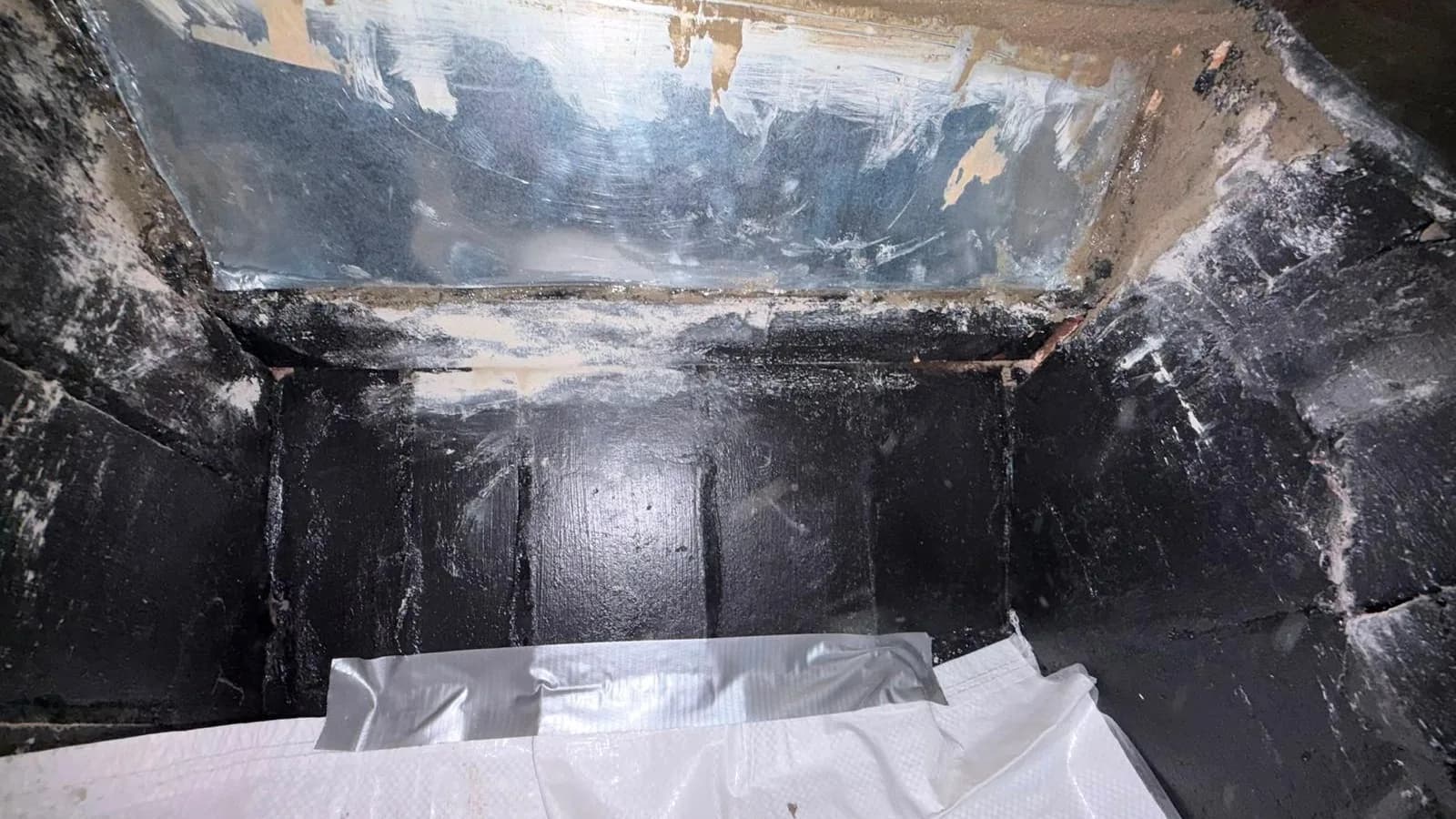
Smoke chamber parged smooth
Problem: A corbelled smoke chamber leaves ledges and gaps that catch smoke on the way up the flue.
Fix: The sloping face parged flat and smooth, with the floor sheeted over while the work was done.

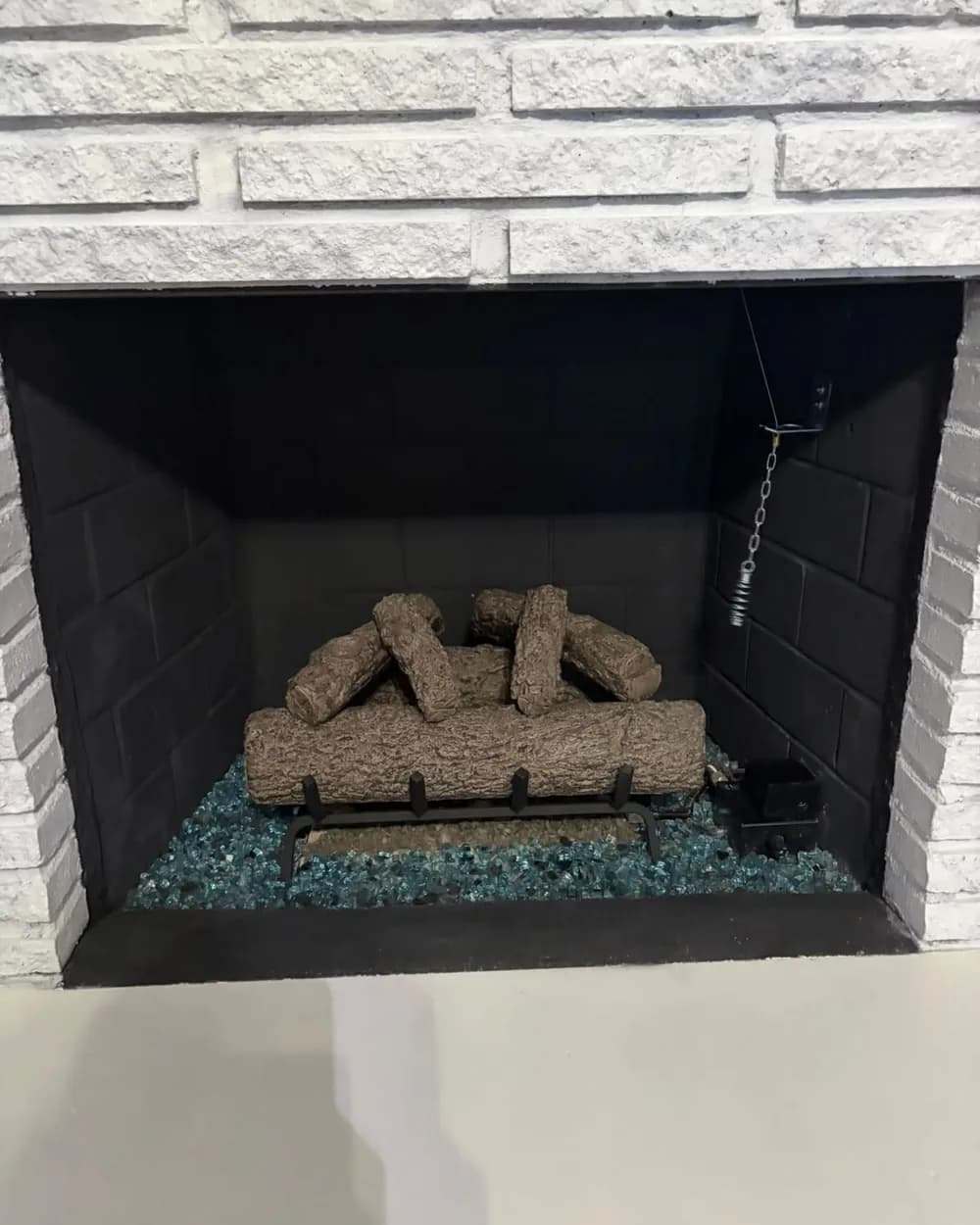
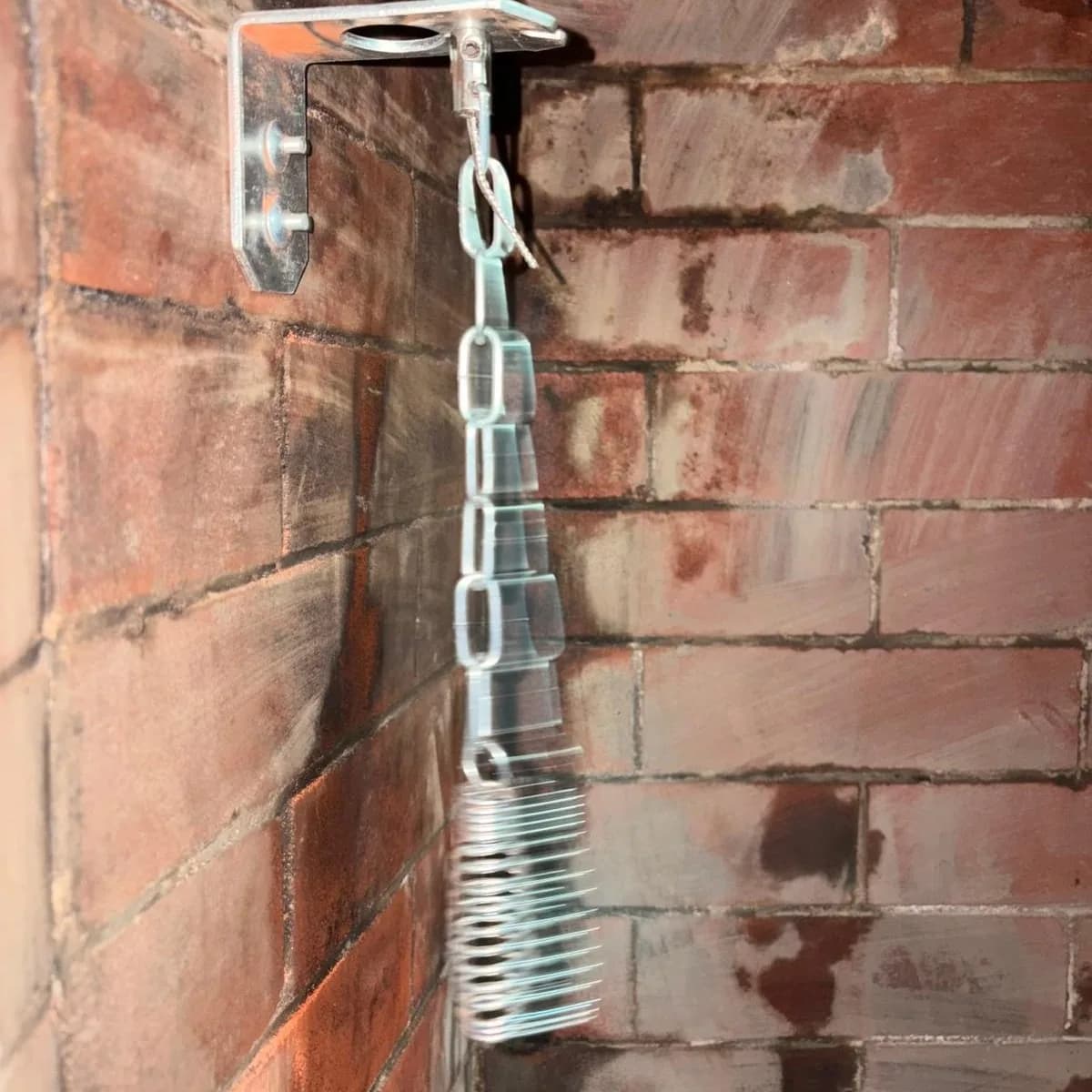
Top-sealing damper control fitted
Problem: A top-sealing damper has to be operated from inside the firebox, which means a fixed anchor for the chain.
Fix: The bracket bolted into the firebrick at the side wall, with the chain and tension spring hanging clear of the opening.

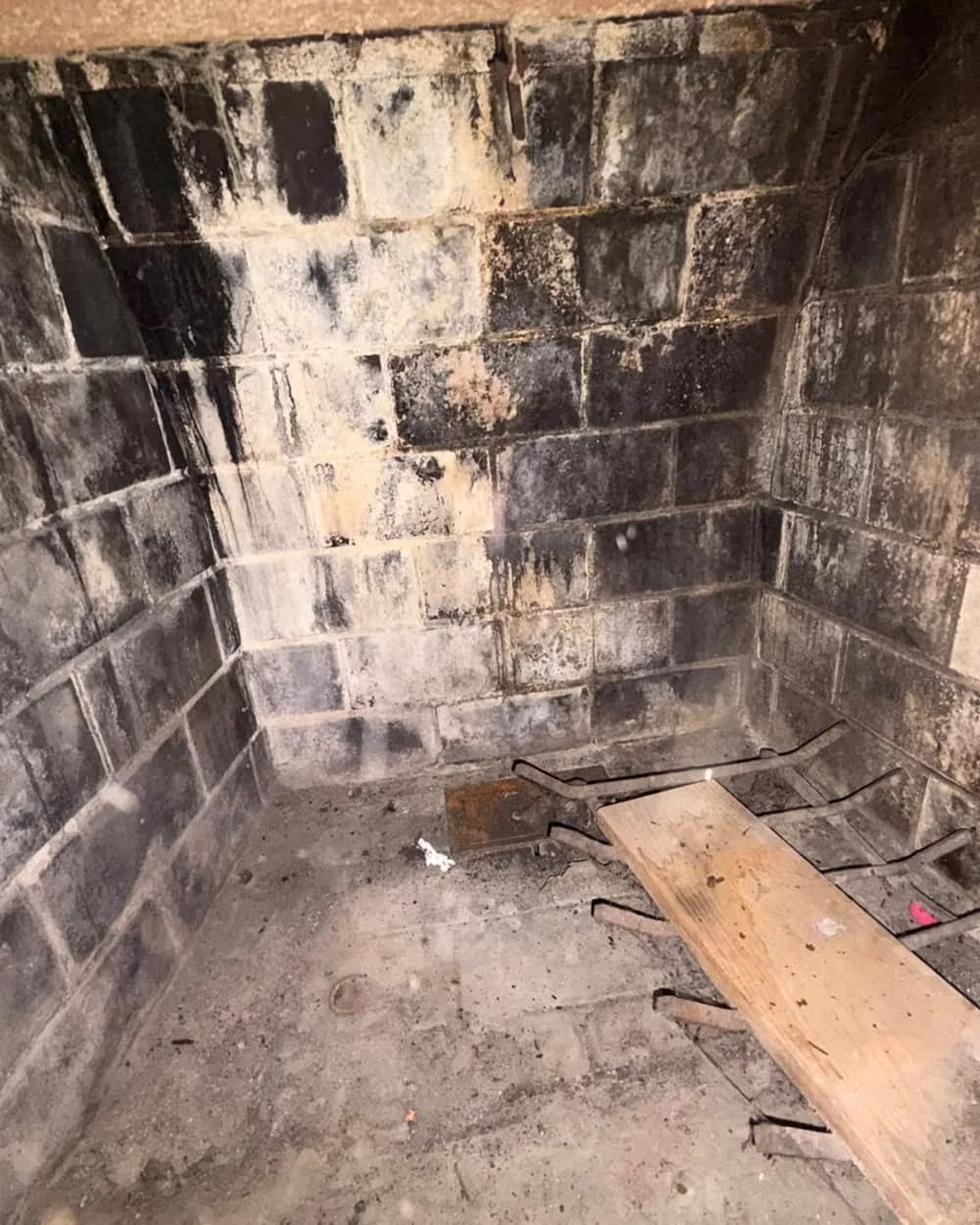
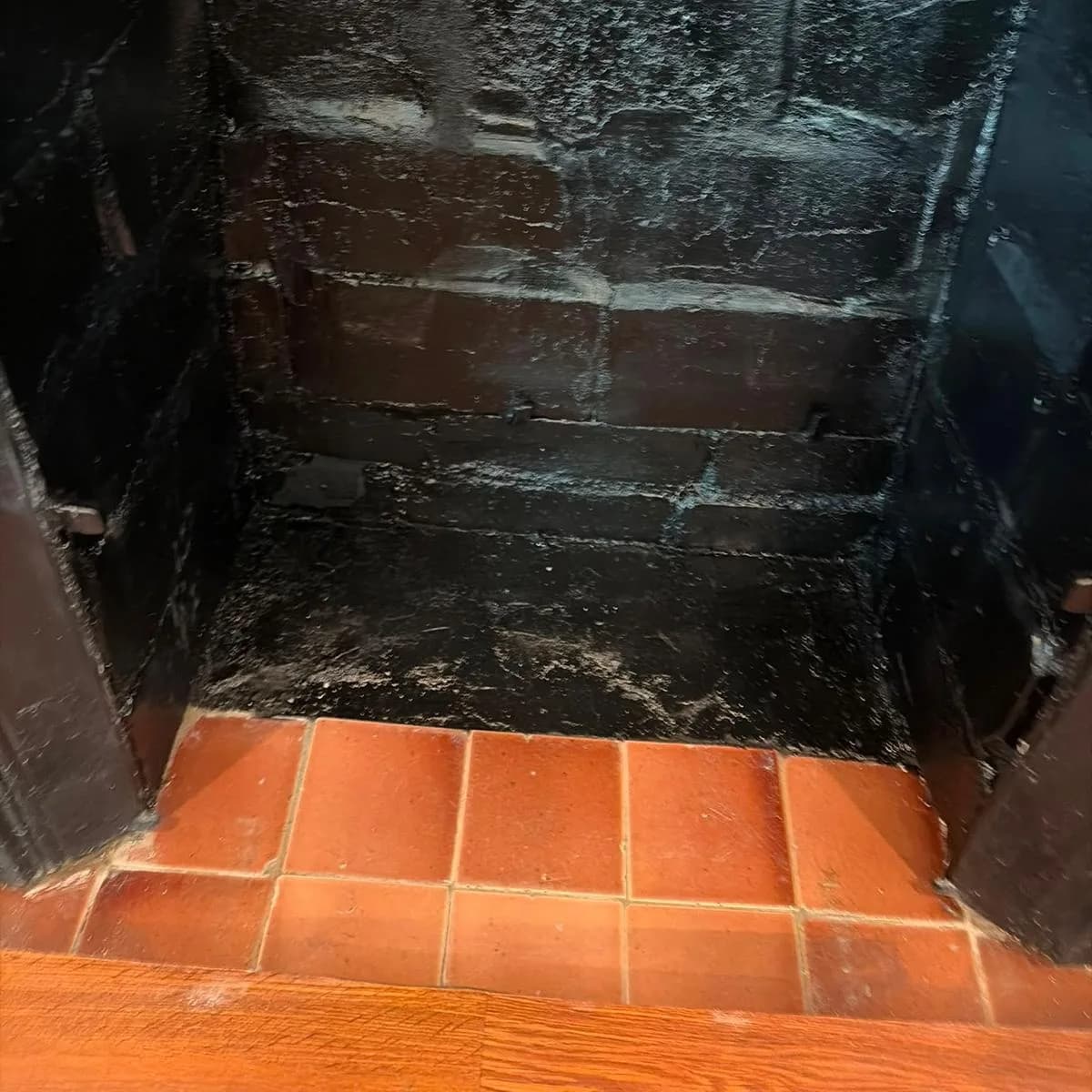
Firebox after sweeping
Problem: Soot builds up on every face of a firebox that gets used.
Fix: Brick and hearth cleared down, with the terracotta tile at the front left clean.

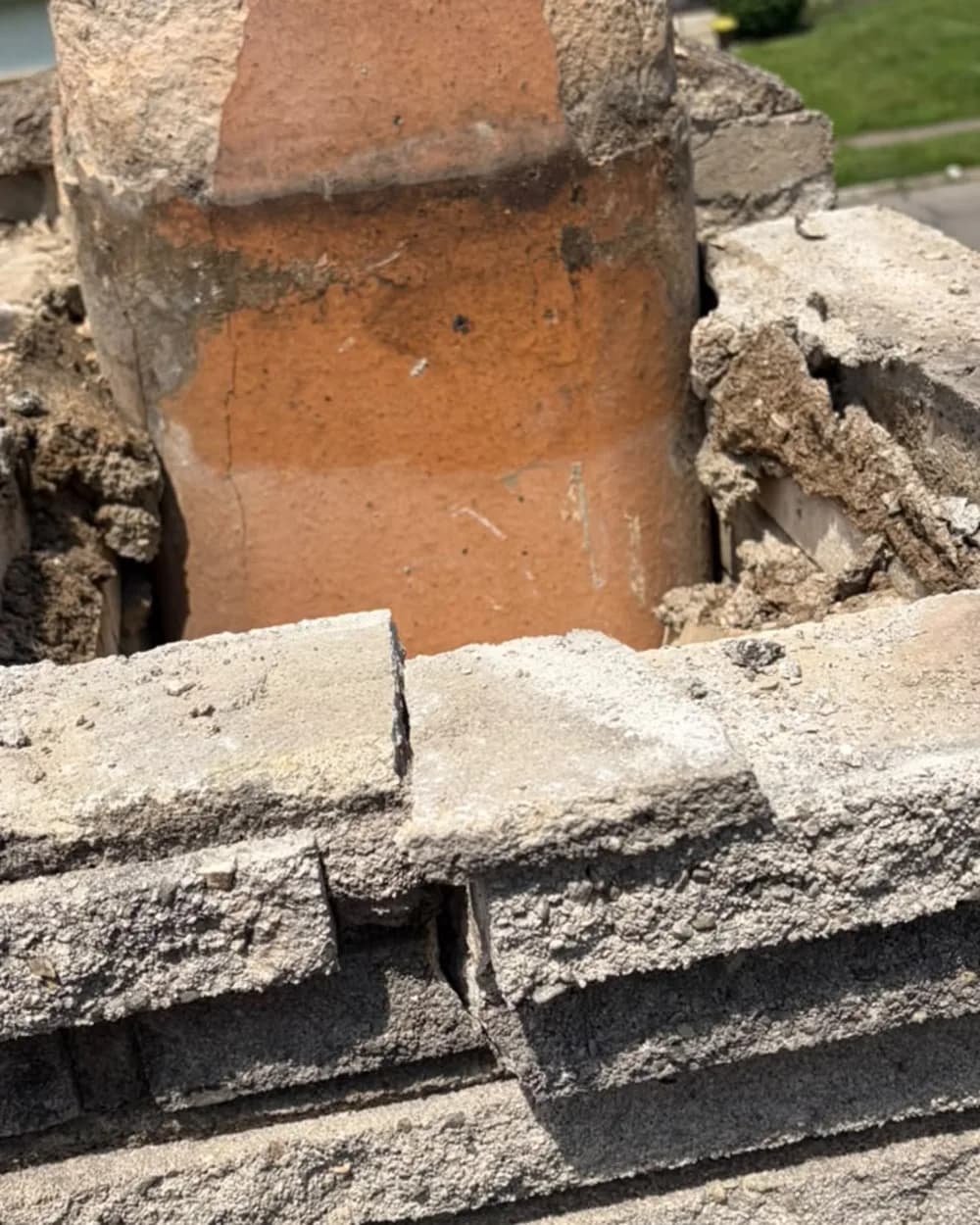
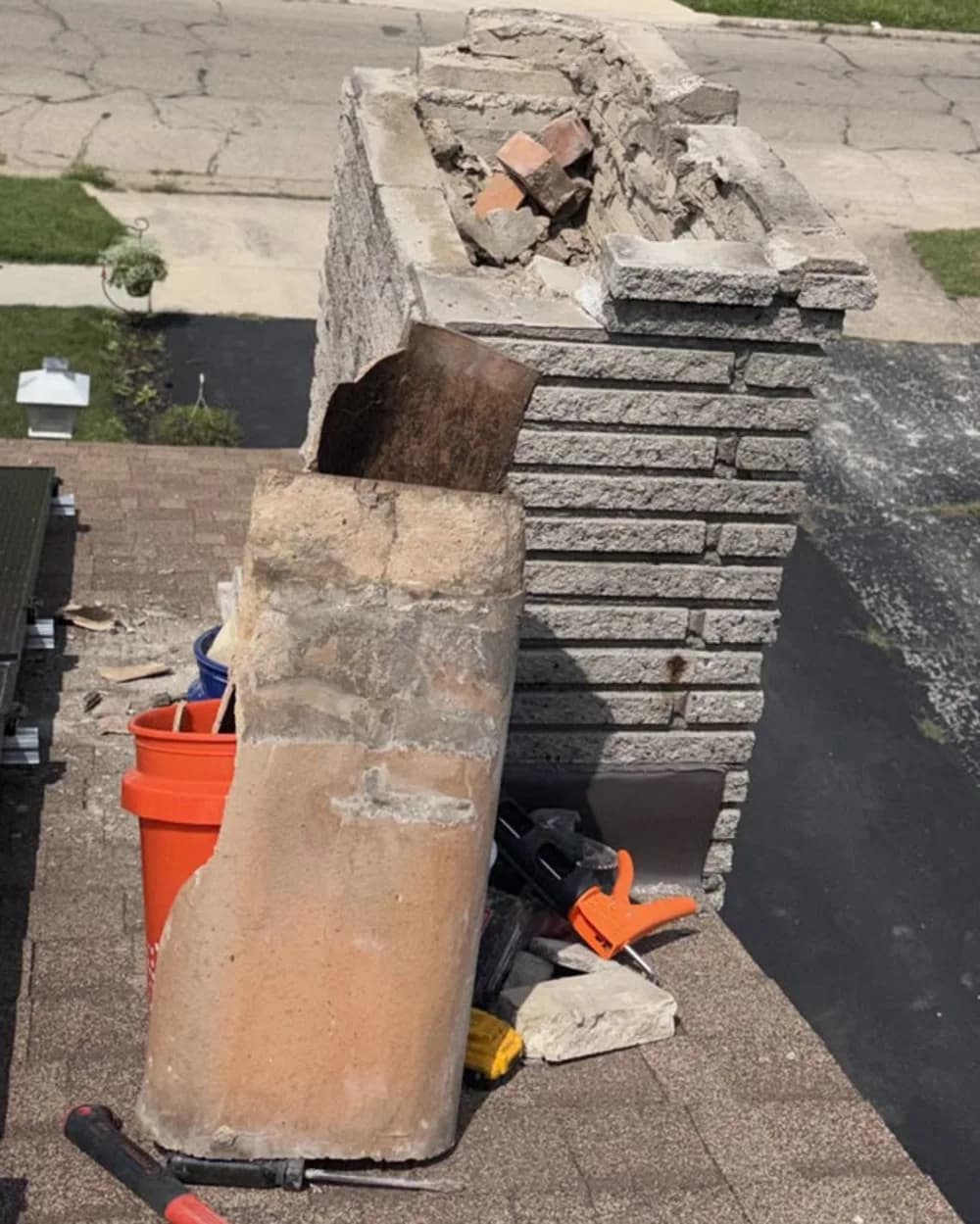
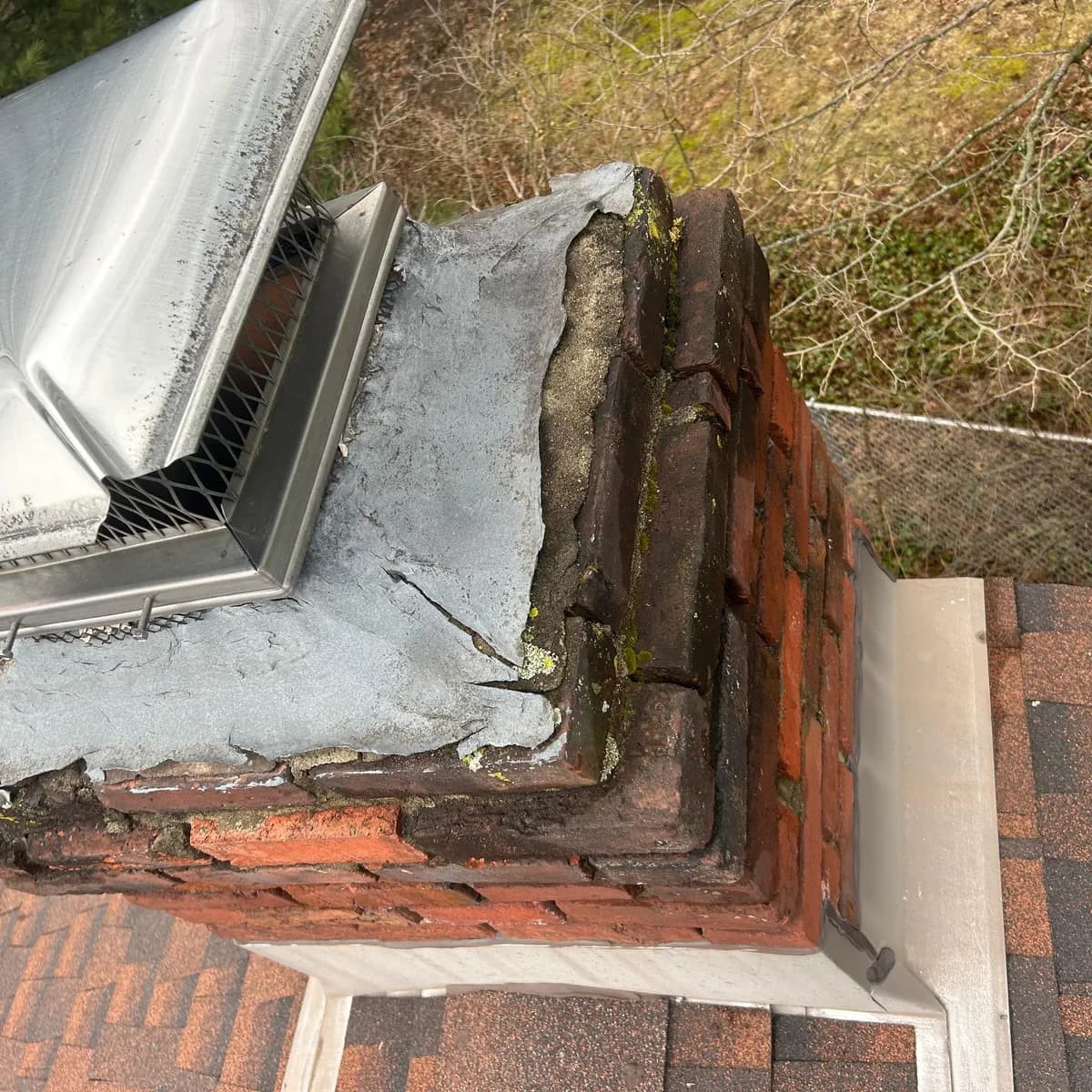
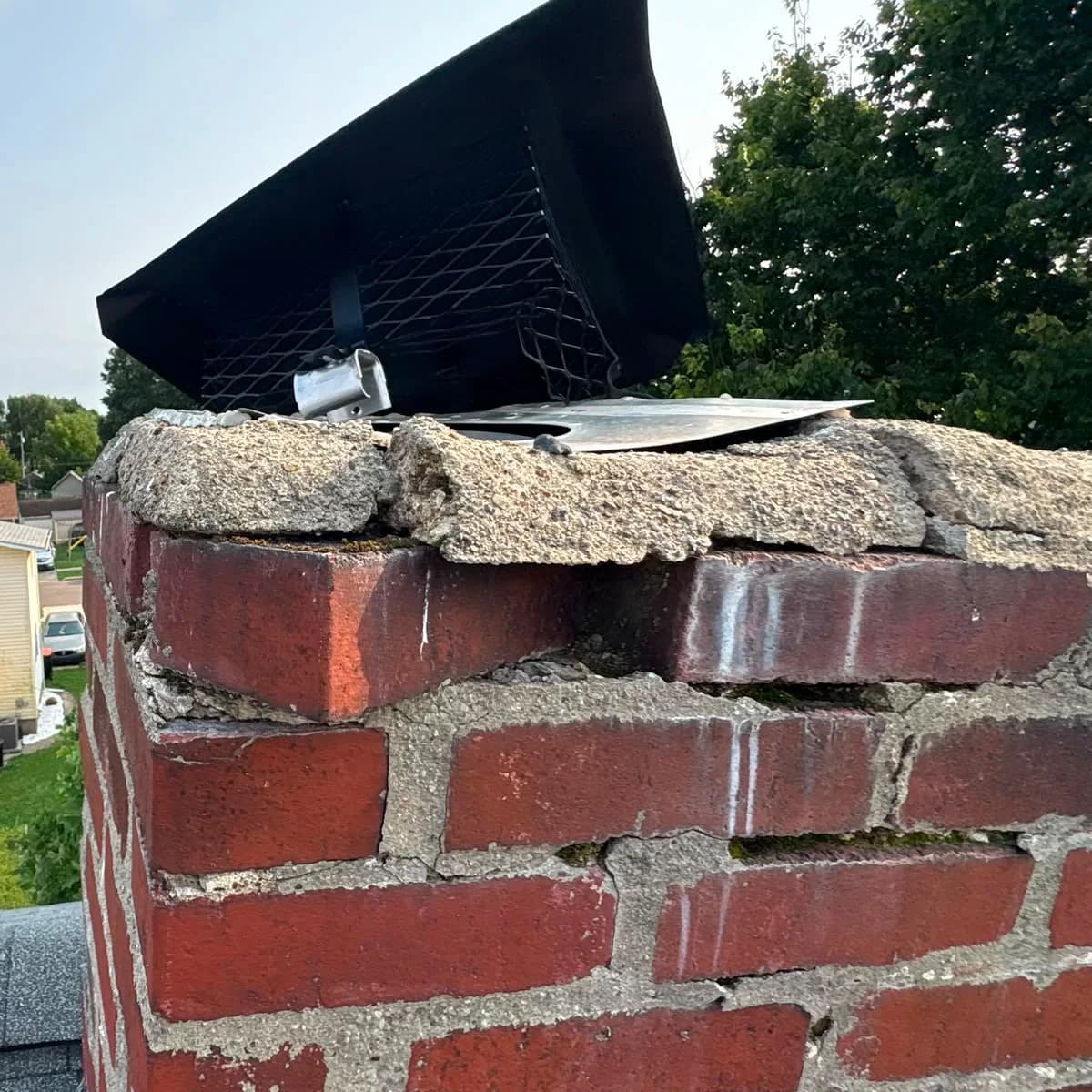
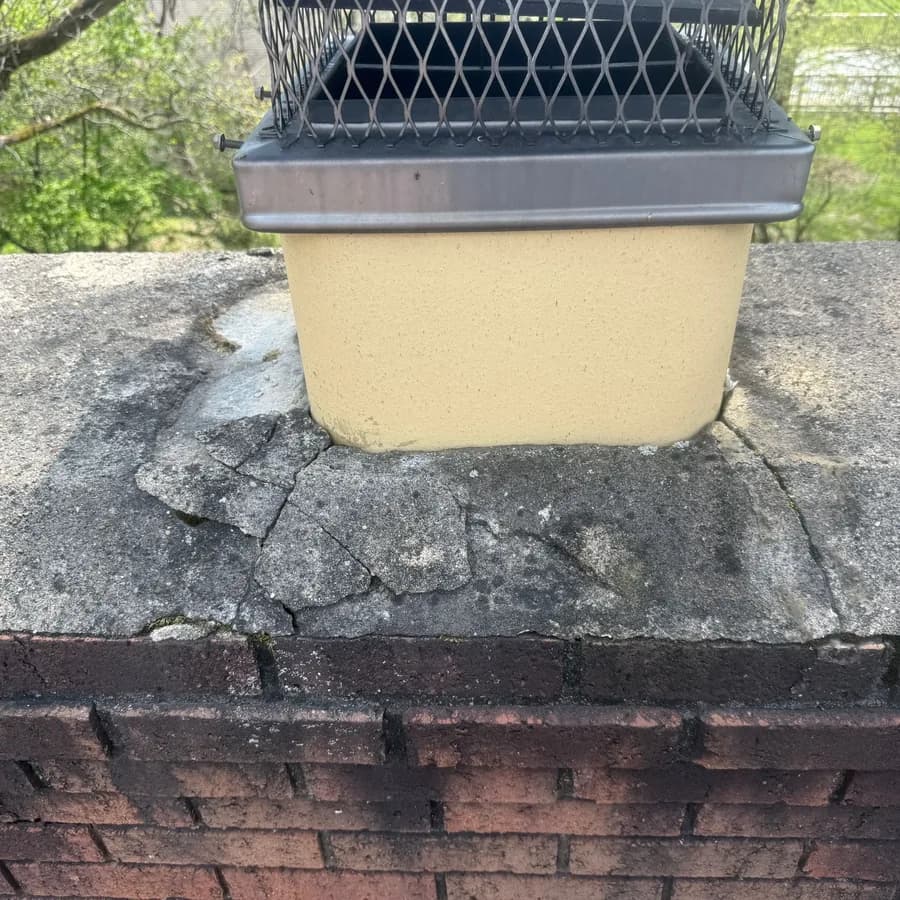
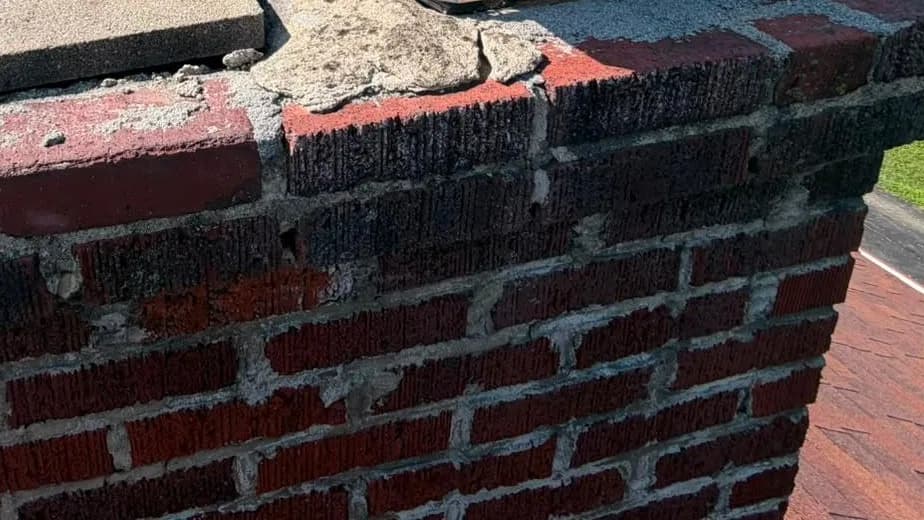
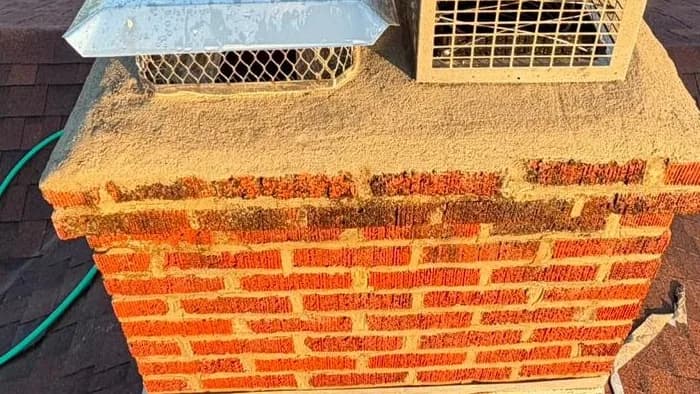
A crown at the end of its life
Problem: The crown slab has broken into separate pieces and lifted, and the top courses of brick underneath are spalling and washed out.
Fix: This is the condition a crown rebuild starts from — water has been getting into the masonry rather than running off it.

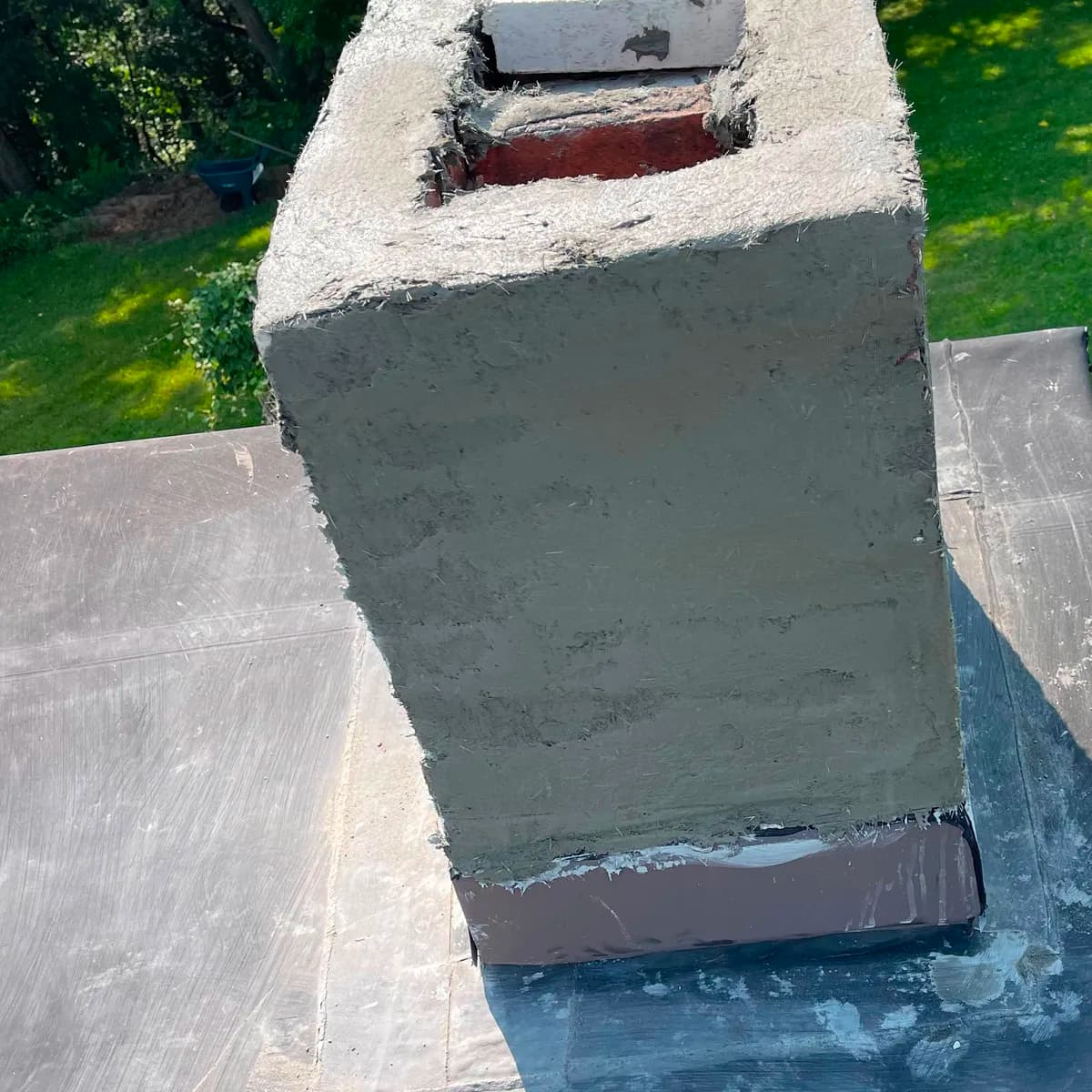
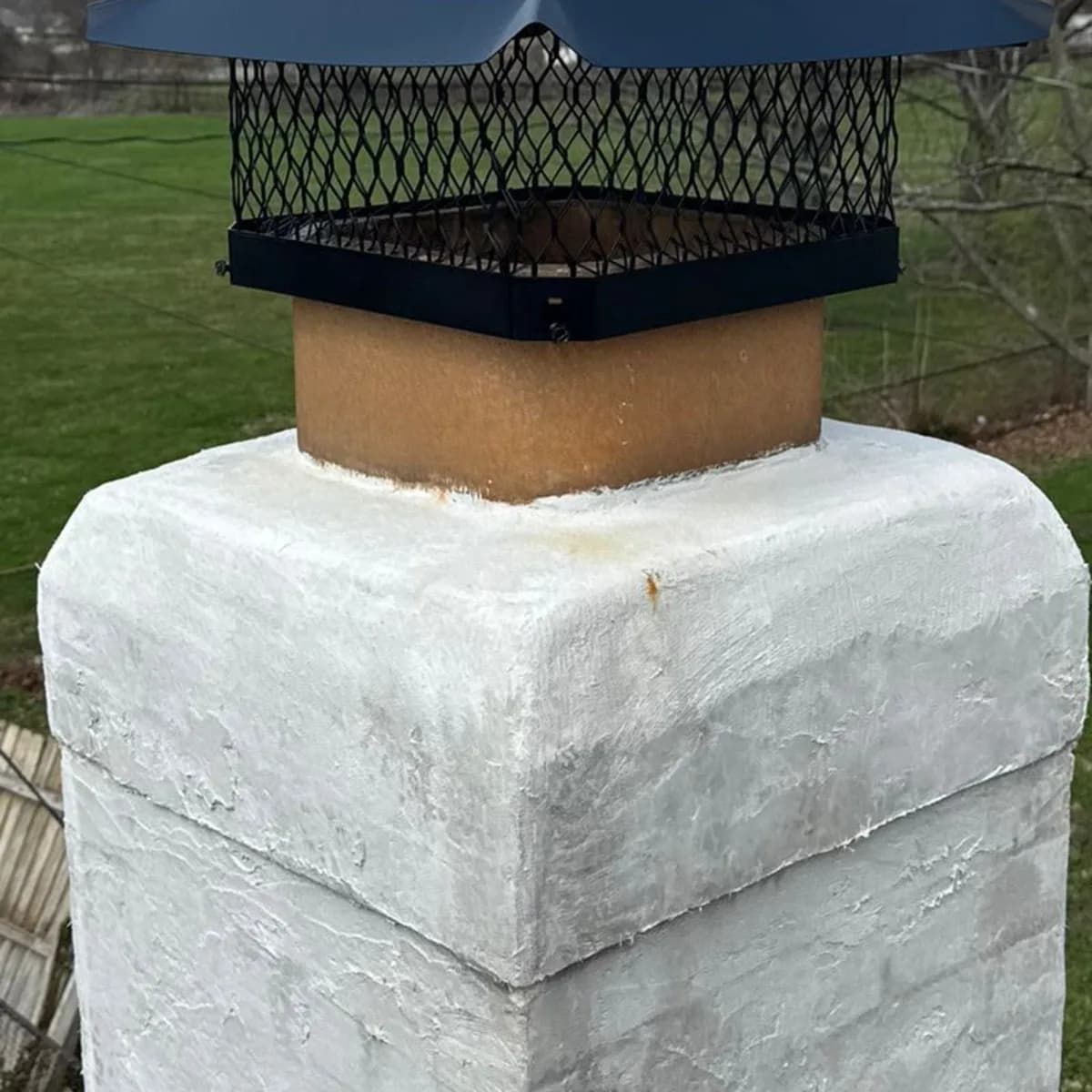
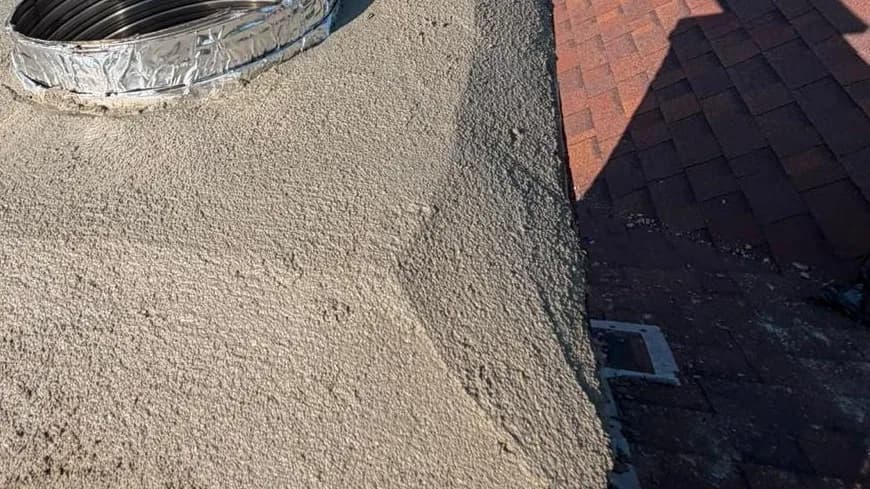
New crown poured around a liner top plate
Problem: Where a chimney has been relined, the crown has to be rebuilt around the top of the liner without leaving a gap at the collar.
Fix: Fresh crown carried out over the brick, with the stainless top plate collared and sealed where the liner comes through.

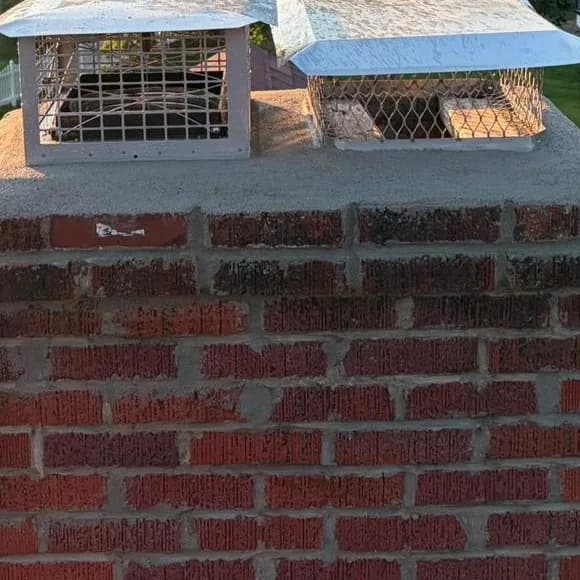
Rebuilt crown carrying two flues
Problem: A chimney with two flues needs one crown that sheds water off both, and a cap on each.
Fix: New crown across the full top of the stack, sloped to the edge, with a cap fitted over each flue.

Two caps on a finished crown
Problem: An open flue takes rain, leaves and animals straight down into the chimney.
Fix: A mesh cap over each flue, seated on the finished crown.

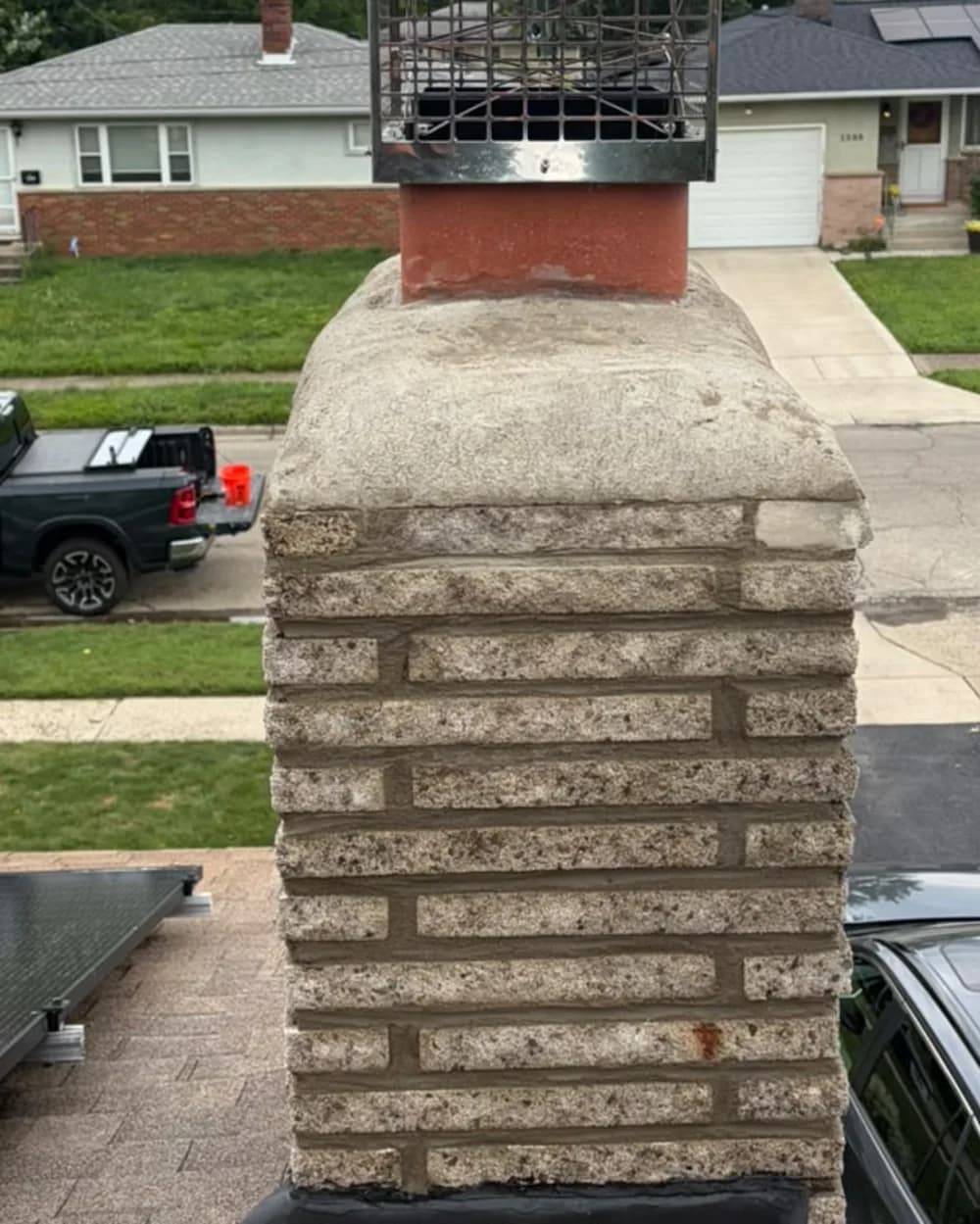
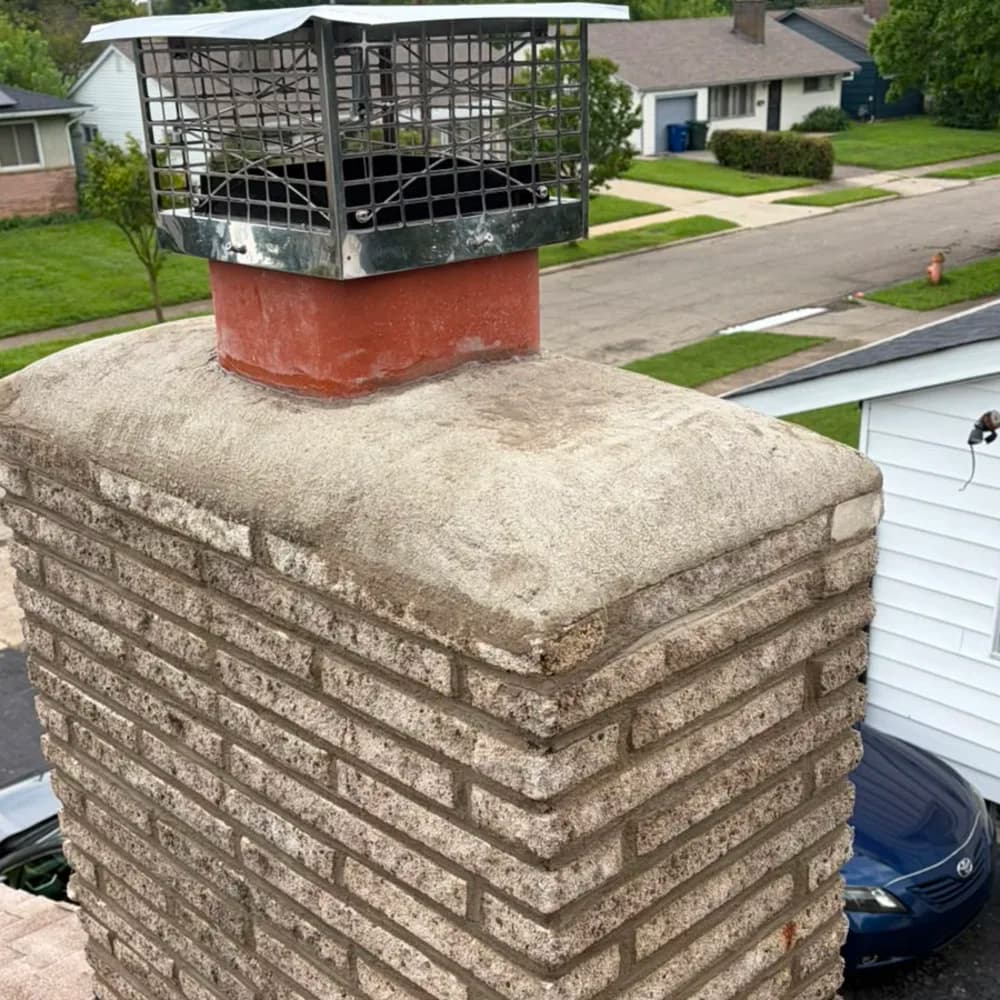
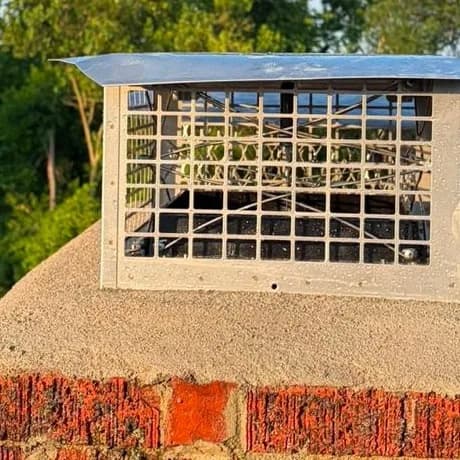
Mesh cap on a rebuilt crown
Problem: The cap is what keeps water and animals out once the crown underneath it is sound.
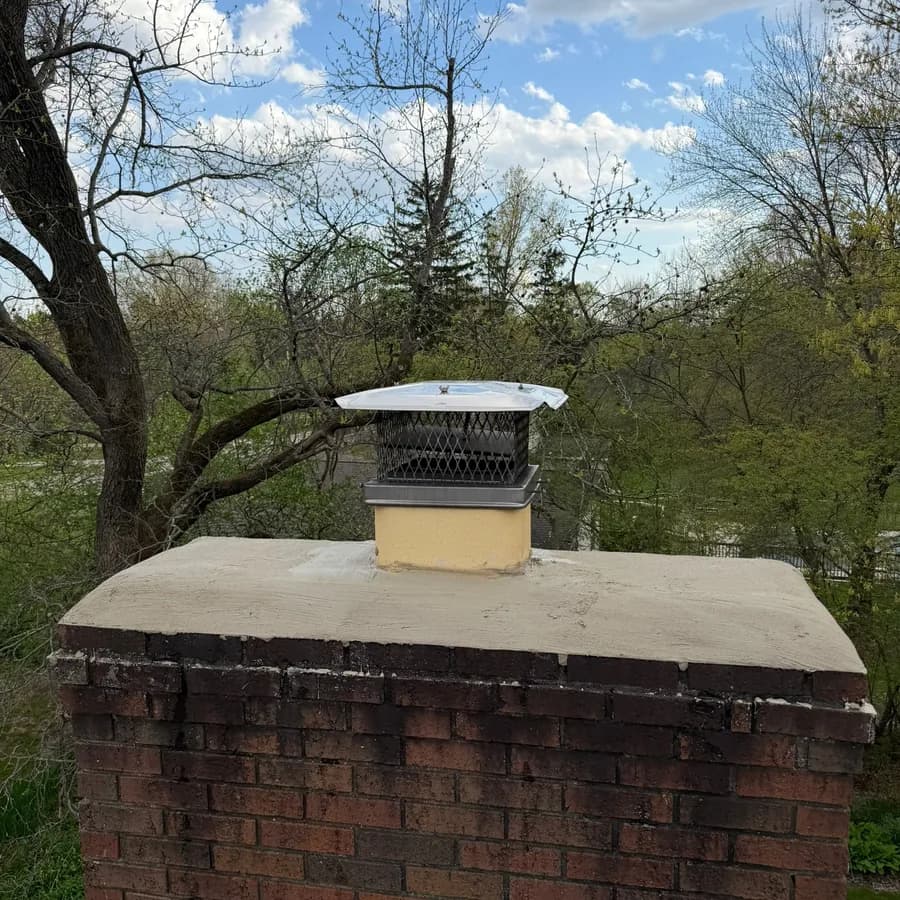
Fix: Heavy mesh cap fitted over the flue on a crown carried out past the brick face.

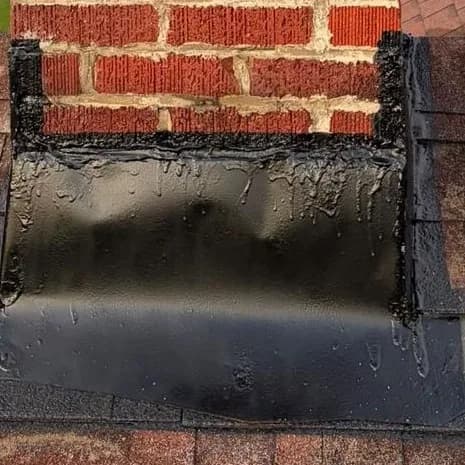
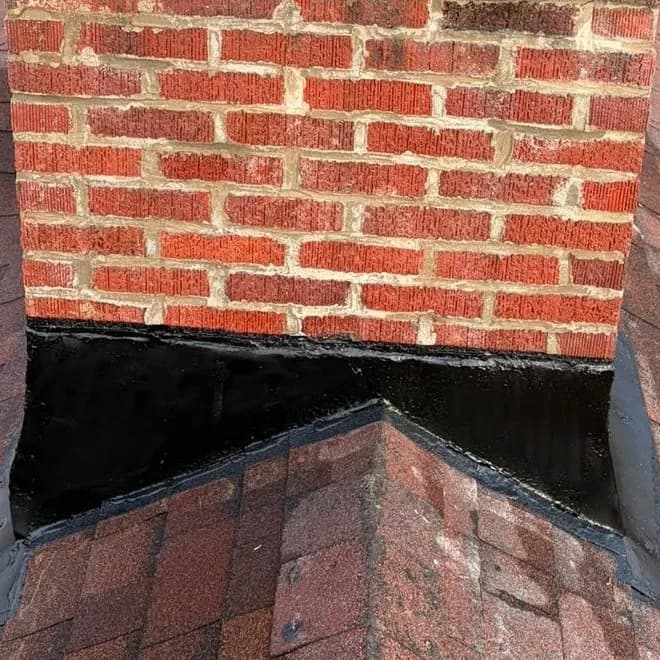
New flashing sealed at the roofline
Problem: Where the chimney meets the roof is the most common place for water to get into the house.
Fix: New flashing run up the brick and out over the shingles, then sealed along every edge.

Flashing carried around the corner
Problem: Flashing has to turn the corner of the stack without a break, or the corner is where it leaks.
Fix: The seal carried continuously around the angle where two roof planes meet the brick.

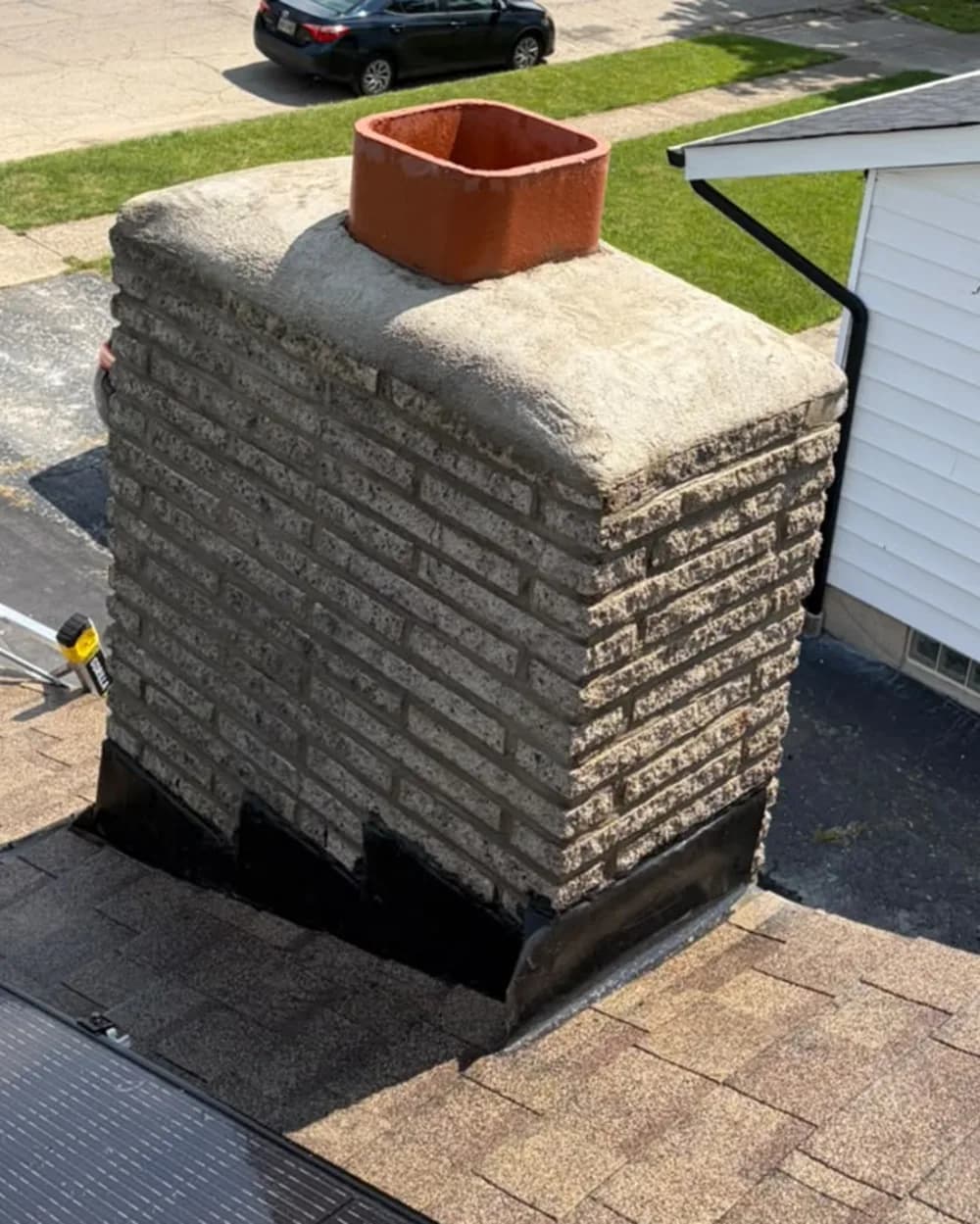
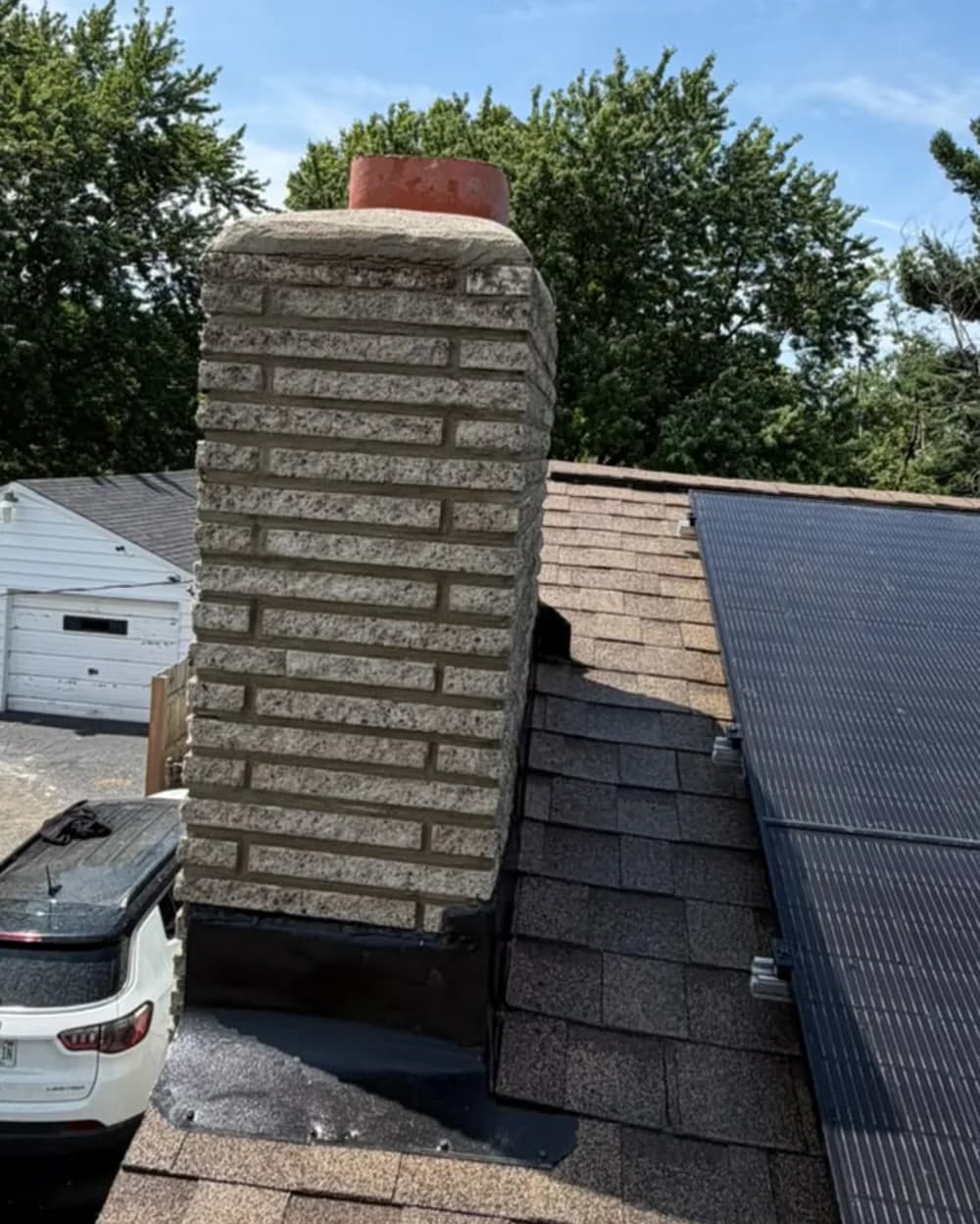
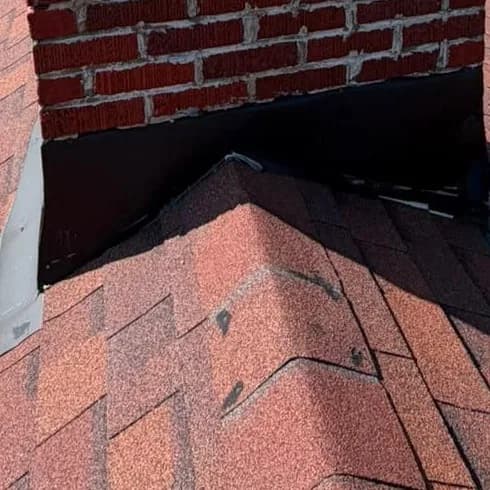
Flashing where the roof meets the stack
Problem: A stack sitting on a ridge has water coming at it from both slopes at once.
Fix: Flashing dressed into the shingles on both sides and sealed against the brick.
Want to see work near you?
Call and ask. We'll send photos of chimneys we've done in your own neighborhood, which tells you far more than any gallery.
Call (216) 480-4644