Skip to content

We quote before we start.

Emergency
APEXChimney

Q&A

Everything homeowners ask us on the driveway

No sales language, no hedging. If a question you have isn't here, call and ask it — we'll add it.

Basics

How often does a chimney need to be swept?
Get it inspected once a year, every year, whether or not you burned much. Whether it needs sweeping depends on what the inspection finds — the industry trigger is about an eighth of an inch of creosote built up in the flue. If you burn most weekends through the winter, expect to sweep annually. If you light three fires a year, you may go longer between sweeps but you still want the yearly look.
What are the chimney inspection levels I keep reading about?
They come from NFPA 211, the national standard. A Level 1 is the routine annual check of everything readily accessible, for a system that hasn't changed. A Level 2 adds a video scan of the flue's interior and the accessible attic, crawl space, and basement runs — the standard calls for one when a home is being sold or transferred, when you change the appliance or fuel, or after something happened, like a chimney fire, a storm, or an earthquake. Whether that's a legal requirement depends on whether your local authority has adopted NFPA 211, but lenders and buyers' agents often ask for it either way. A Level 3 is the invasive one: it involves opening up part of the chimney or the building, and it's only done when there's good reason to believe there's a serious hidden hazard.
What is a drone chimney inspection?
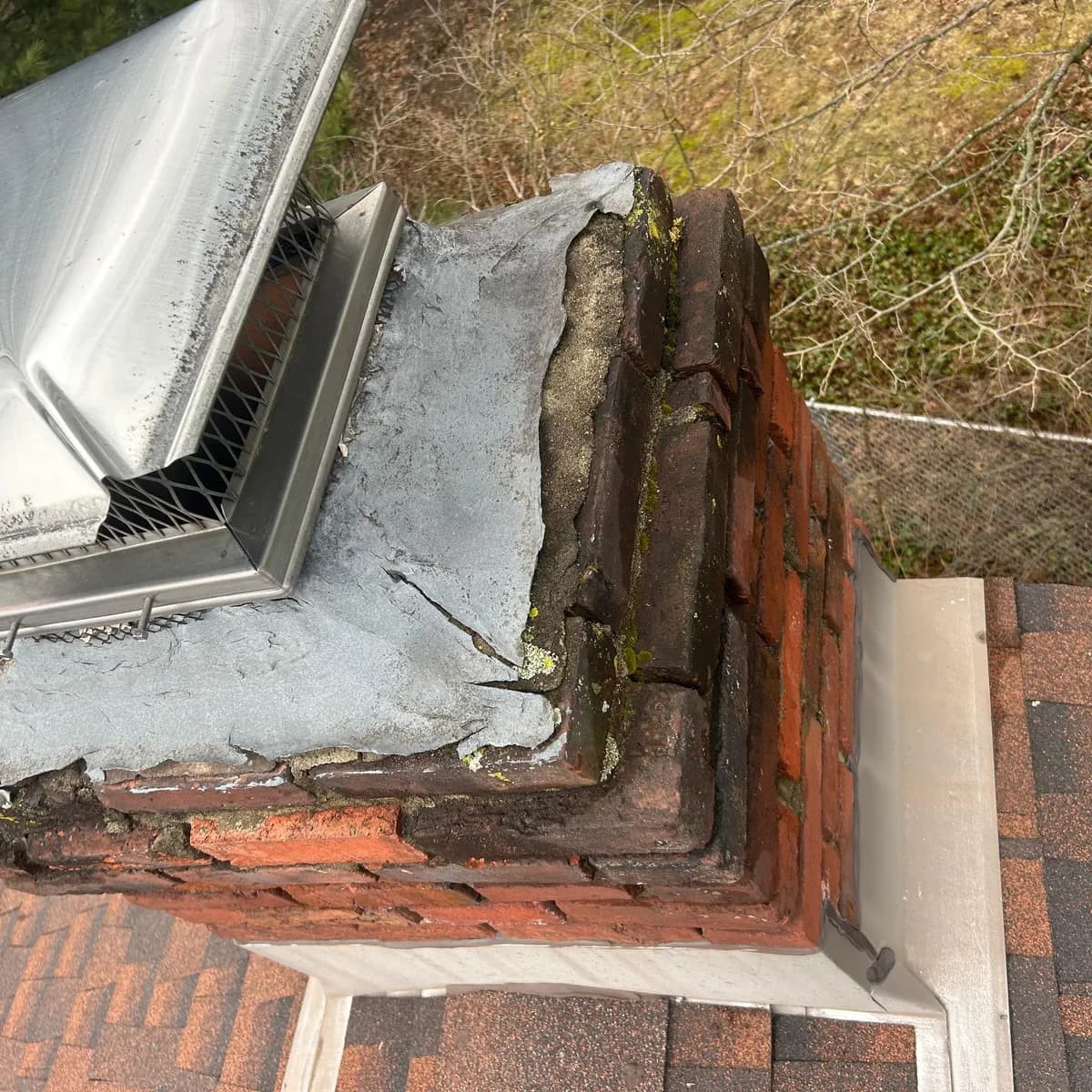
We fly a camera drone over the chimney and photograph the crown, cap, upper masonry, and flashing from above, instead of putting a person on a steep or fragile roof. It's the right call on slate, tile, very high, or storm-damaged roofs, and you keep the images — which is useful when you want to see the problem yourself or send it to an insurer.
Do you also clean dryer vents?
We do, and they're worth doing. Lint is fuel, a clogged vent is a common household fire cause, and a blocked run is usually why a load needs two cycles to dry. If we're already at the house it's an efficient add-on to the same visit.

Safety

What is creosote, and why does everyone worry about it?
Creosote is the tar-like residue that wood smoke leaves behind as it cools on the way up your flue. It starts as a light dust, then hardens into a crust, and eventually into a shiny glaze. It matters for one simple reason: creosote burns. Enough of it in a hot flue is what turns a normal fire in your firebox into a fire inside your chimney.
Do I still need an inspection if I never use my fireplace?
Yes, and this is the one people are most surprised by. An unused chimney still takes weather, still shifts with the house, and is still a favorite nesting spot for birds and squirrels. Water gets into unused flues and quietly takes the masonry apart. And if a furnace or water heater vents into that stack, it's carrying combustion gases whether you ever light a log or not.
Why does smoke come back into the room instead of going up?
Usually one of four things: the damper isn't fully open, the flue is blocked by creosote or a nest, the house is too tight for the fireplace to draw air, or the flue is the wrong size for the appliance. The first two we fix on the visit. The last two are draft problems — often negative pressure, where bath fans, a range hood, or the stack effect in a well-sealed house pull harder than your chimney can — and they need diagnosing rather than guessing, which is what the inspection is for.
What is a chimney liner, and how do I know if mine has failed?
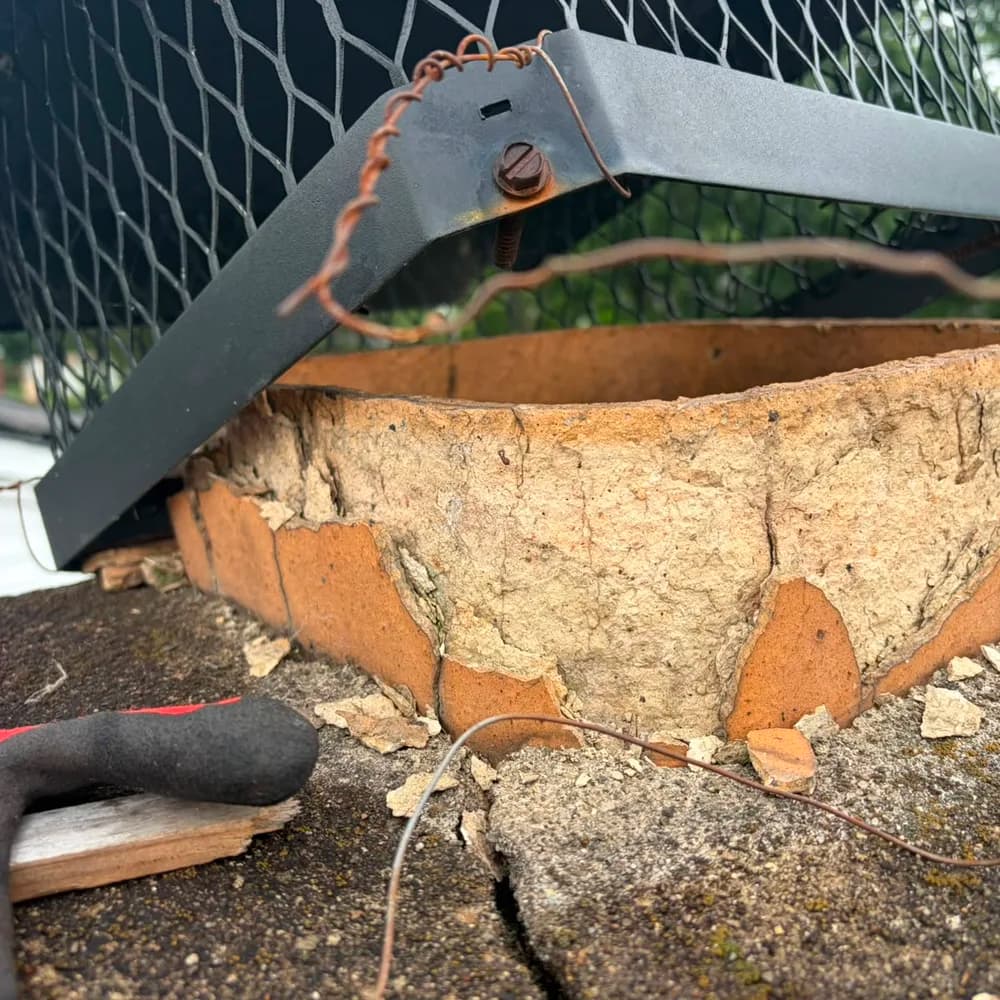
The liner is the inner surface of the flue. It keeps heat and combustion gases contained so they don't reach your framing or leak into the house. Older chimneys use clay tiles, which crack; some very old chimneys were built with no liner at all. Tell-tale signs are pieces of clay tile turning up in the firebox, or an inspection report flagging cracks. A failed liner isn't a maintenance item to schedule for next year — it's the reason to stop using the appliance until it's addressed.
Is a chimney fire always obvious?
No, and that's the danger. A big one is unmistakable — roaring, cracking, dense smoke. But a slow one can burn itself out without anyone noticing, while still cracking tiles and damaging the liner. If you suspect you had one, stop using the fireplace and get a Level 2 inspection, which includes a camera scan of the flue interior.
Do gas fireplaces and gas appliances need chimney service?
Yes. Gas burns cleaner than wood but its exhaust is acidic, and it eats away at clay tile and mortar over time. Gas-fired flues also block with nests and debris just like wood flues do, and a blocked gas flue pushes carbon monoxide back toward the house. Different failure mode, same annual inspection.
Can an earthquake damage a chimney even if the house looks fine?
Yes, and in California this is one of the main reasons to get a Level 2 inspection. Masonry chimneys are rigid and heavy, so seismic movement tends to crack them, shear them at the roofline, or separate them from the house — sometimes with very little visible from the ground. Older unreinforced brick stacks are the ones to be most careful about.

Repairs

Do I need a chimney cap?
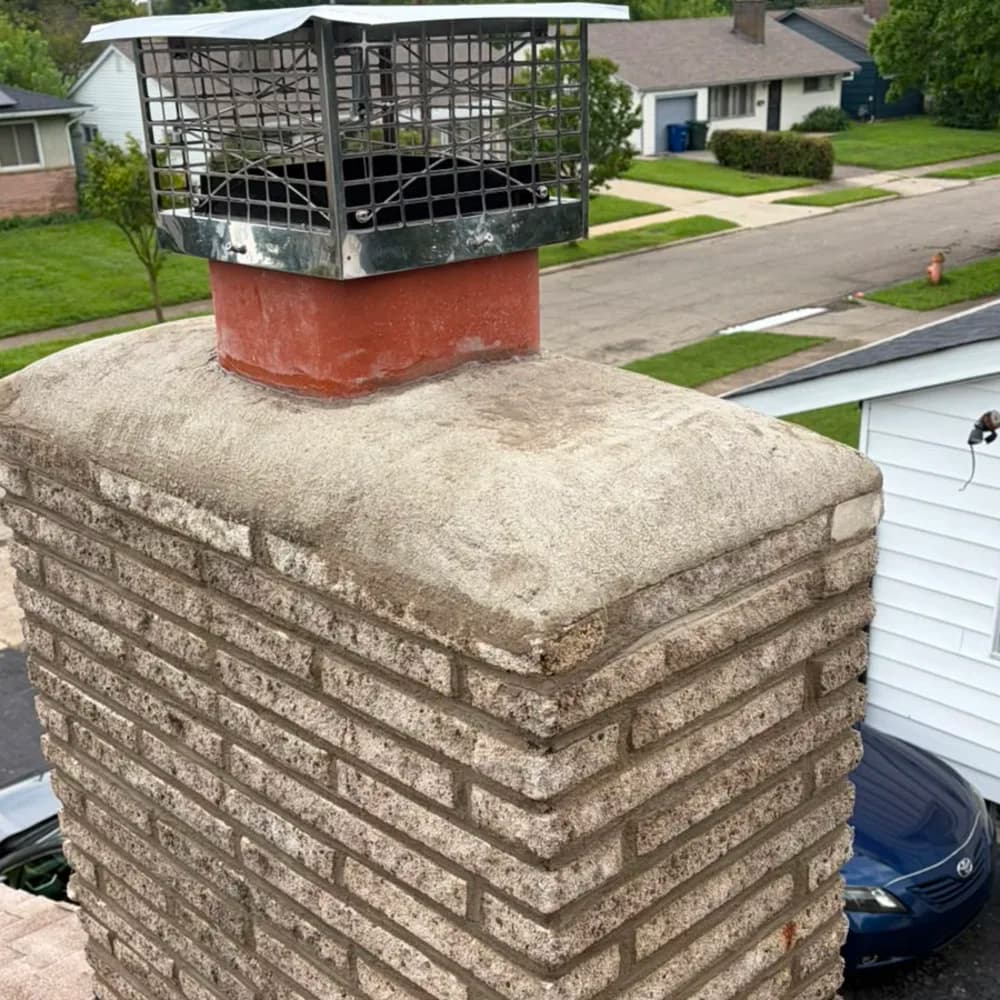
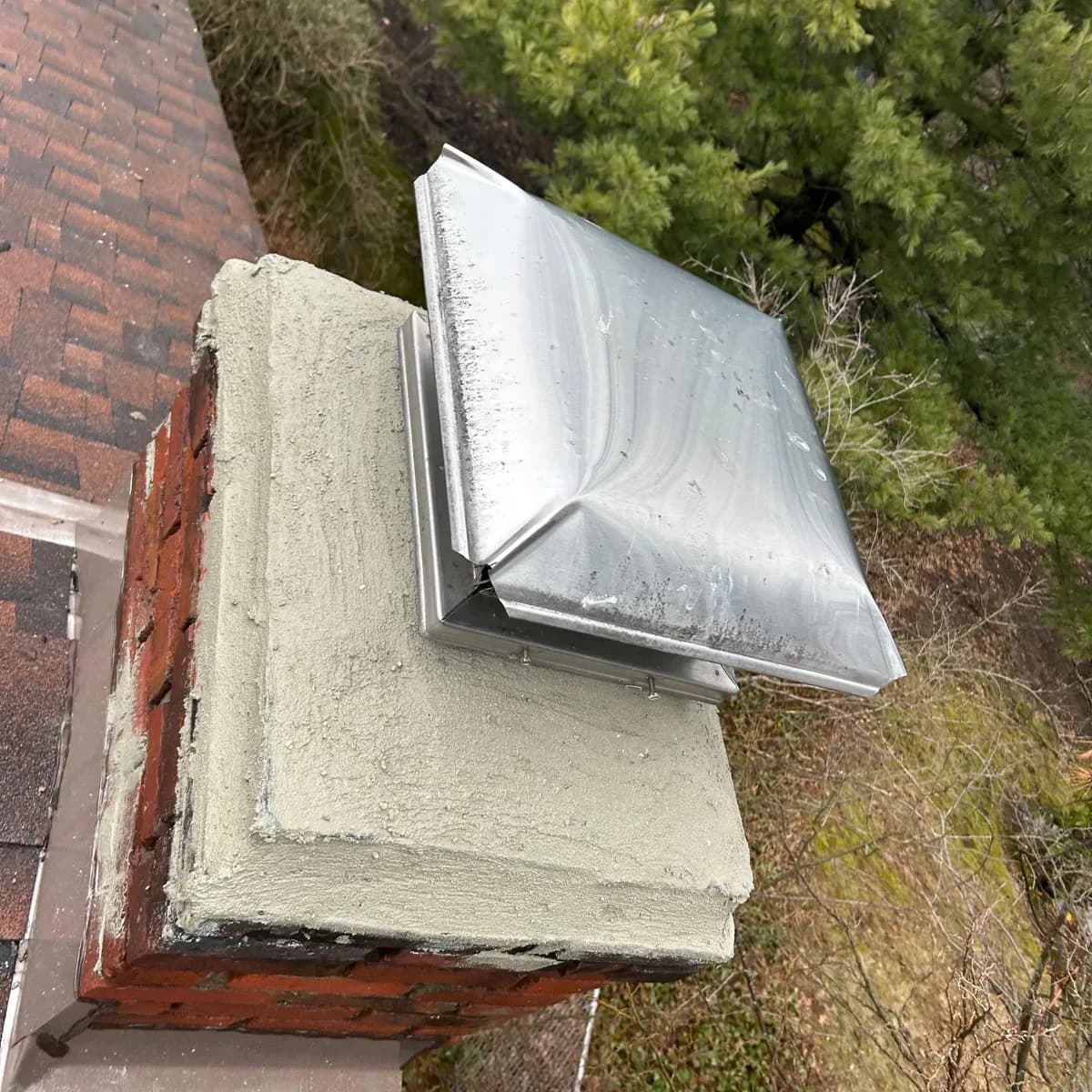
If you don't have one, you have an open pipe pointed at the sky. A cap keeps out rain, snow, leaves, and animals, and its spark arrestor screen keeps embers from landing on your roof. It's a small job that heads off some very large ones.
Why does my chimney leak when it rains?
There are only a handful of ways water gets in, and they're all findable: a missing or damaged cap, a cracked crown at the top, failed flashing where the chimney meets the roof, or brick and mortar that have gotten porous enough to soak water straight through. The fix is cheap once you know which one it is, and expensive when you guess. We find the actual entry point first.
What is tuckpointing?
It's replacing the mortar between the bricks without replacing the bricks. We grind out the failed joints back to sound material and pack in fresh mortar. Done at the right time it's straightforward maintenance. Left too long, water gets behind the brick face and you're rebuilding the stack instead of repointing it.
The brick faces are flaking off. Is that serious?
That's spalling, and yes, it's the clock running. Water gets absorbed into the brick and then either freezes and pops the face off, or carries salts out through it — freeze-thaw does it in Ohio, salt and marine damp do it on the California coast. Every spalled brick exposes more surface for the next round. It doesn't reverse on its own: the damaged units get replaced and the masonry gets sealed so it stops happening.
What's the chalky white staining on my chimney?
Efflorescence — mineral salts carried to the surface by water moving through the masonry. The stain itself is harmless and washes off. What it tells you is not harmless: water is moving through your brick. Treat it as a symptom worth chasing, not a cosmetic problem.

Working With Us

What does a chimney sweep cost?
It depends on the chimney: how tall it is, how easy the roof is to reach, what appliance it serves, and how much buildup is in there. We'd rather quote you honestly than publish a teaser price and revise it on your driveway. Call us with a few details and we'll tell you what the visit will run before we book it.
How long does the visit take, and will you make a mess?
A straightforward sweep and Level 1 inspection is usually a matter of a couple of hours, not a day. On mess: we work with drop cloths and a HEPA vacuum sealed to the fireplace opening, so the soot goes into the machine instead of onto your floor. If we can't leave the room the way we found it, we haven't finished the job.
When is the best time of year to book?
Spring and summer, by a wide margin. Everyone calls in October when the weather turns, so that's when the schedule is tightest and any repair that gets discovered has to wait. Book in the off-season and you get your pick of times, plus room to fix whatever the inspection finds before you actually want a fire.
Do I need to be home for the appointment?
Someone should be, yes. We need interior access to the fireplace or appliance, not just the roof, and at the end we want to walk you through what we found with photos rather than leaving a report on the counter. It's also your chance to ask the questions you didn't know you had.
Can you help document damage for an insurance claim?
We can give you a clear inspection report with photographs of what we found, including aerial images where a drone is the safer way to see the top of the chimney. Whether a particular claim is covered is between you and your insurer, but we can make sure they're looking at the actual condition of the chimney.
How do I know the chimney actually got cleaned properly?
You look. We photograph the flue before and after, and we show you. A sweep you can't verify is a sweep you're taking on faith, and there's no reason for you to have to.

Still wondering about something?

Ask us on the phone. We'd rather you understood your chimney than booked something you didn't need.

Call (216) 480-4644
Call now(216) 480-4644Or requestRequest a Visit