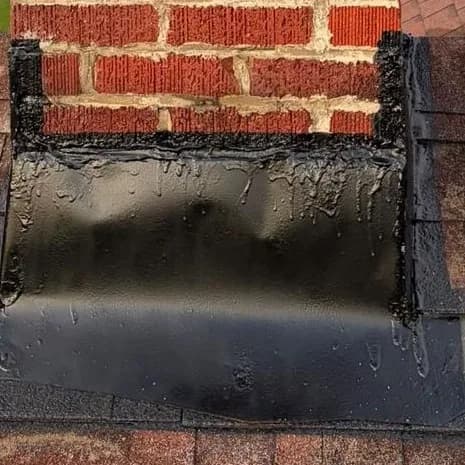
New flashing sealed at the roofline
New flashing run up the brick and out over the shingles, then sealed along every edge.
View this projectEXPERT CHIMNEY CARE. HONEST PRICING. DONE RIGHT.
Emergency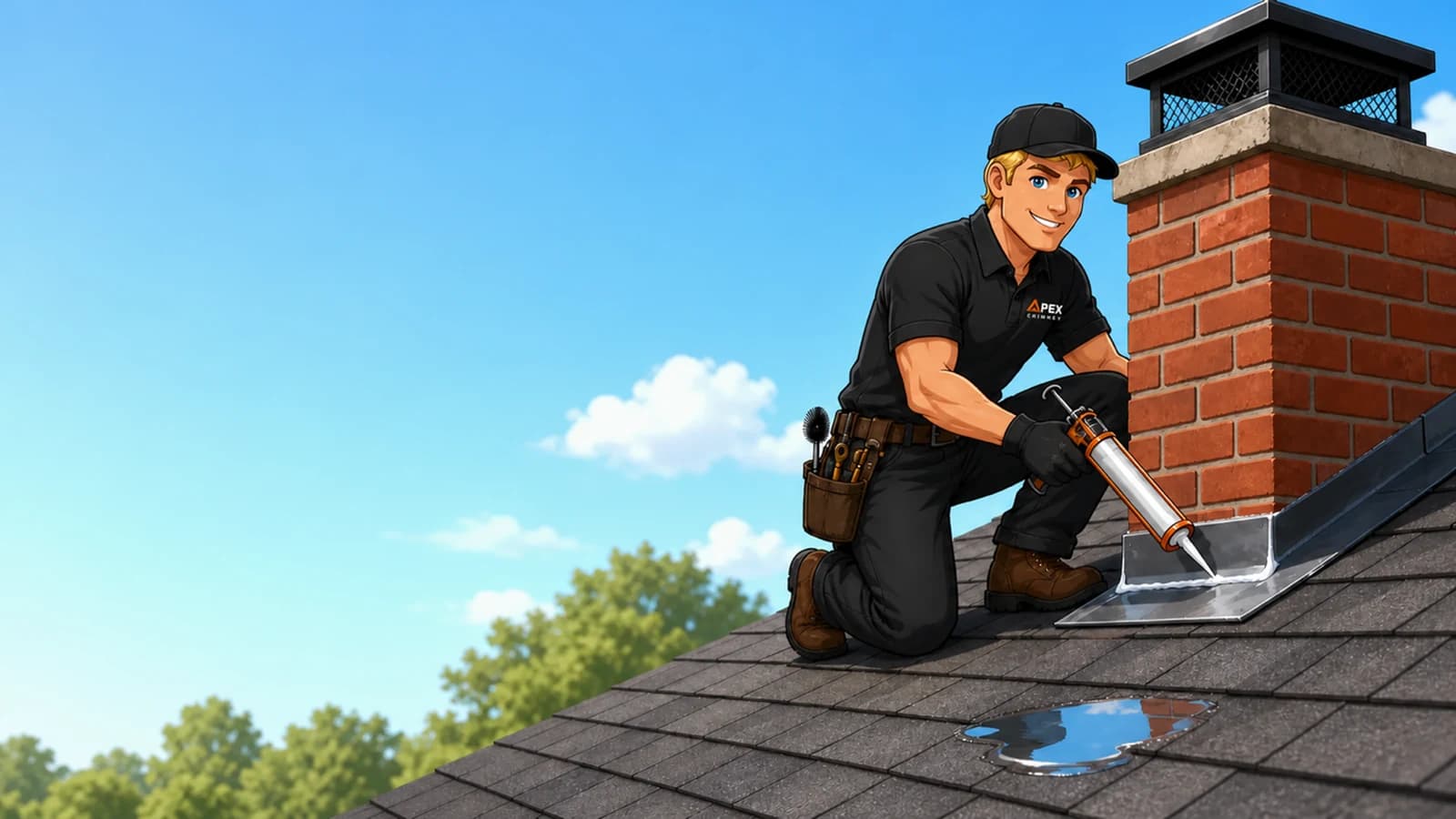
We find where the water actually gets in, fix it, and seal the masonry.
There are only a handful of ways water gets into a chimney, and they're all findable. The expensive mistake is guessing — sealing the brick when the flashing was the problem, or replacing flashing when the crown was cracked. We find the entry point before anybody buys materials.
We work the four suspects in order: cap, crown, flashing, and the masonry face itself. Drone photos where the roof makes that the safer look.
The joint where chimney meets roof is the most common leak point and the most commonly botched repair. Caulk over failed flashing is a stopgap, not a fix. On a wide chimney on a sloped roof, the real answer is often a cricket — a small peaked diverter behind the stack that sends water around it instead of letting it pond against the brick.
Crown repair or rebuild, cap replacement, chase cover if it's a framed chimney. Water almost always starts here.
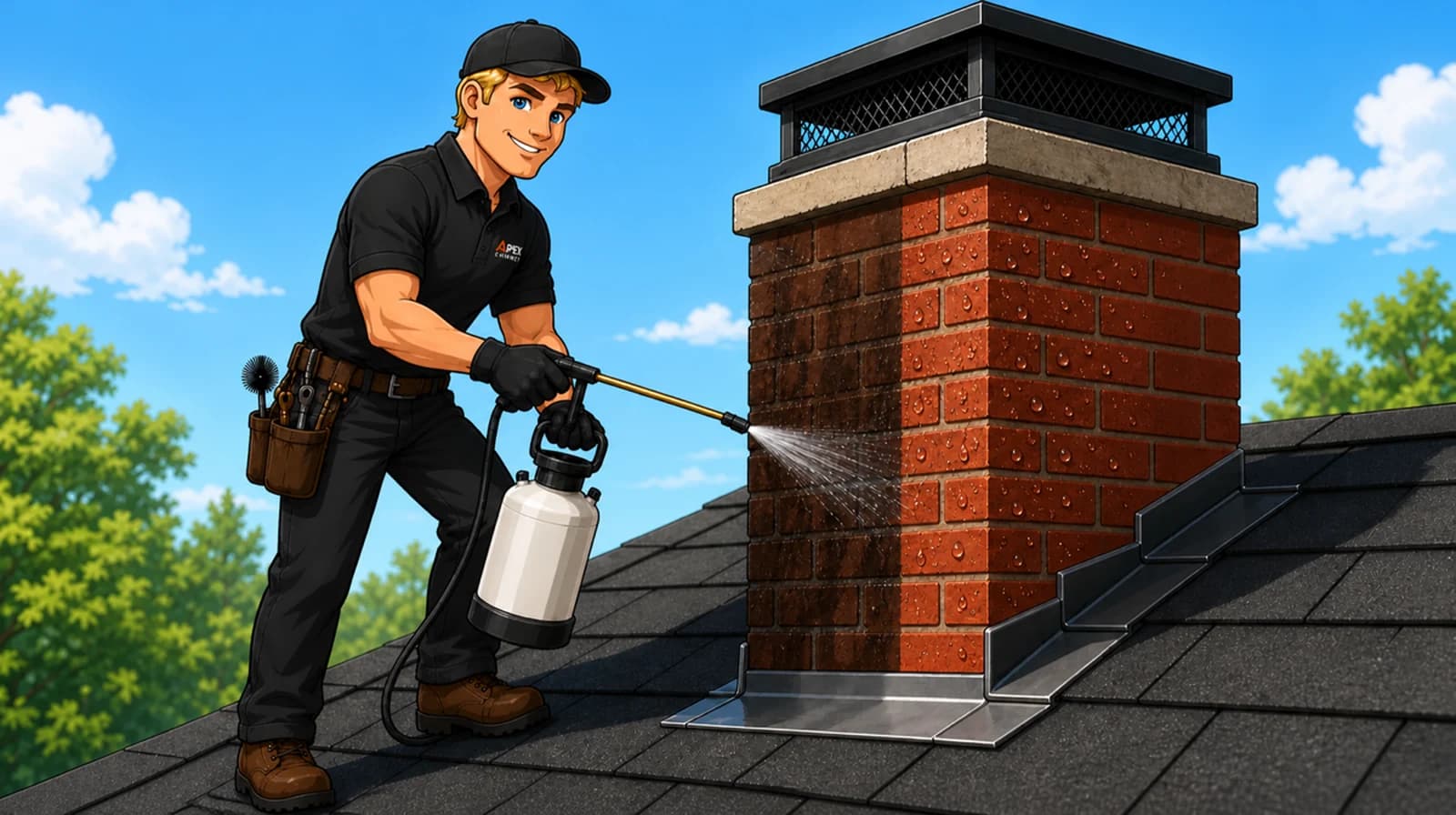
Once the entry points are closed, the masonry gets a vapor-permeable water repellent. It stops water going in while still letting existing moisture out — a film-forming sealer traps it and accelerates spalling.
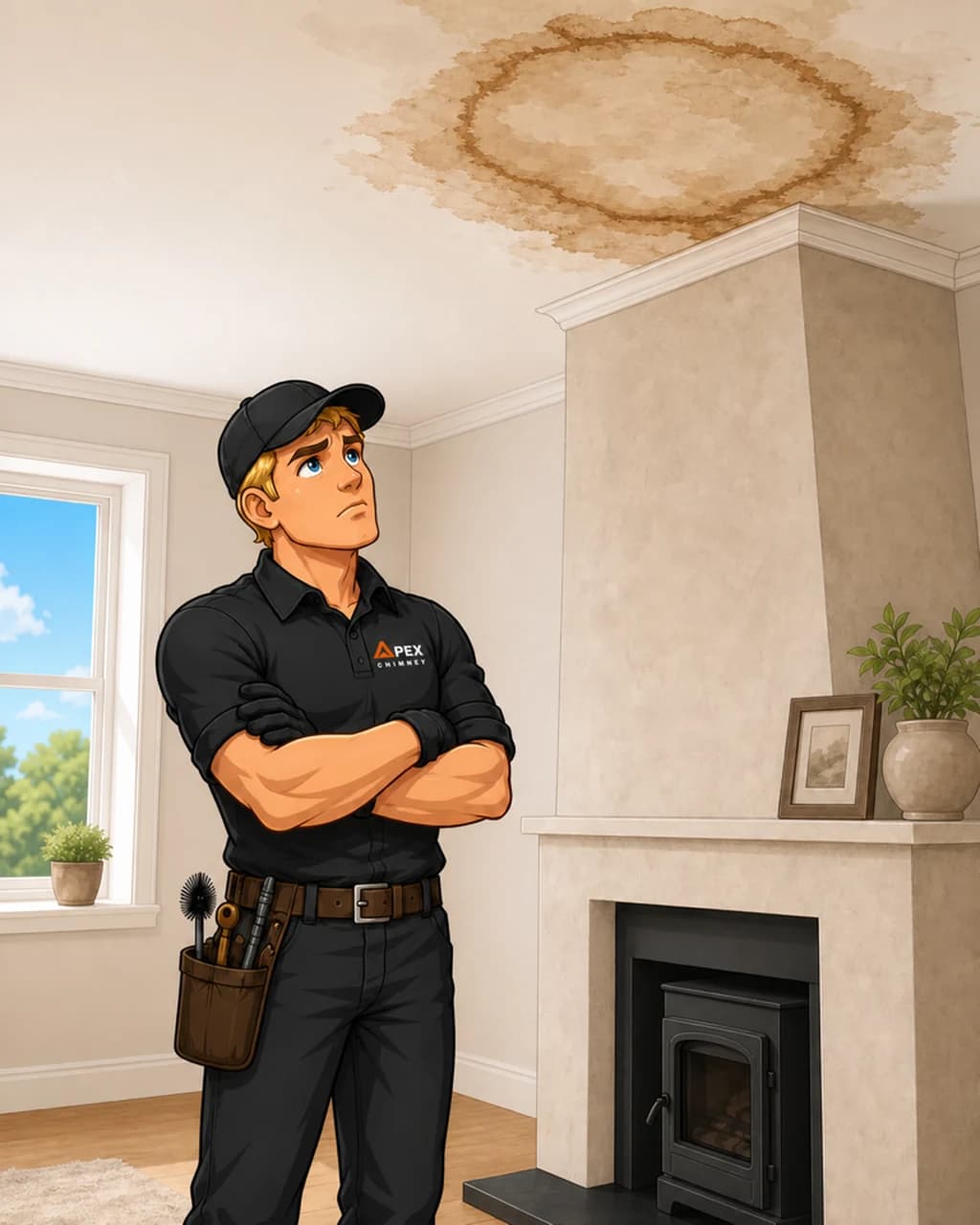
Water destroys chimneys — not fire, not age. It rusts dampers, breaks down firebox mortar, spalls brick from the inside in freezing climates, carries salts to the surface, and stains the ceiling in the room next door. A leak fixed this spring is a repair; the same leak in three years is a rebuild.
Recent work
Our own photographs, from real jobs. Before and after where we have both ends of it.
New flashing run up the brick and out over the shingles, then sealed along every edge.
View this project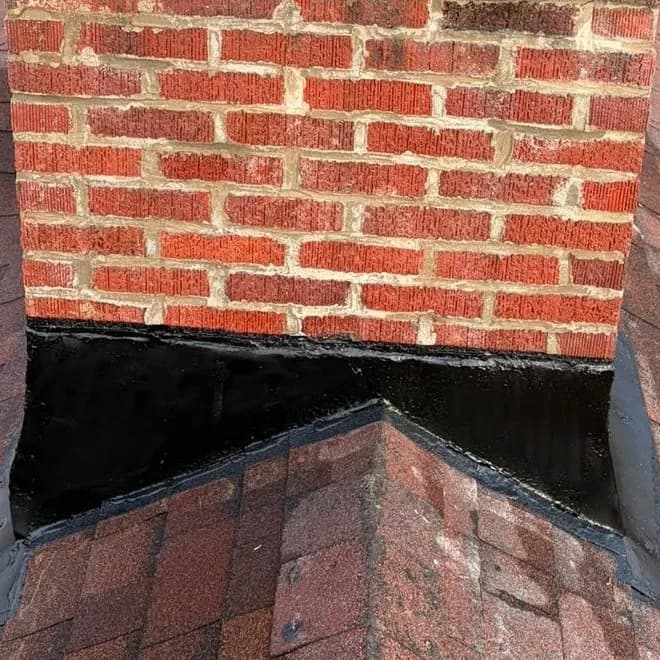
The seal carried continuously around the angle where two roof planes meet the brick.
View this project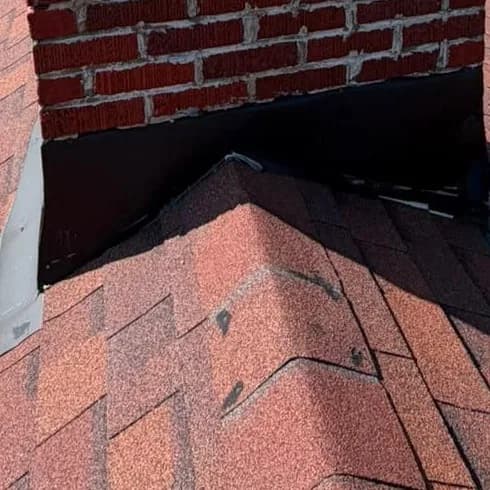
Flashing dressed into the shingles on both sides and sealed against the brick.
View this projectTell us what's going on and we'll call you back to agree on a time. If you'd rather talk it through now, the phone is faster.