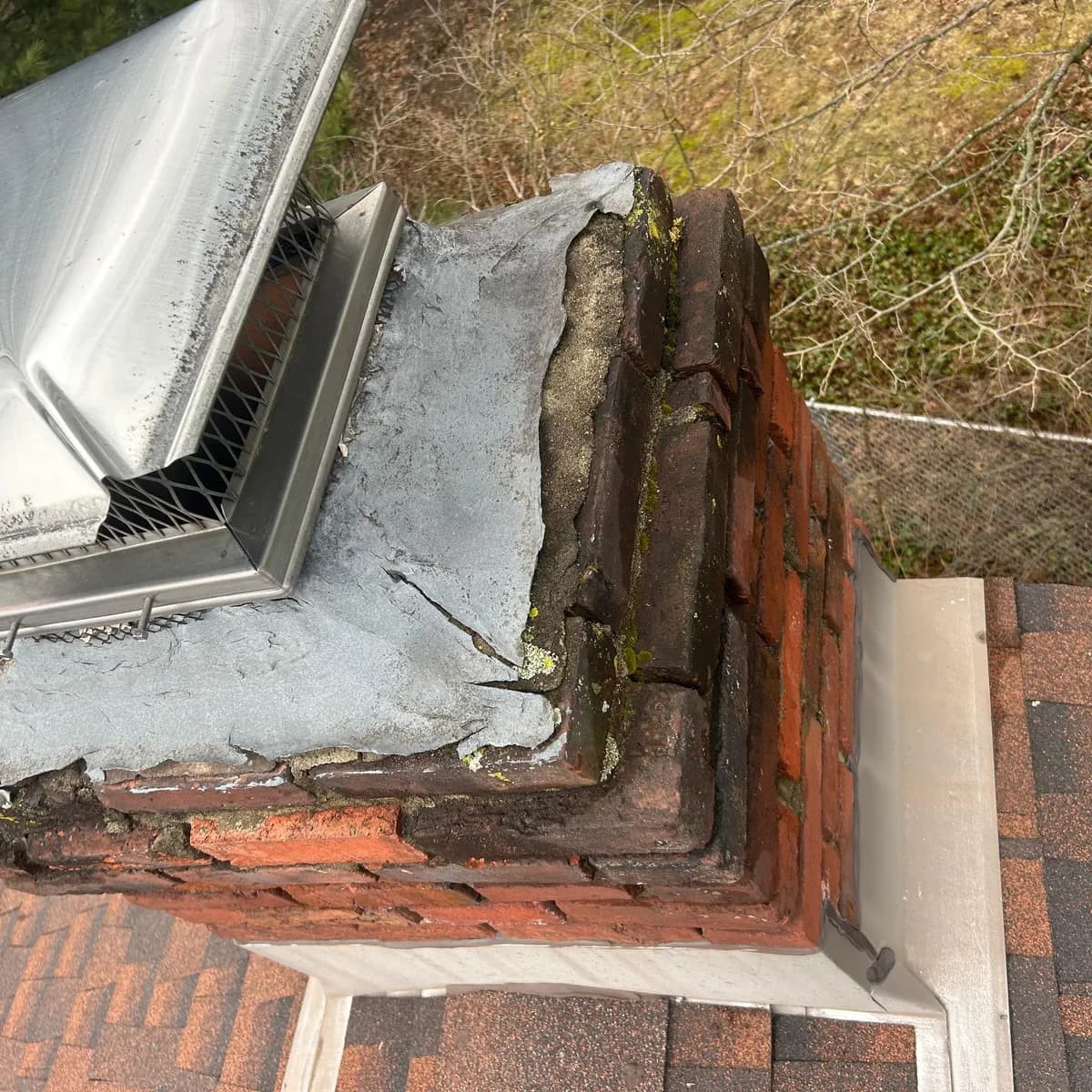
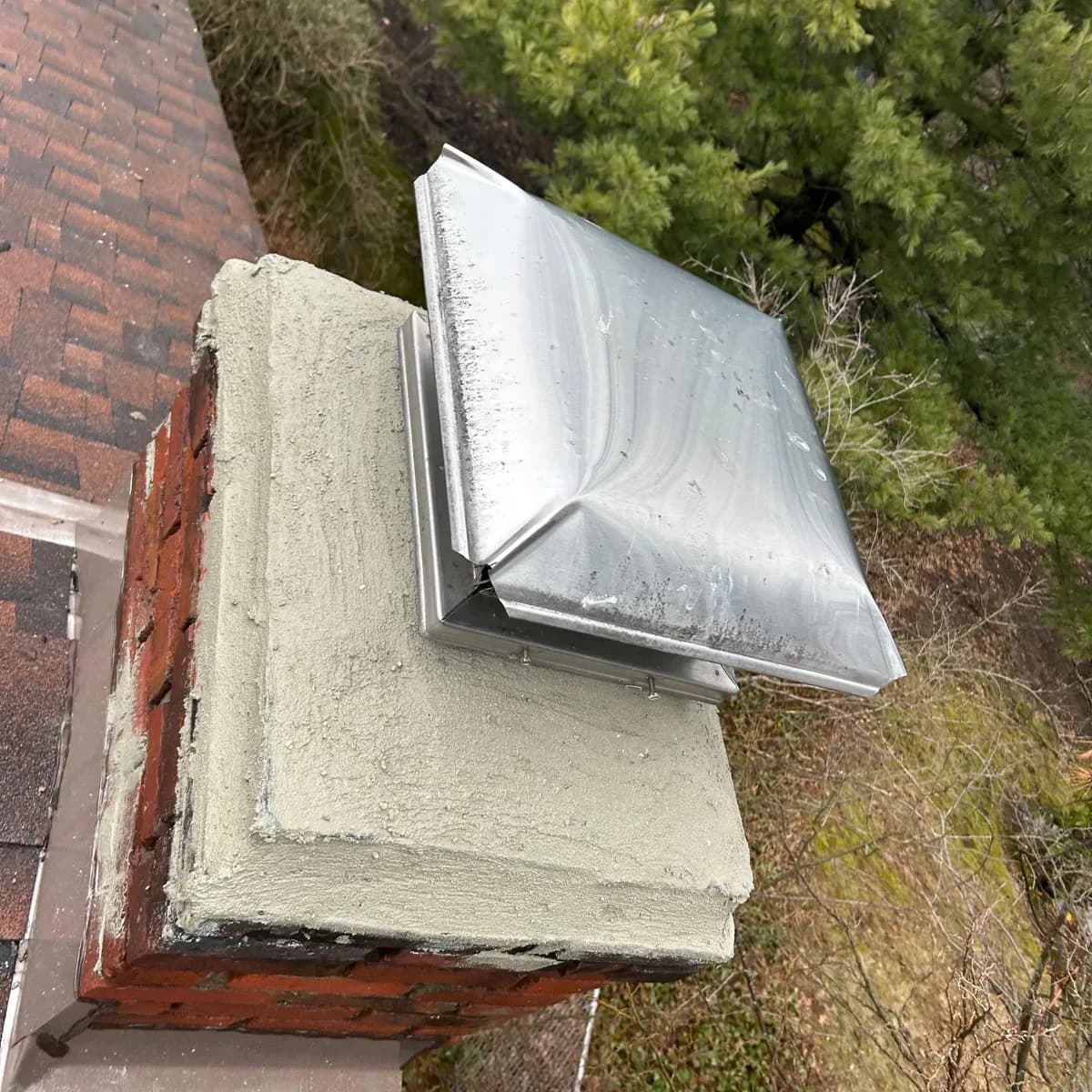
Cracked crown repaired and capped
The crown is continuous around the screened cap again, with fresh mortar closing the top of the stack.
View this projectEXPERT CHIMNEY CARE. HONEST PRICING. DONE RIGHT.
Emergency
A documented look at the whole system, firebox to crown.
An inspection is the difference between guessing and knowing. NFPA 211, the national standard, defines three levels, each for a specific situation. Part of our job is telling you which one you need — including when the answer is the cheapest one.
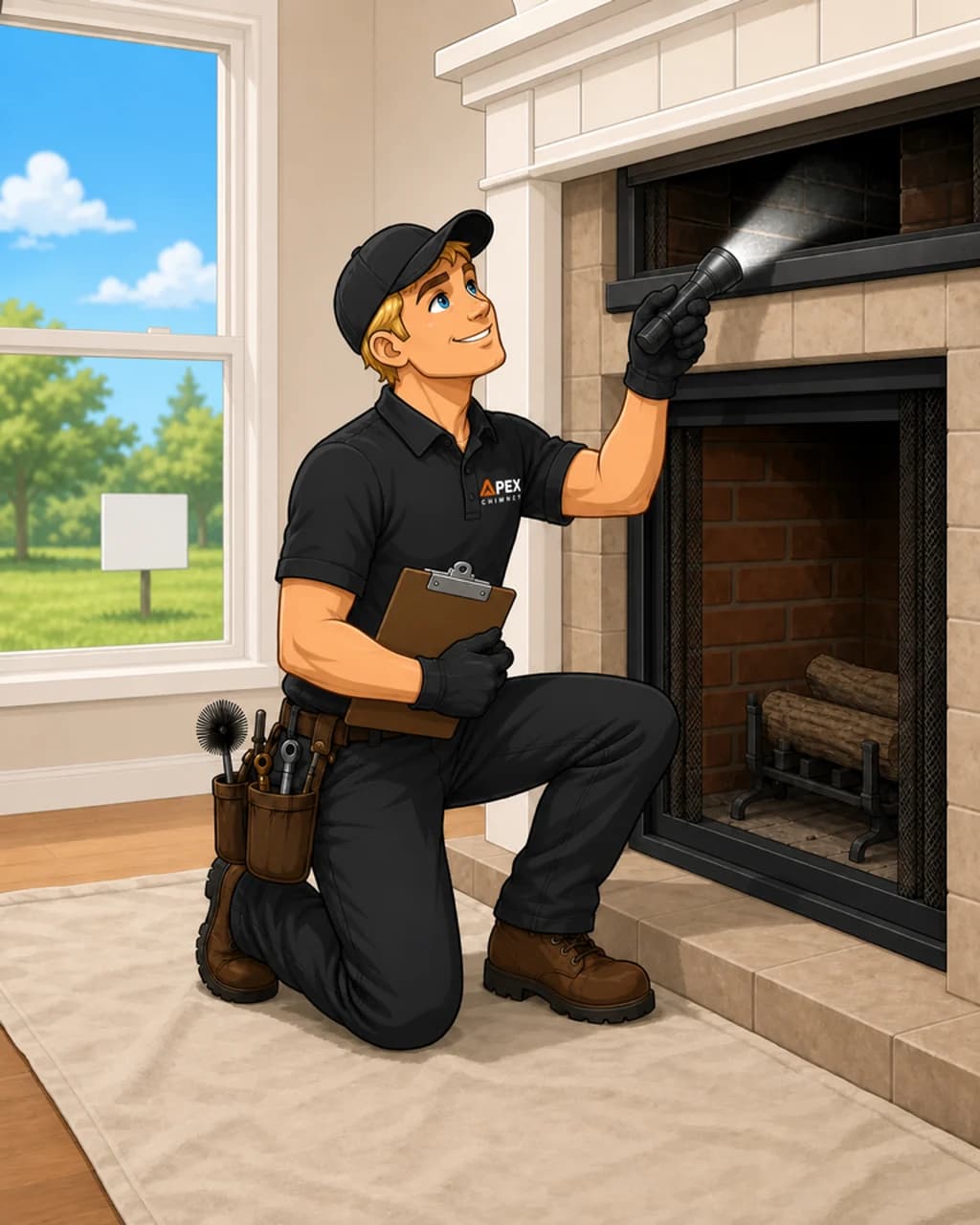

For a system that hasn't changed and is in continued service. We examine all readily accessible portions: firebox, damper, accessible flue, crown, cap, and the exterior masonry. This is what most homeowners need once a year.
NFPA 211 calls for this whenever a property is sold or transferred, when you change the appliance or the fuel, before a flue is relined, or after an event that could have damaged the chimney — such as a chimney fire or a severe storm. It adds a video scan of the flue's interior plus the accessible attic, crawl space, and basement runs. Whether it's legally required where you live depends on whether your local authority has adopted the standard; your lender or a buyer's agent may ask for one regardless.
The invasive one. It means opening up part of the chimney or the building, and there are two reasons to do it: a hazard found at Level 1 or 2 that can't be evaluated without getting behind concealed construction, or a serious chimney or house fire that has to be investigated to establish what it damaged.
A written report with photographs, including aerial images if a drone was the safer way to see the top. If you're in a sale, that's the document the other side's agent will ask for.
Almost everything expensive about a chimney started as something cheap that nobody looked at. A cracked crown is a small repair; the water damage it lets in for three winters is not. And in a home sale, an unexamined chimney is the item that holds up closing while everybody scrambles.
Related
Recent work
Our own photographs, from real jobs. Before and after where we have both ends of it.
The crown is continuous around the screened cap again, with fresh mortar closing the top of the stack.
View this project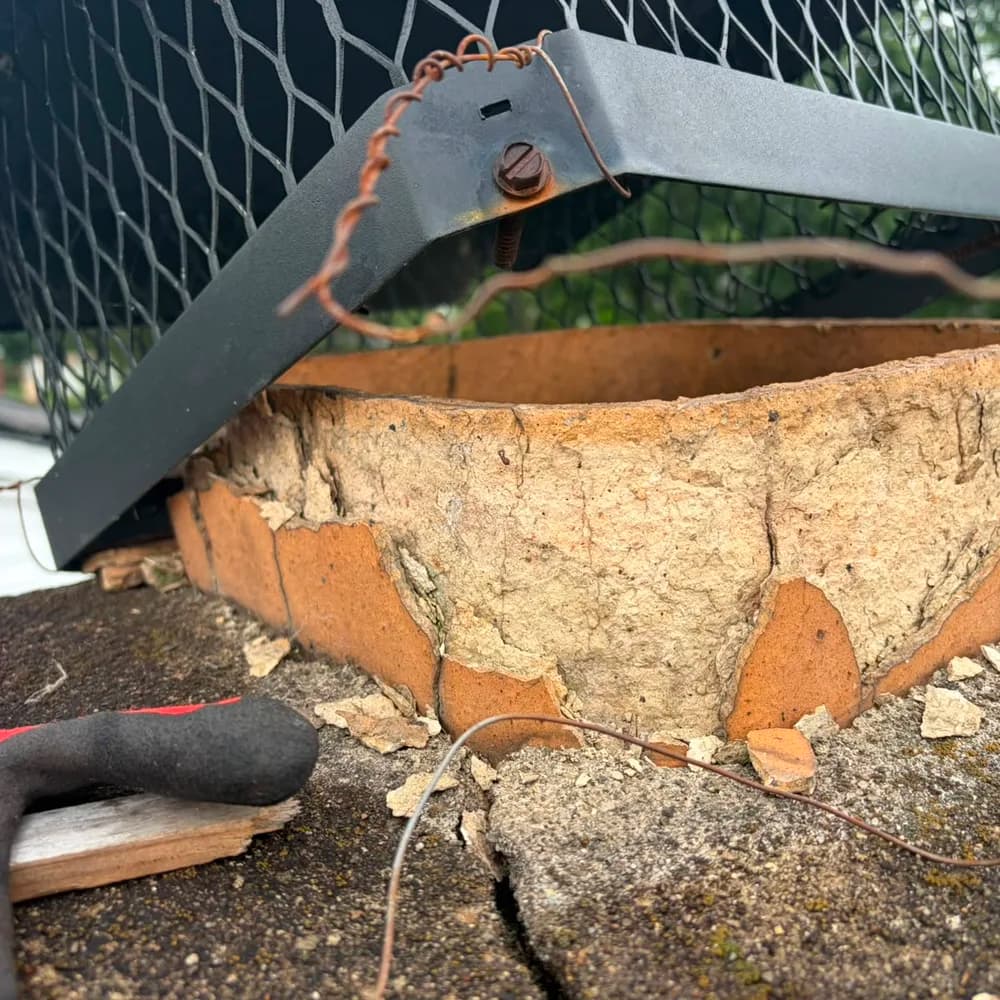
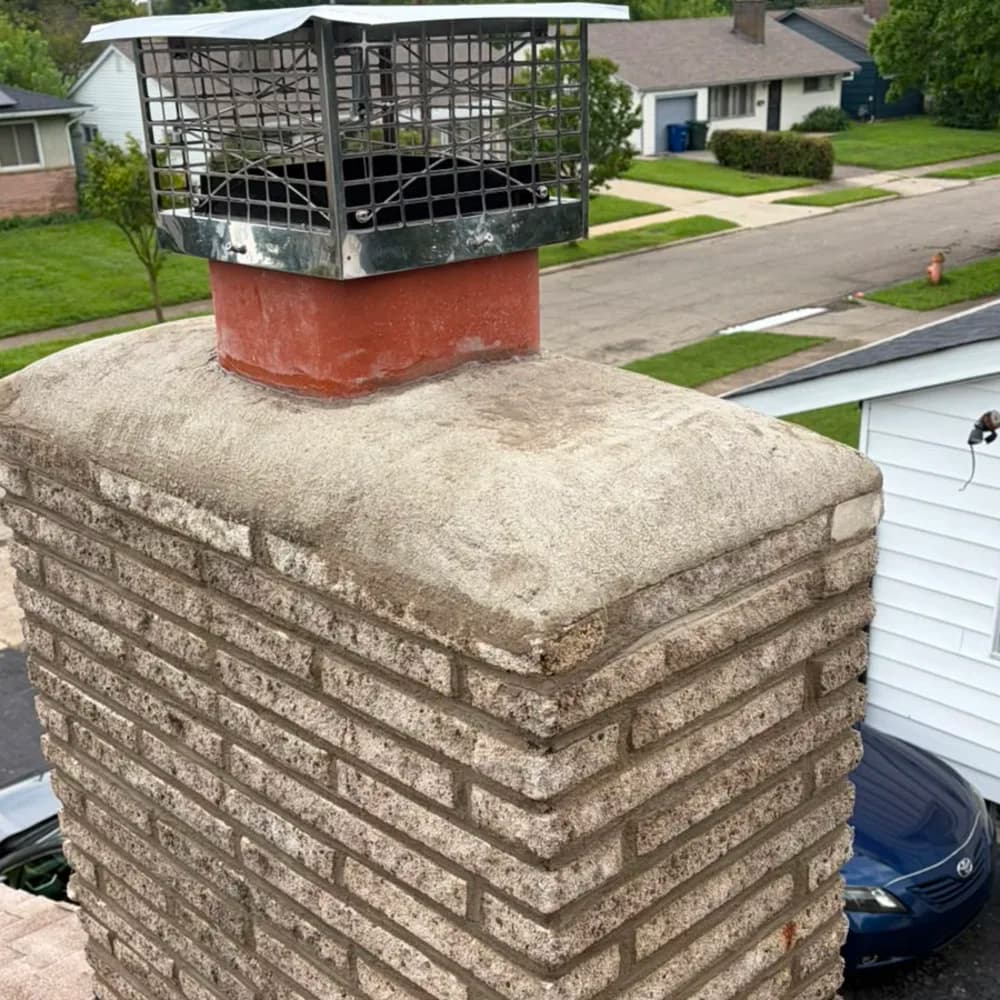
The finished chimney has a continuous crown around the flue and a fitted screened cap.
View this project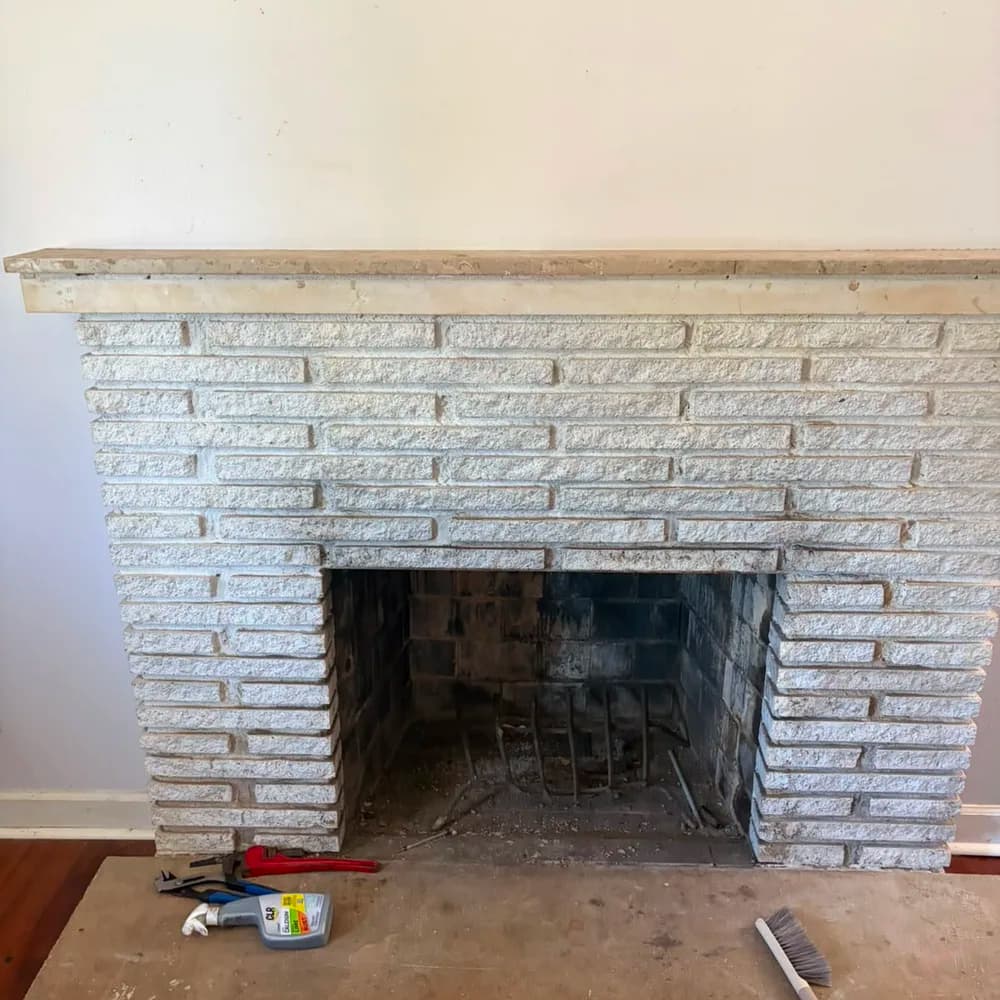
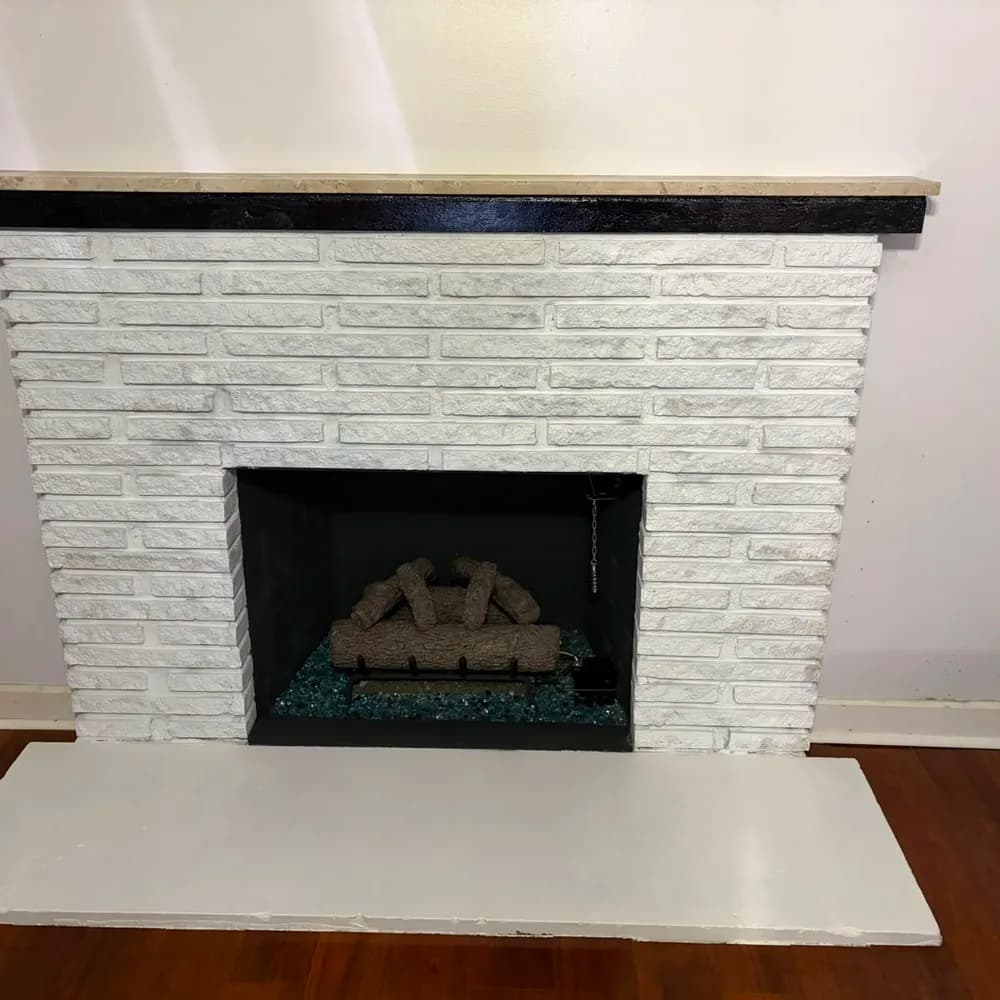
The finished opening has a dark firebox, an arranged log set, and a clear hearth.
View this projectTell us what's going on and we'll call you back to agree on a time. If you'd rather talk it through now, the phone is faster.